Korean, Chinese, and Japanese are considered among the hardest languages in the world for English speakers to learn. Complex character systems, contextual tone, and nuances can even make excellent translation engines miss. Naver Papago is built by a South Korean company specifically for these languages, and it shows.
If you're heading to France or Spain, this is probably not the app for you. Papago supports 13 languages in total, which is a much smaller library than most translation apps. But within its smaller selection, it's the best among competitors for Korean, Mandarin Chinese, Japanese, and Vietnamese. The translation quality is sharper than anything else in this category.
Naver Papago
- Free for iOS and Android
- 13 languages offered, with deep specialization in Korean, Chinese, Japanese, and Vietnamese
The handwriting feature that sets Papago apart
Papago offers all the standard translation modes you can find in almost all translation apps, including text input, voice translation, and camera translation for written text. All three modes work really well. Plus, you get offline usage without having to pay for a premium subscription. But what genuinely sets Papago apart is its handwriting recognition feature.
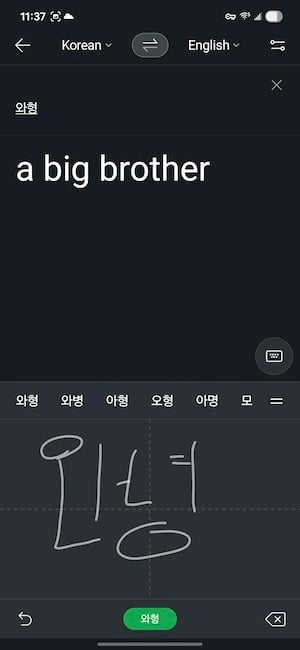
Image: Jessica Santero | WhistleOut
You can draw characters directly onto the screen and the app will translate them. This feature is essential for languages like Japanese and Chinese, where you might encounter handwritten text or calligraphy that's harder for a camera to understand clearly. Just remember, it's not perfect. It can't handle magically translating outright illegible handwriting, but it handles characters that would stump most other apps.
Why Papago translates East Asian languages more accurately
Papago is the best app in its niche: Translation quality for East Asian languages is meaningfully better than the alternatives. The cultural and linguistic specialization of a company based in South Korea means its translations feel more natural and contextually accurate.
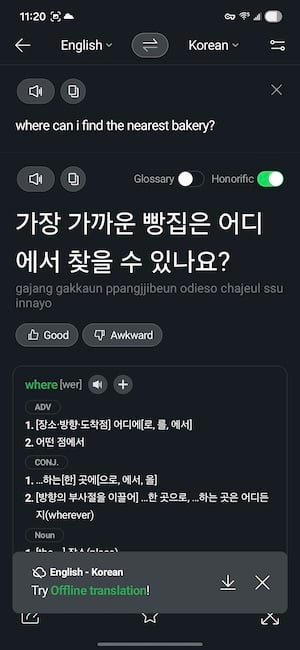
Image: Jessica Santero | WhistleOut
Papago's focus on a smaller language set is actually what makes it so precise for the languages it does cover. It's all about depth over breadth. If you're planning a trip to South Korea, Japan, China, or Vietnam, I'd recommend having both Papago and a broader translation app on your phone. Use the broader app for the quick, general stuff, and use Papago when accuracy actually matters.
Planning a trip to East Asia? Put the savings toward your travel budget instead
If you're planning a trip to Japan, South Korea, or China, expenses can add up fast. Every cent counts when it comes to vacation spending, so why not start saving now by switching to a cheaper phone plan?
Compare affordable unlimited data cell phone plans below and keep more money for the things that actually matter.
|
Visible

$25 Visible Plan
$25.00/mo
Taxes & Fees included
|
|
Mint Mobile

Unlimited Data Plan
$25.00/mo
$75.00 upfront payment for 3 months (equals to $25.00/month). Intro pricing for new customers only.
|
|
XFINITY Mobile

Mobile Select Plan
$0.00/mo
(for the first year of service) <br>Regular rate of $30/mo. thereafter
|
Travelers heading to South Korea, Japan, China, or Vietnam need this app
If your next trip is to South Korea, Japan, mainland China, or Vietnam, download Papago before you leave. The combination of superior translation quality for East Asian languages, handwriting recognition, and an intuitive interface makes it the best tool available for East Asian travel.
If you're headed somewhere else entirely, it's probably not worth the storage space. Since Papago is specialized for specific languages, you might not need it depending on where you're traveling to. You can see the full comparison of all six of our picks in our guide to the best translation apps for international travel to find the best translator app for your next big trip.
Translation is just the start—here's how your phone can master the rest of your trip
From currency converters to offline maps and flight trackers, there are apps that make every part of international travel smoother. We've tested the best of them so you only pack what's actually worth downloading. Check out our full guide to the best travel apps for your phone.
How WhistleOut reviews apps
Our mobile experts scour the app stores, looking for the best new apps for Android and iPhone. Before recommending an app, we use the app for at least one full workday, testing its basic functionality and evaluating whether or not it delivers on its promises.
- Easy to use
Great apps simplify your phone. We selected the tools that don't require a complicated instructional manual. - Affordability
The internet is filled with expensive price tags, but we're not buying what they're selling. We leaned into inexpensive, quality apps. Extra points if they're free! - Hands-on testing
We played around with these before recommending them, ensuring they're worth your download.
From there, we weigh the app's pros and cons and then determine whether or not it's a worthwhile download for the wider population of cell phone users.
Jessica Santero
Staff Writer

Find a better phone plan
Thousands of cell phone plans unpacked. All the facts. No surprises.


.png?w=280&h=280&usm=20&usmrad=0.8&fit=crop "Best Cell Phone Deals for June 2026: Get the New iPhone 17 for Free")