Editor's note: Since its debut, the iPhone 13 has been surpassed by new iPhone models. We've checked the below to ensure accuracy and relevance, though pricing and availability will differ from when we first reviewed this device.
Apple unveiled the iPhone 13 in a September 14, 2021 announcement. The iPhone 13 improved upon its predecessor as Apple's latest flagship device, and progressive updates posited the 13 series as more capable than ever before. Particularly for power users, the 13 series offered a tempting upgrade path.
We don't think either the iPhone 13 or the iPhone 12 are worth buying today in 2026. Both phones have been significantly surpassed in technology since their respective launches, and neither will support more recent iOS updates in coming years.
If you have an iPhone 12 or 13, we suggest considering the iPhone 15 suite for older model options, or the iPhone 16e or 17e for newer models that include some of Apple's more recent technologies but are specifically geared toward more wallet-friendly pricing.
iPhone 12 vs. iPhone 13: Overview
The iPhone 13 lineup consists of the mini, Standard, Max, and Pro Max. Let's compare new iPhones and old iPhones to see what's different.
| Specs | iPhone 12 series | iPhone 13 series |
|---|---|---|
| Starting price (at launch) | From $599 | From $699 |
| Display | Up to 6.7-inch Super Retina XDR display | Up to 6.7-inch 120Hz Super Retina XDR display |
| Camera | Dual-rear 12MP (iPhone 12 + 12 mini) Triple-camera array (iPhone 12 Pro/Pro Max) |
Dual-rear 12MP (iPhone 13 + 13 mini) Triple-camera array (iPhone 13 Pro/Pro Max) |
| Processor | A14 Bionic | A15 Bionic |
| Internal memory | iPhone 12/12 mini: 64GB, 128GB, 256GB iPhone 12 Pro/Pro Max: 128GB, 256GB, 512GB |
iPhone 13/13 mini: 128GB, 256GB, 512GB iPhone 13 Pro/Pro Max: 128GB, 256GB, 512GB, 1TB |
| Battery life | Video playback: iPhone 12 mini: 15 hours iPhone 12: 17 hours iPhone 12 Pro: 17 hours iPhone 12 Pro Max: 20 hours |
Video playback: iPhone 13 mini: 17 hours iPhone 13: 19 hours iPhone 13 Pro: 22 hours iPhone 13 Pro Max: 28 hours |
| Water resistance | IP68 water resistance | IP68 water resistance |
| 5G compatible | Yes | Yes + more bands than the iPhone 12 |
| Overall rating | 85/100 | 90/100 |
Software updates and iOS compatibility
Currently, both the iPhone 13 and the iPhone 12 support iOS 26 and will continue to receive Apple software updates, but not for much longer. The iPhone 12 is expected to continue to receive software updates through 2027, giving it just over one more year of support. The iPhone 13 will get iOS updates for another year or two beyond that, putting its expected support lifespan to 2028 or 2029.
iPhone 13 vs. iPhone 12: Pricing and Availability

Upon its release, the iPhone 13 pricing structure mimicked that of the iPhone 12. Apple offered its iPhone 13 mini and standard iPhone at $699, while the Pro lineup began at $999. Because of the next-generation lineup, iPhone 12 prices dropped to a $599 starting price. A mere $100 difference made the iPhone 13 pretty attractive.
Nevertheless, the iPhone 12 was compelling considering its reduced cost. In our review, we appreciated the iPhone 12's fantastic camera, drop-resistant OLED display, and long battery life. Despite the launch of the 13, the 12 didn't stop being a fantastic handset.
Today, these devices are discontinued through Apple, and most phone carriers have stopped sellin them. However, you can still find them through third-party retailers such as Amazon and eBay.
Display sizes and specs
Along with its choice of four flavors, the iPhone 13 featured three display sizes. The screen was largely unchanged versus the 12 with Super Retina XDR OLED displays. The iPhone 13 mini sported a 5.4-inch display, while the vanilla iPhone 13 and the Pro variants included 6.1-inch screens. The Pro Max stepped up to a 6.7-inch panel.
The iPhone 12 mini came with a 5.8-inch screen, whereas the iPhone 12 and 12 Pro arrived with 6.1-inch displays. Opting for the 12 Max Pro got you a 6.7-inch panel. Overall, iPhone screen sizes remained mostly the same although the 13 mini shrank somewhat.
- iPhone 13 mini: 5.4-inch 2340 x 1080 screen
- iPhone 13/iPhone 13 Pro: 6.1-inch 2532 x 1170 screen
- iPhone 13 Pro Max: 6.7-inch 2778 x 1284 screen
All iPhone 13 models did get an increase in brightness as well as contrast ratio. On the HDR front, the iPhone 13 supported the Dolby Vision, HDR10, and HLG standards. Essentially, you experienced richer, more vivid colors that popped on the iPhone's screen.
ProMotion display technology
Both Pro model versions of the 13 got... er... promoted to ProMotion displays with variable refresh rates ranging from 10Hz to 120Hz. ProMotion display technology can match your finger's speed while scrolling. When viewing pictures or text, the adaptive refresh rate can drop down to 10Hz, and with fast finger movement applications such as gaming, ramp up to 120Hz.
Gaming heavyweights NVIDIA and AMD developed variable refresh rate technology of their own, G-Sync and FreeSync respectively. Apple's ProMotion scrolling experience promises a buttery-smooth gaming experience. Additionally, Apple showcased its adaptive refresh rate, which assists digital artists by delivering stable frame rates while painting and drawing on-screen.
Whether you're immersed in your favorite mobile game, creating digital art, or reading an awesome article (like this one), ProMotion ensures silky scrolling. With the increased brightness and the ProMotion screen, the iPhone 13 was a decent upgrade over the iPhone 12.
iPhone 13 vs. iPhone 12: Processors
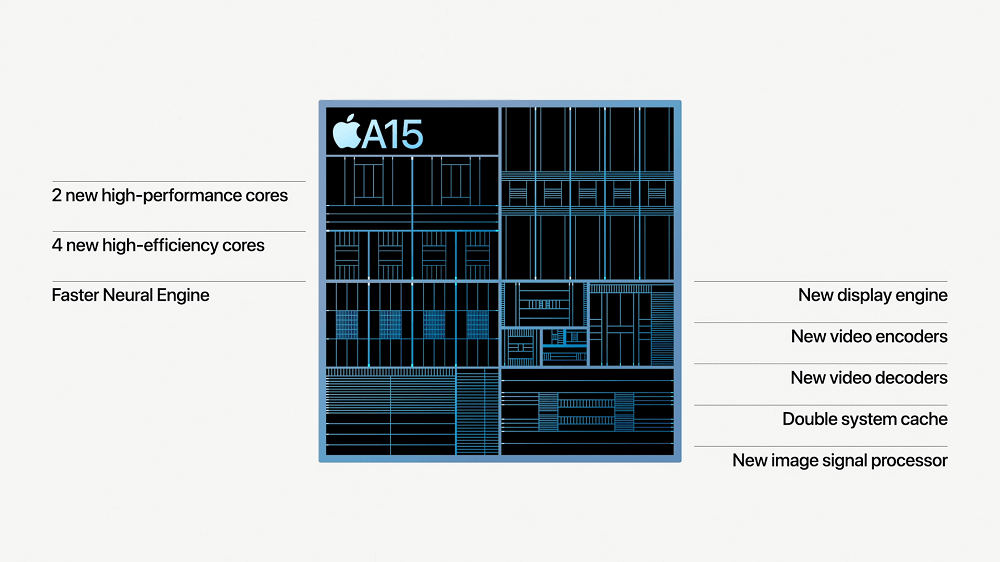
Apple didn't deviate from its proprietary Bionic processors. You'll find the A14 Bionic in the iPhone 12, whereas the iPhone 13 stepped up to the Bionic A15 chip. Boasting an impressive 15.8 trillion operations per second (TOPS), the A15 blew the A14 with its still solid 11 TOPS out of the water.
The A15 Bionic included a six-core CPU and quad-core GPU. While it offered more processing power, Apple claimed that the A15 is more efficient. So how do you benefit? Demanding iOS apps and games such as Genshin Impact, Asphalt 9: Legends, or Call of Duty Mobile run stutter-free.
AI and machine learning
Additionally, the Apple iPhone 13 better handled on-device artificial intelligence (AI) and machine learning (ML) applications. Integrating AI functionality was a fresh trend among mobile device manufacturers at the time. Being able to run AI and ML on your phone itself rather than connecting to cloud services means more accurate voice-to-text and faster Face ID unlocking. Likewise, there's improved automatic photo and picture enhancement.
Altogether, A15 provided more precise speech-to-text with apps such as Siri. Similarly, it automatically improved photo and video quality via machine learning. Although the Bionic A14 is certainly no slouch, the A15 was substantially beefier.
iPhone 12 vs. iPhone 13 cameras

One of the highlight features of most phones is the camera. With improvements to mobile device cameras, now most phones rival the photographic quality of many DSLRs. On the iPhone 13, like the 12, you'll find a dual-camera array. But the 13 arranged its lenses diagonally rather than the stacked cameras on the 12.
- iPhone 13 mini/iPhone 13: Dual-camera array
- Wide-angle lens: 12MP, 1.7 µm sensor, ƒ/1.6 aperture, 26mm focal length, 7-element lens, 100% focus pixels
- Ultra-wide ƒ/2.4 aperture, 13mm focal length, 5-element lens, 120-degree field of view
- iPhone 13 Pro/Pro Max: Triple-camera array
- Wide-angle: ƒ/1.5 aperture
- Ultra-wide: ƒ/1.8 aperture, 120-degree field of view
- Telephoto: ƒ/2.8 aperture, 3x zoom
As with the iPhone 12, both Pro models included a third lens, adding a telephoto shooter. It's a telephoto lens with a 3x zoom that provides best-in-class portraits. The ultra-wide lens offered a significant (90%) improvement in low-light photography while enabling macro photography. Want to capture tiny water droplets on that tree trunk while hiking? Now you can. Essentially, your pictures will look better with increased sharpness and detail versus the iPhone 12's camera.
Notably, the iPhone 13's camera was more competent at low-light photography and particularly in night mode. The selfie and Face ID camera notch was 20% smaller than its predecessor's. While it didn't re-invent the camera, these updates provided even better pictures than the 12's already good image quality.
Photographic styles
Photographic Styles let you customize your pictures. You can think of these as sort of pre-applied Instagram filters. Essentially, you can create tailor-made contrast and lighting settings that will be applied automatically when taking a picture. This eliminates image post-processing. Of course, you could always edit photos afterward, either on your iPhone or on a computer.
Video
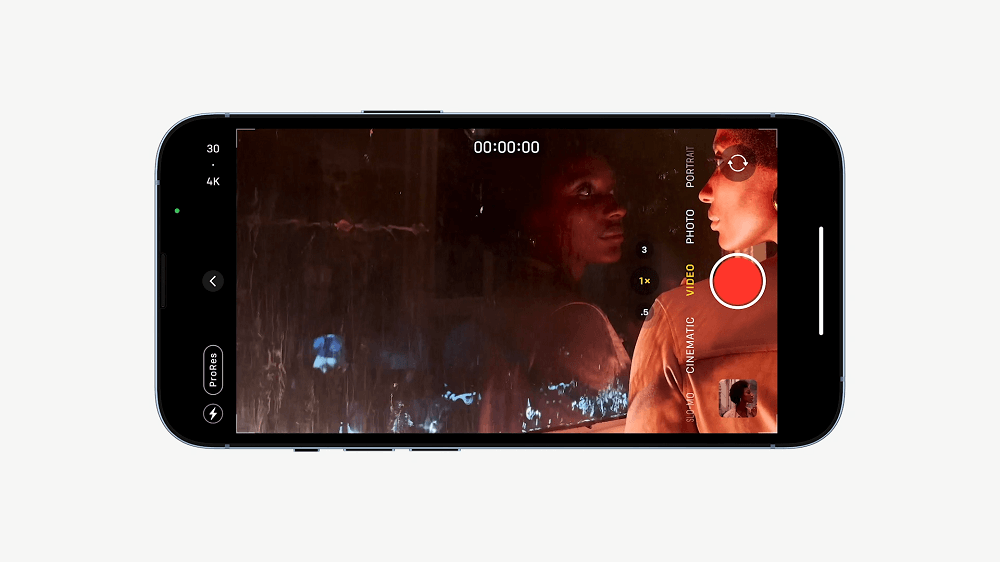
On the video side, the iPhone 13 shot in a cinematic mode at 1080p, 30 frames per second (FPS), and in Dolby Vision HDR in 4K at up to 60 FPS. This was a big jump from the Dolby Vision 4K 30 FPS capabilities of the iPhone 12.
Cinematic Mode was a hot new feature. You'll find rack focus techniques alongside automatic focus transitions. Its camera intelligently focused on objects coming into the frame. Whether you're shooting TikTok videos or indie movies, Cinematic Mode was an appealing addition. With micro-budget films such as "The Alien Report" (which I highly recommend watching) actually being shot on iPhones, the real-world applications were particularly enticing for filmmakers, YouTubers, and videographers.
All told, the iPhone 13 had a better camera than the iPhone 12. Whether you're taking fast-action sports pictures of your kid's soccer game, delving into amateur food photography, or snapping photos of your fur babies, image quality was noticeably sharper than on the iPhone 12.
Design and build
On the outside, the iPhone 13 remained largely unchanged. The 13 and the 13 mini came in pink, blue, midnight, starlight, and (PRODUCT)RED, also known as simply "red." Opting for the Pro/Pro Max gave you a choice of gold, silver, graphite, and Sierra blue. An IP68 water-resistance rating (the same as the 12) meant your device was ok submerged in 4 meters of water for up to 30 minutes. Test at your own risk.
New on the iPhone 13 was a ceramic shield on the front. Combined with an aluminum casing, this was the most durable yet stylish iPhone yet. In promotional videos, Apple showcased the iPhone 13 surviving a dive into the mud out of a delivery driver's hand. While we don't recommend casually tossing your brand new iPhone off of a moped, suffice it to say you won't have to worry much about your keys and phone jangling around in your purse.
Battery life
Whereas the iPhone 12 left its battery unchanged over the 11, the iPhone 13 got a boost to battery capacity. The iPhone 13 mini saw a 1.5-hour increase over the 12 mini, with the standard 13 getting 2.5 hours more than the 12.
Both Pro iterations have all-day battery life. According to Apple, the Pro's battery lasted up to 1.8 hours longer than the 12 Pro, while the 13 Pro Max gained a 2.5-hour increase over the 12 Pro Max. All told, the 13 Pro Max yielded the greatest battery life of any iPhone to date.
Connectivity
Unsurprisingly, the iPhone 13 included 5G. Compared to the iPhone 12, the 13 delivered faster 5G speeds while still offering better battery capacity. Smart data technology intelligently conserves juice when 5G speeds aren't necessary.
New antenna designs, alongside support for more bands, enabled access to cutting-edge 5G speeds. Apple stated that the iPhone 13 supported over 200 carriers for 5G in more places than ever before. Aside from enhanced 5G connectivity, all models included Wi-Fi 6 802.11ax, Bluetooth 5.0, and NFC readers for applications such as tap-to-pay.
There's wasn't Wi-Fi 6E connectivity, although 6E hadn't seen much adoption yet. The iPhone maintained its Lightning port. However, if you want USB-C on an iOS device, the new sixth-generation iPad Mini got a USB Type-C port.
LiDAR scanner
Both Pro models in the iPhone 13 series sported LiDAR scanners. LiDAR, or Light Detection and Ranging, is a means of remote sensing commonly found on self-driving cars or robot vacuums. And it's one of the coolest features of the iPhone. For 3D scanning applications like augmented reality (think Pokemon GO!), LiDAR helps your phone to more accurately map your surroundings.
So if you're immersed in an AR game, your phone better maps your physical surroundings. Therefore, while chasing Pikachu, you can avoid a nasty bump into the edge of your coffee table.
Storage capacity
The iPhone 13 came with more onboard storage. Where the 12 and 12 mini started out at 64GB and went up to 512GB on the Pro and Pro Max, the 13 and 13 mini began at 128GB and went up to 512GB. Both Pro models could be outfitted with up to 1TB of storage space. Especially considering the iPhone's lack of expandable storage, having higher capacity tiers was greatly appreciated.
FAQs
Is it worth upgrading from the iPhone 12 to the iPhone 13?
No, it's not worth upgrading from the iPhone 12 to the iPhone 13. Both models are far outdated and discontinued; it's much better to upgrade to a newer model of iPhone.
Is the iPhone 13 waterproof?
Although the iPhone isn't waterproof, it is IP68 water-resistant. This means that it can handle dirt, dust, and sand plus may survive for up to 30 minutes in 4m of water.
Does the iPhone 13 have Touch ID?
The iPhone 13 will not have Touch ID. An under-display fingerprint reader won't be on the 13. However, you can instead use Face ID to unlock your phone using facial recognition.
Which is better for photography: iPhone 12 or iPhone 13?
The iPhone 13 is better for photography than the iPhone 12.
Is the iPhone 13 5G-compatible?
Like the iPhone 12, the 13 series is 5G-compatible. Apple brags that the iPhone supports more carriers than its predecessor.
How much does the iPhone 13 cost?
iPhone pricing depends on the model:
- Apple iPhone 13 mini: Starting at $699
- Apple iPhone 13: Starting at $799
- Apple iPhone 13 Pro: Starting at $999
- Apple iPhone 13 Pro Max: Starting at $1,099
What colors does the iPhone 13 come in?
The iPhone 13 and 13 mini are available in pink, blue, midnight, starlight, and (PRODUCT)RED. The iPhone 13 Pro and Pro Max come in gold, silver, graphite, and Sierra blue.
How big is the iPhone 13?
iPhone 13 screen sizes vary by model:
- Apple iPhone 13 mini: 5.4"
- Apple iPhone 13: 6.1"
- Apple iPhone 13 Pro: 6.1"
- Apple iPhone 13 Pro Max: 6.7"
Moe Long
Senior Writer

Thousands of cell phone plans unpacked. All the facts. No surprises.





.png?w=280&h=280&usm=20&usmrad=0.8&fit=crop "The Best Cheap Phone Plans for 2026: We Tested Them All to Help You Save")