Metro by T-Mobile (formerly known as MetroPCS) operates on T-Mobile’s network, the best 5G network in the nation. Currently, T-Mobile’s 4G LTE network covers 62% of the United States, while their 5G network covers over 49.24% of the country. In a nutshell, with a Metro by T-Mobile phone plan, you can expect great coverage in cities and urban areas, but you might struggle to find service in more rural and remote parts of the country.
We’ll take a closer look at Metro’s coverage on the T-Mobile network, including how Metro’s coverage compares to other carriers, where you’ll get the best coverage with Metro, and some of the Metro phone plans you can enjoy.
Metro by T-Mobile coverage map
As its full name suggests, Metro (formerly MetroPCS) is owned by T-Mobile. Metro is a mobile virtual network operator (MVNO), which means it offers you coverage on the T-Mobile network for a fraction of T-Mobile’s prices. The only catch with MVNOs is that you may be deprioritized (i.e., experience slower data speeds compared to T-Mobile customers) in crowded areas or if you’ve used up your high-speed allowance.
Metro by T-Mobile’s coverage will be identical to T-Mobile’s, though, so you should have service in any place where T-Mobile customers do. T-Mobile’s 4G LTE network covers 62% of the country. It’s in third place out of the three major carriers, but there’s only an 8% difference between T-Mobile’s network coverage and the winner of the coverage game, Verizon.
Where T-Mobile pulls away from the pack is its 5G network, which is the largest in the nation clocking in at 49.24%. Its 5G coverage is especially strong in the east, but it’s a little less reliable anywhere west of Nebraska.
Metro by T-Mobile really shines in urban and densely populated areas. For that reason, the company claims that its coverage reaches 99% of people in the United States. But if you live in a rural area, especially in the Mountain West, you’ll want to double-check the coverage map near where you are—this is where that 8% difference starts to show. The network’s coverage gets spottier in places like Wyoming, Idaho, and Nevada.
Metro by T-Mobile 5G coverage map
As mentioned, Metro by T-Mobile’s network has the best 5G network coverage by far. Over 7,500 cities currently have Metro’s 5G coverage. T-Mobile’s purchase of Sprint allowed them to expand the network fast.
T-Mobile's high-band 5G towers offer some of the fastest speeds in the county. Meanwhile, its low-band 5G speeds might feel like glorified 4G for now. That said, Metro customers will get faster data as T-Mobile continues to ramp up its speeds.
That being said, as a Metro customer, you might deal with slower speeds from deprioritization once you reach 35GB of data use. Basically, T-Mobile will prioritize the people that pay them more and give them faster data speeds when the network gets crowded.
For example, you could be sitting next to a T-Mobile customer at a basketball game, and they could be uploading Instagram stories when you can’t even pull up your feed. Because of deprioritization, you might not get the full power of T-Mobile’s 5G speeds, even though you are on its network.
If you want the full speeds of T-Mobile’s 4G and 5G networks, consider one of T-Mobile's phone plans.
Metro by T-Mobile coverage breakdown
Metro's 4G LTE network
Since Metro by T-Mobile (MetroPCS) operates on T-Mobile’s 4G LTE network, we’ll need to compare T-Mobile to the other major carriers’ coverages. Here’s how they break down::
- Verizon: 70% 4G LTE coverage
- AT&T: 68% 4G LTE coverage
- T-Mobile: 62% 4G LTE coverage
Right now, Metro’s 4G LTE network coverage sits behind both Verizon and AT&T. That won’t affect you much if you live in a city or major suburb. But if you live in any rural area of the western United States, you’ll want to double check that your specific area is covered and be aware that you might lose service on drives up the mountains.
Metro's 5G network
Metro’s network might not be winning the 4G game, but it’s the biggest 5G network in the country right now thanks to its access to T-Mobile’s 5G domination. Check out how its coverage compares:
- T-Mobile: 49.24% 5G coverage
- AT&T: 41.11% 5G coverage
- Verizon: 21.04% 5G coverage
If you own a device that’s compatible with 5G and you live in an area with 5G coverage, you can get faster data speeds with T-Mobile’s 5G network. However, that doesn’t mean you’ll suddenly be downloading movies in seconds. Much of Metro’s 5G network is largely made up of low-band 5G. Low-band 5G has pretty impressive coverage, so it can reach more people. But in terms of speed, it’s basically glorified 4G.
T-Mobile is working on expanding its mid-band 5G coverage, which offers significantly faster speeds (though still nowhere near blazing-fast millimeter-wave 5G). So as time goes by, you can expect the 5G network to get even speedier. For now, though, you’ll get a large 5G network and pretty fast data speeds with a Metro by T-Mobile plan.
All the latest cell phone news and deals, delivered every Thursday.
Metro cell phone plans
Metro’s cell phone plans include three unlimited plans and a 5GB limited data plan.
All of Metro's unlimited plans include 35GB of priority data. If you exceed that allotment your data is subject to slowdowns. The key differences in the plans are with their hotspot allotments.
- 10GB Data Plan includes no mobile hotspot data
- $50 Unlimited Plan includes 8GB mobile hotspot
- $60 Unlimited Plan includes 25GB mobile hotspot
The Metro Flex Unlimited Plus Plan also includes extra perks like Amazon Prime and 100GB of cloud storage with Google One and international texting.
Metro coverage vs. Other carriers
Metro isn’t the only carrier that gives you coverage on a major network for a lower cost though. You can find similar carriers on the Verizon and AT&T networks. You’ll learn more about how these networks compare below, but any of them will give you solid coverage in well-populated areas.
Metro vs. AT&T MVNOs
| Metro | AT&T MVNOs | |
|---|---|---|
| 4G LTE coverage | 62% | 68% |
| 5G coverage | 49.24% | 41.11% |
| Urban coverage | Excellent | Excellent |
| Rural coverage | Poor | Good |
| 5G bands | Low-band Mid-band |
Mid-band |
Since Metro by T-Mobile offers cheaper coverage on T-Mobile’s network, it’s worthwhile to compare it to carriers like Red Pocket or Cricket that offer cheap coverage on AT&T’s network. These carriers will often give you slower data than AT&T itself, but you’ll save some cash on your bill. As you’ll see, there’s very little difference between the 4G LTE coverage you’d get with Metro and the coverage you’d get with an AT&T MVNO.
|
Cricket

Supreme Unlimited Plan
$55.00/mo
with AutoPay; $60 for the first month.
+ $9.99 Upfront
|
As Metro is owned by T-Mobile, it’s only 6% behind AT&T’s 4G LTE network in coverage. But T-Mobile’s 5G network is almost double the coverage of AT&T’s. If you have a 5G-capable device, Metro will get you on a 5G network in more places.
Just remember that while AT&T’s 5G network may be smaller, it will be faster in areas where it has high-band mmWave hotspots. But as T-Mobile expands its mid-band 5G network, Metro’s speeds will catch up to those of AT&T’s limited mid-band network.
Overall, your experience on either network will be pretty similar, unless you live in that 6% of the country where you’d get better 4G coverage with a carrier like Red Pocket or Cricket.
Metro vs. Verizon MVNOs
| Metro | Verizon MVNOs | |
|---|---|---|
| 4G LTE coverage | 62% | 70% |
| 5G coverage | 49.24% | 21.04% |
| Urban coverage | Excellent | Excellent |
| Rural coverage | Poor | Good |
| 5G bands | Low-band Mid-band |
Mid-band High-band |
Similarly to Metro, smaller carriers like Visible Wireless or Xfinity Mobile (for Xfinity internet customers) will get you on the Verizon network for cheap. Carriers like Visible Wireless offer better 4G LTE coverage in rural areas, and Metro by T-Mobile has a larger but slower 5G network.
|
Visible

$25 Visible Plan
$25.00/mo
Taxes & Fees included
|
Verizon and its MVNOs are clearly the winners of any 4G LTE coverage battle, but carriers on T-Mobile’s network like Metro don’t give a half-bad performance. With only 8% difference between the two networks, you won’t notice the difference in coverage unless you’re in rural or remote areas.
You’ll also get much better 5G coverage on the T-Mobile network, though again, your speeds are limited to just a bit higher than 4G LTE due to its low-band makeup. Verizon’s high-band 5G, on the other hand, has incredibly fast speeds where its high-band hotspots are located, but overall its network is much smaller than Metro’s.
That said, Verizon has expanded its own low-band 5G network (dubbed “Verizon 5G Nationwide”), which has increased its network coverage to just over 12% of the country. Unless you live in that 1%, though (mostly near big cities), you’d probably have a better chance of 5G access on the Metro network. After all, what good is super-fast data if you can’t access it?
Metro by T-Mobile's international coverage
Metro by T-Mobile (MetroPCS) offers international talk and text with over 140 countries through some partner carriers, but you’ll have to pay extra to access it.
To chat with friends and family across the pond, you can add Metro’s Global Voice feature starting at $10/month when you’re on any plan of $30/month or higher. This feature offers unlimited texts to select countries, plus anywhere from 200 to unlimited voice minutes to landlines and/or mobile numbers depending on the Global Voice plan tier you choose.
If you’ve got loved ones in Mexico or Canada, or you’re planning a trip to either country, Metro’s “Mexico Unlimited” and “Canada Unlimited” add-on services are only $5 a month. These include unlimited talk and text to and from each country, plus 5GB of high-speed data that you can use while traveling.
How good is Metro's cell coverage?

Most people will get great coverage on T-Mobile’s network with a Metro by T-Mobile (MetroPCS) phone plan. Because T-Mobile’s network covers well-populated areas of the country, the carrier can claim to cover 99% of Americans. You’ll also have access to the largest 5G network out there, and while the speeds won’t be mind-blowing, you’ll be able to load videos and download apps faster.
That being said, there are some gaps in rural coverage that you’ll see in the Metro’s network. It’s worth it to double-check the coverage map, especially if you live in the western United States. It’s also important to be aware that T-Mobile will prioritize its own customers over Metro customers. Your data will be slowed down in some places where T-Mobile customers will have no problems.
Pros and cons of Metro's coverage
Pros:
- 4G LTE network covers 99% of Americans
- Biggest 5G network in the country
- International calling opportunities in over 140 countries
Cons:
- Large gaps in rural coverage, especially in the west
- 5G network is slower than 5G from other networks
- Metro can deprioritize you after 35GB of data use
Where is the best Metro coverage?
Most people will have a great experience getting coverage on T-Mobile’s network, with the exception of those living in the mountain west or on the West Coast. Metro also doesn’t have any coverage in Alaska, so you’ll want to choose another carrier if you live there.
If you want solid 4G coverage from Metro, here are the best states to find it:
Metro by T-Mobile 4G LTE coverage: Best states & cities
| States | Cities |
|---|---|
| Connecticut—98% | Washington, D.C.—100% |
| New Jersey—98% | Atlanta, GA—99.9% |
| Delaware—97% | Fort Worth, TX—99.9% |
| South Carolina—80% | New York, NY—99.9% |
| Indiana—95% | Nashville, TN—99.8% |
If you’re looking for faster 5G speeds, here are the best cities and states to get that:
Metro by T-Mobile 5G coverage: Best states & cities
| States | Cities |
|---|---|
| South Carolina—98% | Washington, D.C.—100% |
| New Jersey—79% | Indianapolis, IN—99.4% |
| Minnesota—77% | Cincinnati, OH—99.7% |
| Indiana—74% | Charlotte, NC—99.3% |
| North Carolina—72% | Houston, TX—98.8% |
There are a few places where Metro’s coverage really struggles, though. If you live in any of these states, it’s probably worthwhile to check your coverage on another network.
- Alaska: 0% coverage
- Nebraska: 20% coverage
- Oregon: 43% coverage
- Maine: 43% coverage
- West Virginia: 43% coverage
How good is Metro's coverage in my area?
While this is all good information, it doesn’t tell you how much coverage Metro has in your zip code. But WhistleOut has a tool that will tell you exactly how good your specific coverage will be on Metro’s network.
That's where WhistleOut's address lookup feature comes in. Head over to our comparison engine, type in your talk, text, and data preferences, then your street address where it reads "Coverage Check." On the resulting page, you'll be able to get location-specific coverage info by clicking one of the buttons on the upper-right hand of your screen.


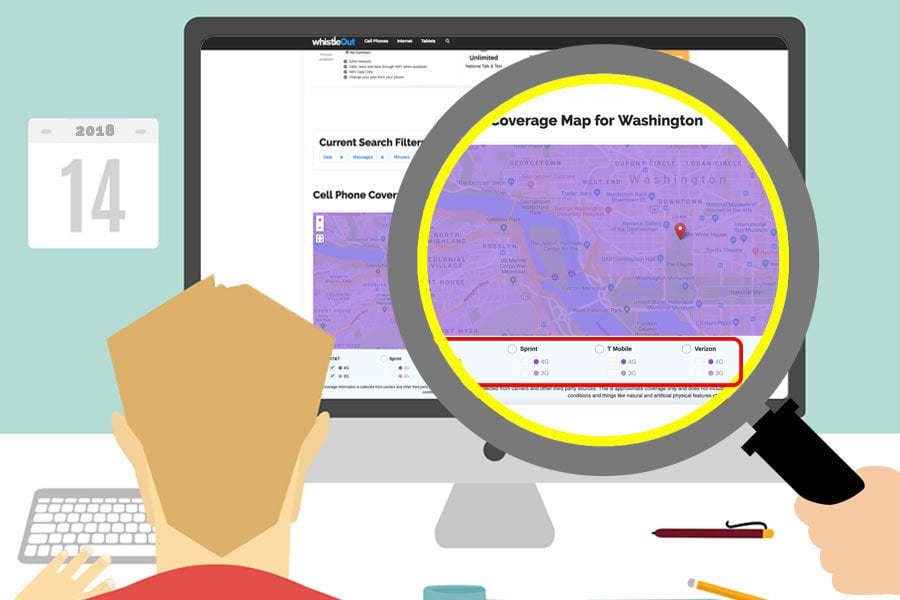
We've also written in-depth state-by-state coverage guides, as well as coverage info for America's largest cities. Use these to get thorough coverage information on the four major networks in your area.
Which other carriers use T-Mobile's network?
While Metro by T-Mobile is one of the most recognizable MVNOs on T-Mobile’s network, it’s not the only one out there. Other MVNOs like Mint Mobile, Simple Mobile, Ting, and US Mobile will offer you low-cost plans with the same coverage as Metro. Because of the Sprint/T-Mobile merger, other companies like Boost Mobile are also migrated to the T-Mobile network.
The following is a list of MVNOs that run on the T-Mobile network:
T-Mobile MVNOs
| MVNO | Network(s) |
|---|---|
| Consumer Cellular | T-Mobile, AT&T |
| Metro by T-Mobile |
T-Mobile |
| Mint Mobile |
T-Mobile |
| Project Fi |
T-Mobile, Sprint, U.S. Cellular, Three |
| Red Pocket |
T-Mobile, Sprint, Verizon, AT&T |
| Simple Mobile |
T-Mobile |
| Ting |
T-Mobile, Sprint |
| TracFone |
T-Mobile, Sprint, Verizon, AT&T |
| Ultra Mobile |
T-Mobile |
| US Mobile |
T-Mobile |
One major advantage that Metro has over some of its competitors: the carrier includes all fees and taxes in their cell phone plan prices (we love the transparency!). Other carriers often have hidden fees that aren’t listed up front in the initial plan price, so a cell phone plan might look cheaper when it’s actually more expensive.
As mentioned previously, one catch with all of these MVNOs is that they have the potential for slower data speeds in busy areas and peak usage times. If you don’t want to deal with slowed data in crowded places, you can always grab a T-Mobile plan as well.
How can I get a better signal with Metro?
You could be in a great Metro by T-Mobile (MetroPCS) service area and still not be getting speedy coverage. In that case, it might be time to upgrade your device. Newer phones can tap into T-Mobile’s 5G network, bringing you the faster speeds that you want.
Smaller carriers like Metro don’t typically have all the latest devices, but you can get an iPhone 12 or other smartphone models with a Metro plan. Check out some of the new devices that Metro offers:
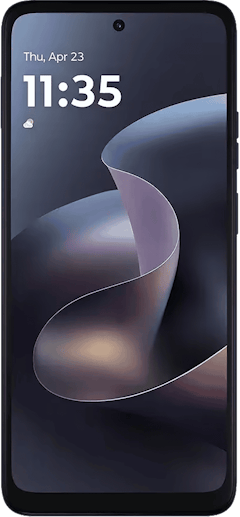
Moto G 5G (2026) 128GB
- 6.7 inch display
- Rear Cameras: 50MP, 2MP
- Front Camera: 32MP
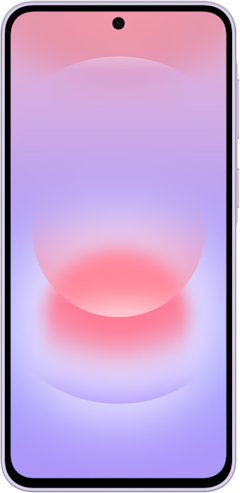
Galaxy A37 5G 128GB
- 6.7 inch display
- Rear Cameras: 50MP, 8MP, 5MP
- Front Camera: 12MP
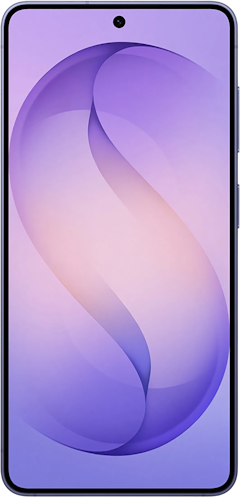
Galaxy A57 5G 256GB
- 6.7 inch display
- Rear Cameras: 50MP, 12MP, 5MP
- Front Camera: 12MP

Galaxy S26 5G 256GB
- 6.3 inch display
- Rear Cameras: 50MP, 10MP, 12MP
- Front Camera: 12MP
iPhone 18 Pro 256GB
- 6.3 inch display
- Rear Cameras: 48MP, 48MP, 48MP
- Front Camera: 18MP


Metro by T-Mobile coverage: FAQs
Does Metro have nationwide coverage or work in all states?
Metro by T-Mobile (formerly MetroPCS) has service in 49 out of the 50 states. It doesn’t have service in Alaska. Generally, Metro has good coverage nationwide, but there are some areas in the Mountain West where you might lose signal.
How good is MetroPCS’ signal?
Metro by T-Mobile/MetroPCS will give you a great signal in all of the well-populated areas of the country. The only places where you might lose signal are remote parts of the western United States.
Is MetroPCS coverage the same as T-Mobile?
Because T-Mobile purchased MetroPCS—now called Metro by T-Mobile—the carriers’ coverage is identical. Metro customers can call, text, and access data in any place where T-Mobile customers have service.
What’s the difference between MetroPCS and Metro by T-Mobile?
Not a thing! MetroPCS was purchased by Metro by T-Mobile and changed its name to reflect its new branding.
Kenna Pierce
Contributing Writer

Thousands of cell phone plans unpacked. All the facts. No surprises.





.png?w=280&h=280&usm=20&usmrad=0.8&fit=crop "The Best Cheap Phone Plans for 2026: We Tested Them All to Help You Save")