Making friends as an adult is exponentially harder than it was in college. There are no dorm floors or mandatory orientations forcing you into proximity with potential friends.
So, like millions of other people, I turned to friendship apps. I've used them in four different cities—when I moved to Boston and needed to build a friend group from scratch, during a Pokémon Go Fest visit to Seattle, after moving back to San Diego, and even on a weekend trip to Los Angeles.
In theory, friendship apps are the perfect solution for connecting with people. In theory, they're the perfect solution for someone constantly starting over in new cities. In practice, most friendship apps are total scams.
Here are three that you should probably avoid.

Bumble BFF hides compatible matches unless you pay for premium
- You have to pay for premium ($50/month) to see your best matches.
- Conversation timer leads to superficial small-talk.
I first tried Bumble BFF when I moved to Boston, desperately hoping to build a friend group in a city where I knew absolutely no one (spoiler: it didn't work). Bumble BFF gets recommended constantly because it piggybacks off the dating app's reputation. And while the concept sounds reasonable, it just didn't deliver.
You swipe right on people who seem interesting, match, and start chatting. The problem is that the free version is significantly limited compared to the premium subscription. It isn't cheap either, costing $50/month.
All I got from Bumble BFF were short-lived messages that fizzled out with zero actual plans to meet up or do something. I even tried using it again later in Seattle while attending Pokémon Go Fest, thinking maybe a gaming community would yield better matches. I was wrong.
The profiles shown to me on the free version felt random. People with completely different interests kept showing up. Meanwhile, I'd see notifications that someone really compatible had liked my profile, but I couldn't see who without upgrading.
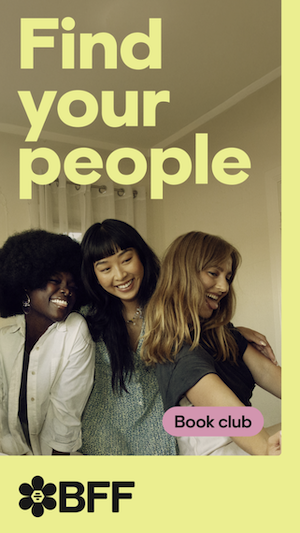
Image: Jessica Santero | WhistleOut
The algorithm identifies people you'd probably connect with, but those profiles aren't accessible to free users. For an app focused on helping people make friends, this pricing model feels counterproductive.
Even when I did match with people, the interactions often fizzled quickly. Bumble BFF gives you 24 hours to send a message after matching, or the connection disappears. While this works for dating where there's romantic interest motivating quick action, it doesn't translate as well to platonic friendships where people might be more cautious about reaching out to strangers.
I'm not the only one who is suspicious of Bumble BFF, either. One redditor in r/bumblebff complained, "Came across my first person who is on bff to 'find a woman best friend to do unspeakable things to'... GIRL WHAT GO ON TINDR."
Need more data for social networking?
Constantly swiping through profiles, loading images, and sending messages can burn through your data quickly. If you're serious about finding genuine connections, make sure your phone plan can handle the data load without surprise overage charges.
Check out the best unlimited data phone plans that provide enough data for social networking without premium pricing, or pick from the most popular unlimited data plans below:
|
Visible

$25 Visible Plan
$25.00/mo
Taxes & Fees included
|
|
Mint Mobile

Unlimited Data Plan
$25.00/mo
$75.00 upfront payment for 3 months (equals to $25.00/month). Intro pricing for new customers only.
|
|
XFINITY Mobile

Mobile Select Plan
$0.00/mo
(for the first year of service) <br>Regular rate of $30/mo. thereafter
|

Expect fake profiles and sus messages on BeFriend
- Instant inappropriate messages.
- Users with questionable intentions and profiles.
BeFriend was anything but a friendship app. I moved back to San Diego, and thought I'd give it a try since it was supposedly built specifically for making friends rather than dating. But within less than two minutes of logging in, I already had a message from some guy saying I was sexy. Nothing even remotely close to friendly, just straight up thirsty.
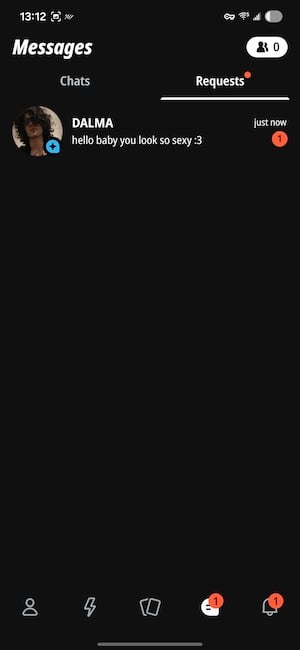
Image: Jessica Santero | WhistleOut
The first profile that popped up in my feed was a shirtless man. Again, this is supposed to be a friendship app, not a dating platform. But the content and behavior on BeFriend blur that line constantly. So much so that another BeFriend user posted to Reddit, saying, "Between the Asian fetishists, mommy's basement boys, and one persistent stalker, I had to drop the whole concept... The bulk of profiles are either bots or catfish... On paper, anyone can claim to be anything."
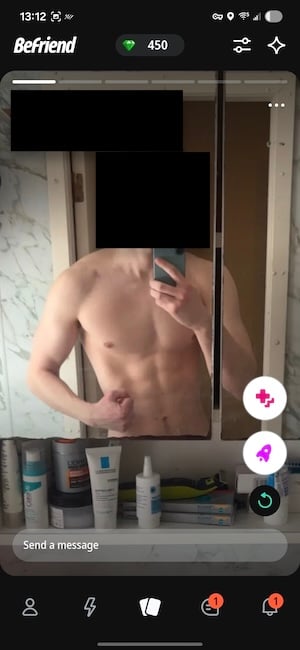
Image: Jessica Santero | WhistleOut
Needless to say, I deleted and uninstalled BeFriend immediately. I wasn't about to waste my time wading through inappropriate messages and questionable profiles just to maybe find one genuine person looking for actual friendship.

Yubo started for teens, but became 18+ because everyone wanted to flirt
- Adult-only live-streaming app.
- Feels more like a dating pool than a friendship platform.
Yubo was originally designed as a friendship app for teenagers, complete with parental consent requirements and age verification features. But in 2024, the company made a significant pivot and announced it was becoming an 18+ app.
According to Yubo's own blog post, "This transition has been in motion for the past year, dating back to when 92% of responding Yubo users said in a 2024 survey that they'd prefer us to be adult-only." The app marketed as a safe space for teens to make friends was actually being used by hormonally inclined users who wanted to flirt and hook up. So Yubo just leaned into it and kicked out the underage users entirely.
I didn't like the video format, whatsoever. Sending videos of yourself to strangers on a platform that clearly has a flirting problem doesn't exactly scream "safe friendship app." And I didn't stick around long enough to encounter whatever uncensored content might be lurking in those live streams.
Other users have also suffered the same Yubo misfortune, with one Redditor ranting, "It mostly seems like people who just want hookups/dates. Almost exactly like Tinder... Everyone was super immature, and the app felt like a waste of time where men consistently asked to be [sexually explicit act]. Deleted it."
Yubo might work for what it actually is, which appears to be a video-based platform for flirting and casual connections with an 18+ user base. But if you downloaded it hoping to find genuine friendships, you're using the wrong app for the job.
How WhistleOut reviews apps
Our mobile experts test apps extensively before recommending or warning against them. For this review, I spent one full month actively using Bumble BFF and Yubo to evaluate their functionality, user experience, and whether they deliver on their promises.
- Real-world testing
I created genuine profiles, attempted to match with and message other users, attended events when possible, and evaluated whether each app facilitated actual friendships or just wasted time. - Honest assessment of monetization
We evaluate whether apps are transparent about costs, whether paywalls are reasonable or limiting, and whether free versions provide genuine value or are designed to push upgrades. - User experience matters
Beyond functionality, we assess whether apps respect users' time, make deletion straightforward, and deliver on their marketing promises.
From there, we weigh each app's pros and cons and determine whether it's worth downloading, worth paying for, or worth skipping. In the case of Bumble BFF and Yubo, each has significant limitations that may make them less effective for adults genuinely looking to build friendships.
Jessica Santero
Staff Writer

Find a better phone plan
Thousands of cell phone plans unpacked. All the facts. No surprises.


.png?w=280&h=280&usm=20&usmrad=0.8&fit=crop "Best Cell Phone Deals for June 2026: Get the New iPhone 17 for Free")