Apple iPhone 14 Review
- Cutting-edge safety features
- Excellent camera system
- Beefy A15 Bionic processor
The iPhone 14 arrives as Apple's best smartphone to date. Sporting an impressive array of features, including satellite connectivity, an enhanced TrueDepth camera, and crash detection, it's an excellent all-around handset.
Thankfully, Apple kept pricing the same. While we'd prefer a processor upgrade and notch-less design, Apple's iPhone 14 is still a fantastic piece of kit. But is this the right iOS handset for you? Find out in our iPhone 14 review.
PSA: The iPhone 15 is out! In our iPhone 15 review, we liked its USB-C connectivity, 48MP main camera, and A16 Bionic processor. If you're thinking about upgrading from an iPhone 14 or even 13, the iPhone 15 may not be worth it because of iterative improvements. But for folks with older iphones or those that just want the latest and greatest, the iPhone 15 is a compelling choice. Learn why you should (or shouldn't) get one in our hands-on iPhone 15 review!
Is the iPhone 14 right for you?
The iPhone 14 sports a familiar design, notch and all. While it still rocks an A15 Bionic processor, it's at least the five-core GPU variant from the iPhone 13 Pro and Pro Max for a marginal upgrade. Satellite-to-cellular support, crash detection, and an improved TrueDepth camera system make the iPhone 14 a compelling purchase.
What we love
- TrueDepth camera update
- Satellite communications
- Crash detection
- Long battery life
What could be improved
- Negligible processor upgrade
- Not notch-less
- eSIM only
iPhone 14 specs at a glance
- Performance: Five-core A15 Bionic processor
- Battery: Up to 20 hours video playback, 16 hours video streaming, or up to 80 hours audio playback
- Screen: 6.1-inch Super Retina XDR OLED (2532 x 1170 pixels)
- Camera: 12MP primary camera (ƒ/1.5 aperture), 12MP ultrawide (ƒ/2.4 aperture) with 2x optical zoom and 5x digital zoom; 112MP TrueDepth camera (ƒ/1.9 aperture) with autofocus
90/100
Why We Recommend the iPhone 14

The iPhone 14 is an outstanding flagship phone with best-in-class cameras and cutting-edge features. Let's explore what we love about Apple's 14th-generation iPhone and areas for improvement.
What we like: Excellent cameras
Apple graces the iPhone 14 with three total cameras. You'll find a rear-facing dual-camera system with 12MP wide and 12MP ultrawide shooters. On the front, a 12MP TrueDepth selfie camera includes autofocus for crisper selfies. Its primary camera also gets a worthy upgrade that gives you better low-light performance, perfect for capturing nighttime shenanigans at pub trivia or early evening trips to the dog park. Though its low-light performance does fall slightly behind the Samsung Galaxy S23.
You’ll also find additional camera modes compared to the previous-gen iPhone 13. Cinematic Mode boasts 4K 30 frames per second (fps) and 4K 24fps compatibility. There's also an Action Mode with electronic image stabilization which smoothes out choppy video.
What we like: Satellite connectivity

Satellite-to-cellular communication is the next big advancement in mobile technology. T-Mobile partnered with SpaceX's Starlink to eliminate dead zones, and Huawei's Mate 50 series delivers satellite support. Accordingly, Apple now offers satellite connectivity on its iPhone 14 series.
The satellite-based emergency SOS support is a great feature when you're out of Wi-Fi or cell service range. Outdoor adventurers will appreciate this feature for backpacking trips with spotty coverage (but we're hoping you won’t need this feature).
What we like: Crash detection
Apple debuted crash detection in the iPhone 14, as well as the Apple Watch Series 8. If you're in a car crash (and let's hope you're not), your phone automatically recognizes the situation and communicates with local emergency services.
We're unsure how effective this feature is and don't plan to test it out by intentionally crashing a car (although my 2000 Toyota Camry is probably a decent test subject). Nevertheless, crash detection is a nice feature for worst-case scenarios.
What we like: Long-lasting battery
Apple touts that the 14 yields the best-possible battery life on an iPhone to date. You can expect up to 20 hours of video playback, 16 hours of video streaming, and 80 hours of audio playback. That's up across the board from the iPhone 13's 19 hours of video playback, 15 hours of video streaming, and 75 hours of audio playback.
What we don't like: Retains the notch
The iPhone 14 Pro and Pro Max nix the notch in favor of a functional, pill-shaped Dynamic Island, but the iPhone 14 and 14 Plus keep it. While we don't mind the notch, which houses the iPhone's TrueDepth sensor and 12MP camera, some folks prefer a more modern notch-less design. If you don't like the notch, you may consider an upgrade to an iPhone 14 Pro or Pro Max. The 14 Pro's Dynamic Island offers neat capabilities to display a larger notification area or more app controls.
What we don't like: Marginal updates
Outside of its camera and niche features like crash detection or satellite communication, most of the iPhone 14's upgrades are fairly iterative. You'll find an A15 Bionic processor under the hood, but with the five-core GPU variant previously found in the iPhone 13 Pro and Pro Max. For iPhone 13 or 13 mini users, it's an upgrade over the four-core GPU version. Nevertheless, we'd prefer a larger upgrade for all models in the 14 series.
What we don't like: eSIM only
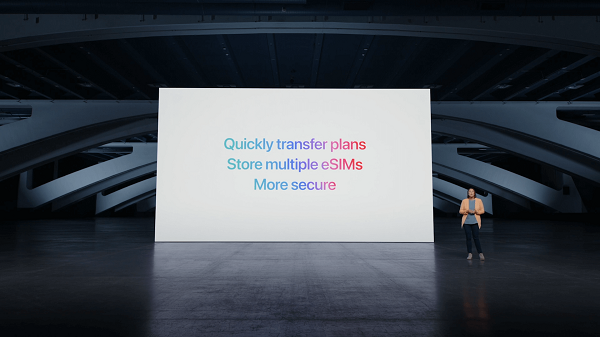
Apple continually streamlines its phones, with the headphone jack a notable casualty. Now we can add the physical SIM card slot to the list of features we’ll miss. The 14 series is now eSIM only, at least in the United States. While most major carriers (Verizon, T-Mobile, and AT&T) support eSIM alongside many mobile virtual network operators (MVNOs), this change limits international travel and compatibility with smaller carriers.
When traveling globally, buying a local SIM card lets you avoid expensive international roaming fees, but support for foreign eSIMs is decidedly shaky. Additionally, only select carriers support eSIM quick transfer for switching carriers. Check out the best eSIM plans on the planet to pick out service for your iPhone.
iPhone 14 Specs
The iPhone 14 is an all-around spectacular device, from its display to cameras and processor. Let's look at the Apple iPhone 14's most notable features.
iPhone 14 cameras

The Apple iPhone 14 sports a dual-camera array with 12MP wide and 12MP ultrawide shooters. Although it's largely unchanged from the iPhone 13, the primary wide-angle lens features a larger aperture which translates to better low-light photography. Your early evening and nighttime pictures should look brighter.
Its TrueDepth front-facing camera benefits from autofocus, improving your selfies. And for video, Apple ups the ante to 4K 30 FPS or 24 FPS shooting. There's also electronic image stabilization which smooths out shaky camera footage, so no more Blair Witch Project-esque vids.
iPhone 14 display
The iPhone 14 packs a 6.1-inch Super Retina XDR OLED with a 2532 x 1170 pixel panel. Its bright, beautiful display looks great for playing Halo on Xbox Game Pass, streaming Paper Girls on Amazon Prime Video, or scrolling through food pics on Instagram.
Five-core GPU A15 Bionic processor
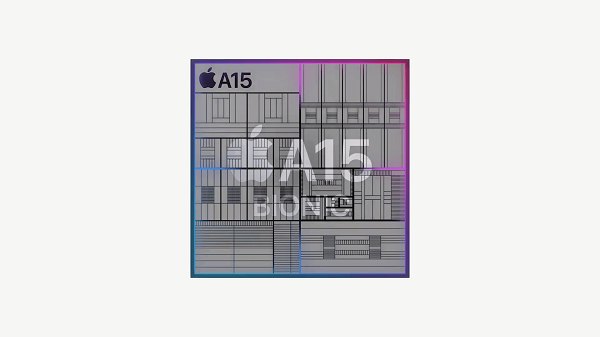
On the surface, the iPhone 14's processor remains unchanged; indeed, it's a holdover from the iPhone 13. At their core, the iPhone 14 and its 14 Plus sibling feature an A15 Bionic processor rather than the fresh A16 Bionic chip in the 14 Pro and Pro Max. However, it's the five-core GPU and six-core CPU variant found in the previous-gen 13 Pro and Pro Max. And since Apple also provides an enhanced thermal system, there's potential for better battery life and minor performance improvements.
iPhone 14 colors
The iPhone 14 comes in five colors: Midnight, Starlight, Blue, (PRODUCT)RED, and Purple. Although the new purple color is purely aesthetic, it's one of our favorite changes the iPhone 14 ushers in.
Storage capacity
Apple's base iPhone 14 model comes with 128GB of storage space. There are also 256GB and 512GB options for holding more apps, games, and music files.
Safety features
You'll find a pair of important new safety features on the iPhone 14: car crash detection and emergency SOS communications services via satellite. Notably, the Apple Watch 8 provides car crash detection, while the Apple Watch Ultra includes crash detection and satellite emergency SOS support. Therefore, if you've got an older iPhone and don't want to upgrade just yet, you can still enjoy bleeding-edge safety features without shelling out for a new handset.
iPhone 14 cost
Impressively, Apple kept the iPhone 14's price unchanged from the 13. Ahead of its release, we speculated that rising inflation might drive up the 14's price tag (we won't complain about being wrong). The base 128GB iPhone 14 model starts at $799. Here are the prices for the iPhone 14 lineup:
- Apple iPhone 14: $799
- Apple iPhone 14 Plus: $899
- Apple iPhone 14 Pro: $1,099
- Apple iPhone 14 Pro Max: $1,199
iPhone 14 vs. Competitors
Now that we've established what we like and a few minor critiques about the iPhone 14, let's see how it stacks up against Apple iPhones past and present.
iPhone 13 vs. iPhone 14
| iPhone 13 | iPhone 14 | |
|---|---|---|
| Camera | ||
| Processor | ||
| Screen | ||
| Battery life | ||
| Storage and RAM | ||
| Color options | ||
| Price | ||
| View plans | View plans |
The iPhone 14 is undoubtedly a better device than its predecessor. While its iterative updates mean iPhone 13 and even iPhone 12 users won't necessarily want to rush out and purchase a new handset, older iPhone owners can get a drastically improved device. From its camera with improved low-light performance to an A15 Bionic chip with an extra GPU core, the iPhone 14 trounces the 13.
See how the iPhone 14 compares to non-Apple devices like the Google Pixel 7 and the Samsung Galaxy S23.
iPhone 14 model comparison

While the iPhone 14 offers minor improvements over the iPhone 13, let's explore the entire iPhone 14 model lineup so you can decide which iOS device is right for your needs. Like with previous generations, Apple splits its phones into two tiers: the base iPhone and the Pro series. But Apple dropped its pocket-friendly iPhone mini in favor of the new iPhone 14 Plus.
Both the iPhone 14 and 14 Plus share virtually the same specs. The main difference is the Plus's 6.7-inch display, up from the vanilla iPhone 14's 6.1-inch screen. Most folks will love the iPhone 14's high-quality camera, blazing-fast processor, and lovely display. For even more screen real estate without breaking the bank, the iPhone 14 Plus is a good compromise.
Stepping up to the iPhone 14 Pro and Pro Max is where spec comparisons get interesting. The Pro and Pro Max feature the same respective 6.1-inch and 6.7-inch screen sizes as their 14 and 14 Plus younger siblings. You'll enjoy a fast A16 Bionic processor, plus a Dynamic Island as a virtual notification and app control area for a notch-less design. There's also an always-on display, a 48MP camera, and a 1TB storage variant. We recommend the iPhone 14 Pro and Pro Max for enthusiasts like serious photographers, hardcore videographers, and mobile gamers.
iPhone 14 models compared
| iPhone 14 | iPhone 14 Plus | iPhone 14 Pro | iPhone 14 Pro Max | |
|---|---|---|---|---|
| Display | 6.1” 2532 x 1170 pixels Super Retina XDR OLED |
6.7” 2778 x 1284 pixels Super Retina XDR OLED |
6.1" 2556 x 1179 pixels Super Retina XDR OLED |
6.7" 2796 x 1290 pixels Super Retina XDR OLED |
| Storage capacity | 128GB 256GB 512GB |
128GB 256GB 512GB |
128GB 256GB 512GB 1TB |
128GB 256GB 512GB 1TB |
| Processor | A15 Bionic (five-core GPU) | A15 Bionic (five-core GPU) | A16 Bionic | A16 Bionic |
| Cameras | Wide: 12MP ƒ/1.5 UW: 12MP ƒ/2.4 |
Wide: 12MP ƒ/1.5 UW: 12MP ƒ/2.4 |
Wide: 48MP ƒ/1.78 UW: 12MP ƒ/2.2 UW 2x telephoto: 12MP ƒ/1.78 UW 3x telephoto: 12MP ƒ/2.8 |
Wide: 48MP ƒ/1.78 UW: 12MP ƒ/2.2 UW 2x telephoto: 12MP ƒ/1.78 UW 3x telephoto: 12MP ƒ/2.8 |
| Safety features | Satellite emergency SOS Crash detection |
Satellite emergency SOS Crash detection |
Satellite emergency SOS Crash detection |
Satellite emergency SOS Crash detection |
| Battery life | 20 hours video playback 16 hours video streaming 80 hours audio playback |
26 hours video playback 20 hours video streaming 100 hours audio playback |
23 hours video playback 20 hours video streaming 75 hours audio playback |
29 hours video playback 25 hours video streaming 75 hours audio playback |
| Starting price | $799 | $899 | $999 | $1,099 |
| View plans | View plans | View plans | View plans |
Recap: Is the iPhone 14
Right for You?
On the surface, the iPhone 14 doesn't deviate much from the iPhone 13. Nevertheless, marginal overall upgrades combine for an upgrade many people will find worthwhile, making the 14 the best iPhone for most folks. While improvements might not incentivize iPhone 13 or 12 users to order an iPhone 14 immediately, folks with older iOS devices (or switching from Android) will appreciate Apple's innovation.
In particular, we appreciate the iPhone 14's terrific camera system, useful safety features, and battery life.
Here's what you get from the iPhone 14:
- Excellent cameras
- Fantastic processor
- Gorgeous display
- Satellite emergency SOS support
- Car crash detection
- eSIM compatibility
- Best-in-class battery life
We'd like a notch-less design, although that's available on the iPhone 14 Pro series. The lack of a physical SIM card slot is a bummer but only impacts edge cases like frequent international travelers. Ultimately, the iPhone 14 is once again Apple's best phone. While it's not leaps and bounds better than the iPhone 13, state-of-the-art amenities like satellite emergency SOS and car crash detection make it a worthy successor to an already exceptional device.
Ready to make the leap to the iPhone 14? Check out the latest pricing below.
iPhone 14 128GB Plans

|
#1
|
Tello

Unlimited Text, 300 Minutes, and 2GB Plan
$8.00/mo
+ $429 Upfront
|
|
#2
|
Visible

$30 Visible+ Plan
$30.00/mo
Taxes & Fees included
+ $629 Upfront
Out of stock
|
|
#3
|
GoTalk Wireless

SafeSim Regular Consumer Plan
$15.00/mo
$45.00 advance payment for 3 months (equals to $15.00/month)
+ $799 Upfront
|
Methodology
Our team of mobile experts took data from proprietary research and user feedback to evaluate the iPhone 14 according to price, performance, and everyday usability. More specifically, we analyzed its camera quality, battery life, and screen. We compared the iPhone 14 not only to the iPhone 13, but also to the iPhone 14 Plus, 14 Pro, and 14 Pro Max. Additionally, we contrasted the iPhone 14 with dozens of Android handsets and older iPhone models.
Frequently Asked Questions
What is so special about the iPhone 14?
The iPhone 14 includes advanced safety features, improved battery life, and an upgraded processor, making it Apple's best phone. Notably, its crash detection and satellite SOS communication capabilities make it a unique handset.
Is there a difference between the iPhone 13 and 14?
Yes, there is a difference between the iPhone 13 and iPhone 14. Apple's 14th-generation iOS device packs a slightly more powerful processor, improved primary camera sensor, and a new purple color option. Furthermore, the iPhone 14 includes emergency SOS services via satellite and crash detection.
What was the iPhone 14's release date?
The iPhone 14 was released on September 16, 2022.
How much does an iPhone 14 cost?
The iPhone 14 starts at $799 for the 128GB model. The 256GB variant sets you back $899, while the 512GB version goes for $1,099.
Does the iPhone 14 have a SIM slot?
No, the iPhone 14 in the United States does not have a physical SIM card slot, instead opting for eSIM support.
What colors does the iPhone 14 come in?
The iPhone 14 comes in five colors: midnight, blue, starlight, purple, and (PRODUCT)RED.
Will the iPhone 14 have a Pro tier?
Yes, the iPhone 14 has a Pro tier. There are four versions in total: iPhone 14, 14 Plus, iPhone 14 Pro, and 14 Pro Max.
Will the iPhone 14 have three cameras?
No, the iPhone 14 does not have three cameras. Instead, it features a rear-facing dual-camera system alongside a single front-facing camera.
.jpg?w=1000 "iPhone 14 Release")

Moe Long
Senior Writer

Thousands of cell phone plans unpacked. All the facts. No surprises.






.png?w=280&h=280&usm=20&usmrad=0.8&fit=crop "The Best Cheap Phone Plans for 2026: We Tested Them All to Help You Save")