Apple unveiled the iPhone 14 series at a September 7, 2022 event. The iPhone 14 offers small upgrades over the iPhone 13, with the biggest changes found in the iPhone 14 Pro models.
While much about the iPhone 14 will seem familiar, there are enough new features to warrant an upgrade in most circumstances, especially if you value photography or outdoor activities.
How does the iPhone 14 compare with the iPhone 13? Find out as we explore prices, hardware, software, camera features, and more.
How we evaluated the iPhone 14 vs. iPhone 13
- Price & value We ensured you’re getting the most bang for your buck without sacrificing on the essentials to keep you connected.
-
Processing power
We looked at whether the device's processor is worth the sticker price. -
Battery life
There's nothing worse than running low when you're on-the-go. We tested whether the handset will last through the day. -
Camera quality
Smartphones have become some of the best cameras on the market. We weighed whether or not these cameras hold up to others on the market.
You can read more about our detailed methodology below.
iPhone 14 vs. iPhone 13 Summary
 |
 |
|
|---|---|---|
| Price |  |
|
| Display | |
|
| Processor | |
|
| Camera | |
|
| Battery Life | |
|
| Connectivity | |
|
| Design | |
|
| iPhone 14 Plans | iPhone 13 Plans |
iPhone 14 vs. iPhone 13: Specs
The iPhone 14 lineup includes the iPhone 14, the brand-new iPhone 14 Plus, and the much-loved Pro models (iPhone 14 Pro and Pro Max). Gone is the experimental "mini" model, which is still an option for the iPhone 13, as well as the 13 Pro and Pro Max options.
Let’s do a quick rundown on how the specs of the base model iPhone 14 compare with those of the base model iPhone 13.
iPhone 14 vs. iPhone 13: Specs
| iPhone 14 | iPhone 13 | |
|---|---|---|
| Starting price | From $699 | From $599 |
| Display | 6.1” 120Hz Super Retina XDR |
6.1” 120Hz Super Retina XDR |
| Processor | A15 Bionic (A16 Bionic on Pro models) |
A15 Bionic (all models) |
| Main camera | Dual-lens 12MP main @ ƒ/1.5 12MP ultra-wide @ ƒ/2.4 2x optical/5x digital zoom Deep Fusion Photonic Engine |
Dual-lens 12MP main @ ƒ/1.6 12MP ultra-wide @ ƒ/2.4 2x optical/5x digital zoom Deep Fusion |
| TrueDepth front camera | 12MP @ ƒ/1.9 Cinematic mode up to 4K Autofocus Photonic Engine |
12MP @ ƒ/2.2 Cinematic mode up to 1080p |
| Video recording | 4K HDR Cinematic mode (up to 4K) Action mode |
4K HDR Cinematic mode (up to 1080p) |
| Internal memory | 128GB 256GB 512GB |
128GB 256GB 512GB |
| Battery life | Up to 20 hours video | Up to 19 hours video |
| Connectivity | 4G LTE 5G (sub-6 GHz, mmWave) Bluetooth 5.3 Emergency SOS via satellite |
4G LTE 5G (sub-6 GHz, mmWave) Bluetooth 5.0 |
| Water resistance | IP68 | IP68 |
| Colors | Blue Purple Midnight Starlight (PRODUCT) RED |
Green Pink Blue Midnight Starlight (PRODUCT) RED |
iPhone 14 vs. iPhone 13: Price
Since Apple discontinued the iPhone mini option on the 14 series, the standard iPhone 14 is now the cheapest and most basic option available. Apple also reintroduced the larger of its base models with the iPhone 14 Plus.
- iPhone 14: $699
- iPhone 14 Plus: $799
As the storage capacity increases, so will the price. We recommend evaluating how much storage space you need before choosing a model.
iPhone 14 128GB

| Description | |
|---|---|
| Screen Size | 6.1" |
| Available On | 34 Plans from 3 carriers |
| Available From |


|
| Priced From | $8 per month + $429 upfront |
| View Full Details |
 Apple's 2022 model featuring new dual camera system with improved technology for low light photos, increased battery life, access to emergency services via satellite, and recycled gold wiring

The iPhone 13 starting price is just $100 cheaper, at $699, while the iPhone 13 mini comes in at an even more wallet-friendly $599. Naturally, the iPhone 13 prices dropped with the introduction of the newer iPhone 14 suite.
Winner: iPhone 13
iPhone 14 vs. iPhone 13: Display
Like the iPhone 13 and 13 Pro, the iPhone 14 and 14 Pro have a 6.1-inch display. Displays on the iPhone 14 Plus and Pro Max come in at 6.7 inches, the same size as the iPhone 13 Pro Max.
The specs of the iPhone 14 display are virtually identical to the iPhone 13, right down to the 2532 x 1170 pixel resolution, with standout differences between the iPhone 14 Pro and Pro Max models. Those models have a 2556 x 1179 pixel resolution, ProMotion adaptive refresh rates, and a 2000 nits peak brightness. The screen on the top-end models is the brightest of any smartphone currently on the market. And if you spring for the iPhone 14 Pro Max, you’ll get a 2796 x 1290 pixel screen, which produces a slightly sharper view.

Always-On display
The Always-On display—a feature on Android for quite some time—finally makes its way to iOS via the iPhone 14 Pro and Pro Max models. With an Always-On display, your phone’s lock screen will remain on. The feature dims your phone’s wallpaper but brightens the time, widgets, and any live activities on your device so you can clearly see them. It’s sure to be a welcome addition for any former Android users.
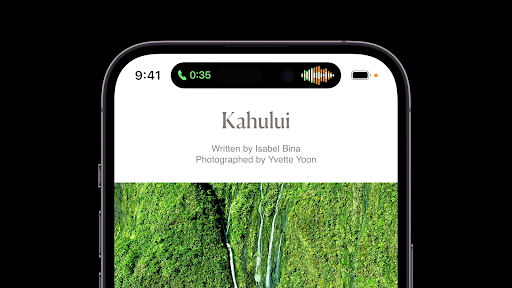
Dynamic Island
Apple is getting close to eliminating the infamous “notch” on its Pro models. The notch is the section of black space at the top of iPhone screens that surrounds the TrueDepth camera array. With the introduction of Dynamic Island, this area comes alive.
Dynamic Island provides a live look at notifications and background processes running on your iPhone. It’s constantly adapting in real time and shows phone calls, timers, music, and even live sports scores. If you have more than one process running in the background, the island can divide itself to show your current music or timer, all without leaving the app you’re in.
While the standard iPhone 14 display isn’t a massive upgrade over the iPhone 13 model, the Always-On display and Dynamic Island features of the 14 Pro and Pro Max are exciting enough to give the 14 series the win here.
Winner: iPhone 14
iPhone 14 vs. iPhone 13: Processors
The iPhone 14 models rely on the A15 or A16 Bionic processors, depending on your model. iPhone 13 series models use the A15 Bionic processor.
iPhone processor comparisons
| iPhone 13/13 mini | iPhone 13 Pro/Pro Max iPhone 14/14 Plus |
iPhone 14 Pro/Pro Max |
|---|---|---|
| A15 Bionic chip | A15 Bionic chip | A16 Bionic chip |
| 6-core CPU (2 performance and 4 efficiency cores) | 6-core CPU (2 performance and 4 efficiency cores) | 6-core CPU (2 performance and 4 efficiency cores) |
| 4-core GPU | 5-core GPU | 5-core GPU |
| 16-core Neural Engine | 16-core Neural Engine | 16-core Neural Engine |
A15 Bionic chip
It is true that the iPhone 14 and 14 Plus use the same A15 Bionic Processor as the iPhone 13 models, but that’s not the whole story. The iPhone 14 uses the faster model of the chip in the iPhone 13 Pro and Pro Max, offering a 6-core CPU and 5-core GPU. An extra GPU core makes the iPhone 14 18% faster than the previous generation, offering better performance during tasks that use a lot of processing power, like mobile gaming.
A16 Bionic chip
Only the iPhone 14 Pro and Pro Max received the A16 Bionic chip, Apple’s newest generation of processors. It is currently the fastest chip ever put into a smartphone. Apple claims it is 40% faster and uses one-third less power than the closest competitor. This processor makes the iPhone 14 Pro and Pro Max handle intensive processing tasks like the Pro camera system, mobile gaming, and shooting 4K video easily—all while using less energy than previous generation chips.
Winner: iPhone 14
iPhone 14 vs. iPhone 13: Cameras
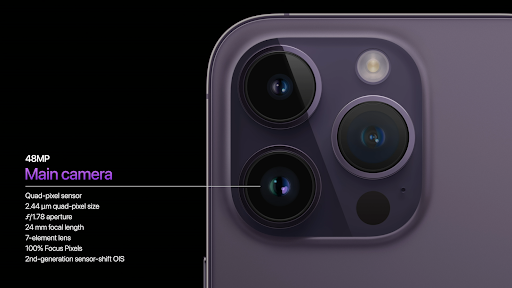
Camera quality is a top concern for most smartphone users, and the iPhone 14 lineup doesn’t disappoint. The iPhone 14 and 14 Plus have a similar dual-camera arrangement to the iPhone 13 and 13 mini, but with improved features. On the iPhone 14, there’s a new 12MP camera with a larger sensor and a faster ƒ/1.5 aperture. This sensor allows better motion shots and shows more vibrant colors, textures, and detail. The new cameras also boast a 49% improvement in low-light captures.
- iPhone 14/14 Plus:
- Dual-camera array
- Main: 12MP, ƒ/1.5 aperture
- Ultra-wide: 12MP, ƒ/2.4 aperture
- 2x optical zoom out, digital zoom up to 5x
- True Tone flash
- iPhone 14 Pro/Pro Max:
- Triple-camera array
- Main: 48MP, ƒ/1.5 aperture
- Ultra-wide: 12MP, ƒ/2.2 aperture
- Telephoto: 12MP, ƒ/2.8 aperture
- 3x optical zoom in, 2x optical zoom out, digital zoom up to 15x
- Adaptive True Tone flash
The iPhone 14 Pro models also capture light up to three times better than the iPhone 13 and boast a completely redesigned flash feature. The flash is now twice as bright and intelligently adapts to the focal length of each photo.
Video recording and Action Mode
The recording capabilities of the iPhone 14 lineup are similar to the iPhone 13 Pro models, keeping them a step above the regular iPhone 13. You’ll get 4K recording at 30 fps (frames per second) and 24 fps in Cinematic mode on the iPhone 14. Higher frames per second mean capturing greater detail and smoother motion in all your videos.
The debut of Action Mode is the biggest change to video recording in the iPhone 14 lineup. Think of Action Mode as an enhanced stabilization mode for high-action videos. It’s also Apple’s attempt to dethrone GoPro as your top piece of adventure camera equipment. If you’ve tried running while recording, you’ve probably seen how the shaking can ruin your video. With the latest iPhone, you can record silky-smooth, shake-free video in 4K.
Winner: iPhone 14
iPhone 14 vs. iPhone 13: Battery Life
The iPhone 14 introduces the best battery ever put in an iPhone. Apple claims all models in the 14 series have all-day battery life and intelligent features designed to help reduce battery consumption.
While the iPhone 14 is clearly on top, you may not see a major difference if you’re thinking about upgrading from the iPhone 13. The iPhone 14 only has a one-hour increase in battery life over the iPhone 13. It’s the same story with the 14 Pro and 13 Pro. So, unless you upgrade from a much older iPhone (especially one with a dying battery), you won’t see a massive difference.
Winner: iPhone 14
iPhone 14 vs. iPhone 13: Connectivity
The iPhone 14 and 13 boast great 5G connectivity and will work with 4G LTE networks. However, US models of the iPhone 14 will only use eSIM technology instead of a physical SIM card. That change is something to keep in mind if you frequently travel to destinations without networks supporting eSIM capabilities.
Emergency SOS via satellite

The big connectivity development for the iPhone 14 lineup is Emergency SOS via satellite. This feature gets you help when you’re in remote, outdoor locations without a standard signal. You’ll now be able to point your iPhone at low-orbit satellites in the sky to send text-based emergency messages. Apple is even setting up relay centers to forward messages to emergency departments without text-based communications. This service is free on all iPhone 14 models for two years. It’s unclear what the pricing will look like after that.
Crash detection
The other new development for iPhone 14—and Apple Watch Series 8—is Crash Detection. In the event of a car crash, your iPhone and watch will automatically connect you to emergency services. The feature uses the existing components of the iPhone and watch—like the barometer for pressure changes, microphone for loud noises, and GPS to determine sudden stops—to detect a crash.
The introduction of new safety features like Emergency SOS and Crash Detection on all iPhone 14 models is a big deal and handily gives it the win for this category.
Winner: iPhone 14
iPhone 14 vs. iPhone 13: Design

Design-wise, the iPhone 14 is nearly the same as the iPhone 13. The camera array and buttons are the same, and the new generation brings back the Ceramic Shield front screen for extra protection. It also has the same IP68 water-resistance rating, meaning your device should withstand 4 meters of water for up to 30 minutes.
Color options
The iPhone 14 lineup introduces new colors but has fewer options than the 13 lineup overall. For the iPhone 14 and 14 Plus, your options are blue, midnight, starlight, (PRODUCT) RED, and purple (the new color on the block). Missing are the green and pink options from the iPhone 13.
The iPhone 14 Pro models followed a similar trend, introducing a new color while losing two in the process. It comes in space black, silver, gold, and a new deep purple. The alpine green and Sierra blue options from the 13 Pro models are gone.
Since the 13 series offers more color options, the iPhone 13 wins this category. However, if you want to score that new deep purple color—which looks great—the iPhone 14 is your only option.
Winner: iPhone 13
iPhone 14 vs. iPhone 13: Verdict
The iPhone 14 is the winner because there’s a lot to love about the new lineup. New safety features like crash detection and Emergency SOS are impressive. Add in new camera features like Action Mode or a 48MP main sensor, and it’s clear that the 14 outpaces the iPhone 13.
That said, many of the most impressive features of the iPhone 14 lineup—like the Always-On display, 48MP camera, or A16 Bionic processor—require purchasing one of the Pro models. The iPhone 14 and 14 Plus actually feel more closely related to the iPhone 13 Pro models since they share a processor and feature similar designs, camera specs, and interfaces.
If you’re considering upgrading from the iPhone 13 to the new lineup, you’ll probably need to spring for a 14 Pro model to see a massive difference. For anyone with an iPhone 12 or earlier model phone, the iPhone 14 is a great potential upgrade.
Winner: iPhone 14
Methodology: How WhistleOut evaluates cell phones
Our experts performed hours of hands-on testing to evaluate the iPhone 14 and 13. We leveraged data from proprietary research and user feedback to review the iPhones' processing power, camera quality, battery life, and design. After an initial review of the phone, we also compared the phones to other previous Apple flagship devices and phones from other manufacturers.
Max McCaskill
Sr. Staff Writer

Thousands of cell phone plans unpacked. All the facts. No surprises.





.png?w=280&h=280&usm=20&usmrad=0.8&fit=crop "The Best Cheap Phone Plans for 2026: We Tested Them All to Help You Save")