EDITOR'S NOTE:
Since their release dates in 2020 and 2021, the iPhone 12 and Samsung Galaxy S21 have been replaced by newer iPhone and Galaxy S-series models. Although several years old, the iPhone 12 still supports the latest iOS version, and the Galaxy S21 still receives the latest Android software updates.
The information below reflects the data and pricing at the time of the devices' releases, and availability will differ from when we first reviewed them. You can upgrade to a newer iPhone or new Galaxy phone, or you may still be able to find refurbished models of these devices through retailers such as Amazon or eBay.
The Samsung Galaxy S21 and the Apple iPhone 12 are currently the two hot flagship series from each mobile phone giant.
The best choice between the two really depends on your preferred operating system: Android or iOS. While each has its strengths, at the end of the day, iPhone lovers will love the iPhone, and Android lovers will love the S21.
In the event of the rare person who's on the fence, we looked at both series to see how they stack up against each other in categories like, pricing, display, size, cameras, and performance.
Samsung Galaxy S21 and iPhone 12 Lineups
Comparing the iPhone 12 to the Samsung Galaxy S21 isn't quite as simple as pitting a single device against another—each series is made up of multiple devices.
The Samsung Galaxy S21 series comes in the base S21 model, a slightly beefed up S21+, and a very upgraded S21 Ultra. Meanwhile, the latest iPhone series includes the base iPhone 12, the diminutive iPhone 12 mini, a technically advanced iPhone 12 Pro, and the uber-advanced (and bigger) iPhone 12 Pro Max.
With the exception of the iPhone 12 mini, each model has a similar counterpart across both series. These comparable models include the following:
- Samsung Galaxy S21 and iPhone 12
- Samsung Galaxy S21+ and iPhone 12 Pro
- Samsung Galaxy S21 Ultra and iPhone 12 Pro Max
Samsung Galaxy S21 and iPhone 12 Specs
To get an idea of how the iPhone 12 and Samsung Galaxy S21 stack up against each other, check out this comparison chart of the base models from each phone series.
| Samsung Galaxy S21 | iPhone 12 | |
|---|---|---|
| Display | 6.2” AMOLED | 6.1” OLED |
| Camera | 12MP main and ultrawide 64MP zoom camera | 12MP main and ultrawide |
| Dimensions | 71x151.7x7.9mm | 71.5x146.7x7.4mm |
| Storage | 128GB 256GB | 128GB 256GB 512GB |
| Processor | Snapdragon 888 Octa-Core | A14 Bionic |
| Starting Price | $799.99 | $799 |
Performance
Smartphones have already been extremely fast for years, more than capable of handling everyday demands. The average user might not even be able to discern major performance differences from one year to the next. Still, the big phone manufacturers make certain their new phones are able to technically outdo their old ones.
Driving those annual performance boosts are upgraded processors. Apple's A Bionic chips have been the cream of the crop for the past few years, and the latest 2.99 GHz A14 Bionic is no exception. It’s blazing fast and will have you smoothly running through all of your iPhone's apps and functionality with no hiccups.
That’s not to say the Snapdragon 888 in the Samsung Galaxy isn’t a solid processor. In fact, it’s probably the best one you can get in a non-Apple phone—it would take using the S21 and iPhone 12 side-by-side to really notice any difference in performance between the two. Again, these are two high-end series of smartphones, and you’ll get high performance from both. That said, the iPhone 12 still has the edge with its super-speedy responses and advanced capabilities.
Winner: iPhone 12
Galaxy S21 vs. iPhone 12: Cameras
Both the iPhone 12 series and S21 series have some of the best cameras you’ll find on any cell phone. Each has its own strengths, making it a bit tricky to really say which is best.
The iPhone 12 and 12 mini come with two rear-facing lenses, a 12MP main camera, and a 12MP ultra-wide. The iPhone 12 Pro and Pro Max models include a third 12MP telephoto lens for zoom. For selfies, you’ll be dealing with a front-facing 12MP camera on all iPhone 12 models.
You can learn more in our guide on the iPhone 12 cameras.
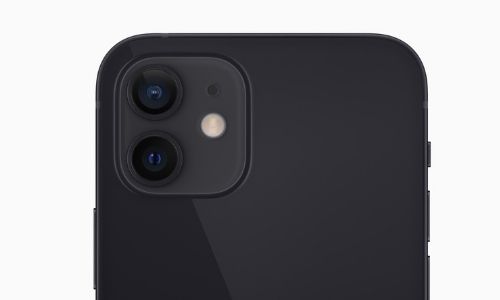
The Samsung Galaxy S21 and S21+ are packed with 12MP wide-angle, 12MP ultrawide, and 64MP telephoto lenses. The beefed-up Galaxy S21 Ultra has a quad-camera system, comprised of a 12 MP ultrawide lens, two 10MP telephoto lenses, and a whopping 108MP wide-angle lens. On the flip side, you’ll find 10MP selfie cameras on the S21 and S21+ and a 40MP selfie camera on the S21 Ultra.
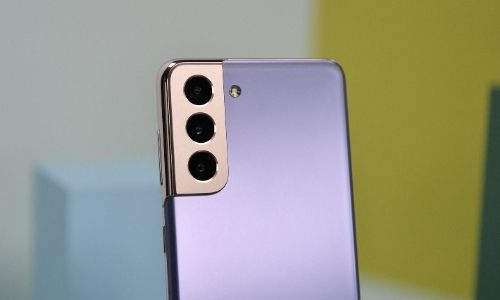
If you look at the lens specs alone, the Samsung S21 series might look like the more impressive setup; however, this only tells part of the story. Nowadays, most cameras on mobile devices are powered by software and computing systems behind the lenses that massively contribute to the sophisticated photos your phone can produce. Behind the strength of the A14 Bionic chip, the iPhone 12 might just have the edge in photography computation.
On the other hand, the Samsung Galaxy S21’s computation is powerful enough to support its Space Zoom, which can digitally zoom up to 30x on the S21 and S21+ or up to 100x on the Samsung Galaxy Ultra.
Meanwhile, Apple’s set of phones seems to take better pictures at night or in other settings where there isn’t a decent amount of natural light. The iPhone 12s seem to handle colors better than the S21 and don't wash away details quite like their Samsung counterparts.
All things considered, both series of phones have great camera systems, and like a lot of categories in this comparison, it largely comes down to personal preference. If zoom is important to you, the S21 might be the phone for you. If taking pictures in low light is your thing, the iPhone 12 could be your choice.
Winner: Tie
Design
Both of these series enjoyed some pretty significant design updates from their predecessors, but each still features the slim, slick look and feel we've become accustomed to with modern flagship devices. Each base model, the iPhone 12 and Galaxy S21, is pretty similar in size and weight. The S21 does have a plastic back—which could be one of the ways Samsung tried to keep costs down for this set of phones—but it doesn’t feel cheaply made. Meanwhile, the iPhone 12 devices have glass backs and feature squared edges that deviate from the rounded edges of the past few iPhone models, providing a better feel in your hands.
Samsung’s biggest change in design integrates the rear camera system into the back itself so that it feels more like it belongs. The iPhone 12 camera systems kind of feel like they were placed on the phone as an afterthought.
Winner:
Samsung Galaxy S21 for looks
iPhone 12 for build
Battery Life
The Samsung devices contain bigger batteries than the Apple phones do, but all seven phones should give you enough juice to last through a day and then some. However, despite the smaller battery size in the iPhone 12, its efficient processor and operating system might actually help to keep your phone working just as long as the Galaxy S21—and maybe even longer. Apple claims that the iPhone 12 battery is strong enough to power about 11 hours of streaming video. Meanwhile, Samsung hasn’t released data on its battery life, but we expect it doesn’t deviate very far from Apple’s device.
Winner: Tie
Display
Thankfully, screen size really isn’t an issue for either the iPhone 12 or Samsung Galaxy S21. The base model iPhone 12 features a 6.1" OLED display, while the base Galaxy S21 boasts a slightly larger 6.2" AMOLED display. The iPhone 12 also introduced a Ceramic Shield front, making the screen more drop-resistant than the basic Gorilla Glass screen on the Galaxy S21.
The big difference between these phones’ displays is in their refresh rates. The iPhone’s display refreshes at 60Hz, which is pretty standard for most mobile devices. Your video playback and scrolling will be pretty smooth on the iPhone 12—just not as smooth as they can be on the Samsung Galaxy S21s. That’s because the Samsung flagships feature a 120Hz refresh rate, over double the capability of the iPhone 12. This creates some of the most baby-bottom smooth displays we’ve seen on mobile devices. The downside: a 120Hz refresh rate will eat up your battery life, but you do have the option to cut back down to 60Hz.
Winner: Samsung Galaxy S21
Price
As you might expect, pricing for the Samsung S21 and iPhone 12 are pretty similar, with two notable exceptions. The first is that the S21 Ultra is about $100 more than the iPhone 12 Pro Max. The other big difference is that Samsung does not offer a miniaturized and cheaper version of the S21, where Apple has the iPhone 12 mini. These facts are just about all we need to call this very close category for the folks from Cupertino.
Winner: iPhone 12
Conclusion
You can't really go wrong buying any of the iPhone 12 or Samsung Galaxy S21 models. These are two of the top gladiators in the 5G-compatible cell phone game. For the five-millionth time, we’ll say it all comes down to preference. Apple lovers are going to fall hard for the iPhone 12, especially with how well it's supported by the newest iOS. Android lovers (AKA Apple haters) are going to adore the S21 lineup: these are the current Android kings. If you’re feeling adventurous and switching from one operating system to another, you’d be best served using either one of these devices to facilitate that switch.
Winner:
Samsung Galaxy S21 for Android users
iPhone 12 for iOS users
(…you saw that coming.)
Samsung Galaxy S21 5G 128GB

| Description | |
|---|---|
| Screen Size | 6.2" |
| Available On | 17 Plans from 2 carriers |
| Available From |


|
| Priced From | $10 per month + $499 upfront |
| View Full Details |
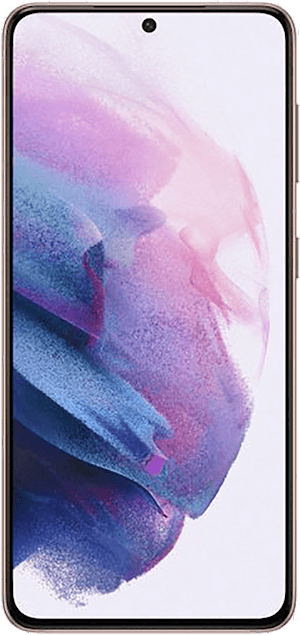
 Samsung’s 2021 Galaxy series phone with a 6.2” flat FHD+ Dynamic AMOLED display, triple rear telephoto, wide-angle and ultra-wide angle cameras, and in-screen Ultrasonic Fingerprint Sensor
iPhone 12 64GB

| Description | |
|---|---|
| Screen Size | 6.1" |
| Available On | 10 Plans from 2 carriers |
| Available From |

|
| Priced From | $10 per month + $249 upfront |
| View Full Details |
 Apple's 2020 model with dual 12MP Ultra Wide and Wide cameras with Night Mode, 5G speed, 6.1" Display Super Retina XDR display, Ceramic Shield, and MagSafe wireless charging

Angelo Ilumba
Senior Writer

Thousands of cell phone plans unpacked. All the facts. No surprises.




.png?w=280&h=280&usm=20&usmrad=0.8&fit=crop "The Best Cheap Phone Plans for 2026: We Tested Them All to Help You Save")