

We've all seen the relentless ads on YouTube videos and social media about free apps that will pay you to use them. I've always been skeptical that they actually work, but I finally decided to give one a shot.
With millions of downloads, high app store reviews, and a "Featured in Forbes" endorsement, I decided to test the COIN: Always Be Earning app for one month to see if I could actually generate passive income from my phone.
To be clear: COIN delivered on its promise. It was free to download, and I did actually earn around $8 from it running in the background of my phone for a month. The app also paid me to complete surveys, play games, and even scan products in grocery stores. COIN pays you in its native cryptocurrency—that's also called COIN—which you can redeem for prizes or sell for cash on Coinbase.
That said, there is a hidden cost. To use this app, you have to surrender much of your data privacy. COIN closely tracks your location, observes your other app activity, and (to see if you qualify for surveys) requires you to share extensive personal information.
As an app that pays you to do nothing, COIN has value for users who are just looking to earn a few extra bucks and aren't concerned about their data privacy. However, as someone who is usually much more strict with my data, I did not see enough of a return to continue using it now that my test is complete.
Why you can trust WhistleOut
.svg)
15+
years of mobile industry experience

900+
published wireless guides

35+
firsthand carrier reviews
We've been around since the birth of the iPhone. Along the way, we've learned how to spot the best deals for your wallet (and your sanity). We spend our days researching informative guides and writing insightful reviews on every kind of wireless plan, distinguishing what matters from what doesn't. We played around with these plans before recommending them, ensuring they're worth your hard-earned money.
Want to know more? Check out how we review every cell phone plan we rank.
How I tested COIN: Always Be Earning
I used COIN for one month to test its features, evaluate its rewards program, and see if it actually paid to use it.
The features I tested included the following:
- Giving COIN full access to my location data, even when the app was closed
- Geomining my location as I traveled
- Taking surveys
- Playing linked mobile games
- Scanning product barcodes in grocery stores
- Redeeming the COIN cryptocurrency for cash on Coinbase
The bottom line
COIN has many familiar elements found in other apps that pay users, like completing surveys, playing connected mobile games, and scanning products in physical locations. However, it also has unique features such as a passive income stream from location tracking and a native cryptocurrency. Most of the features I used on COIN worked extremely well, and any problems seemed to be connected to outside apps or third-party survey offers.
That said, despite letting the app track me for a month, completing dozens of surveys, and sinking a few hours into a terrible mobile game called June's Journey, I only had $8 to show for my effort. I simply did not see enough of a return on my time and loss of data privacy to continue using the app or recommend it to others.
What is the COIN: Always Be Earning app?
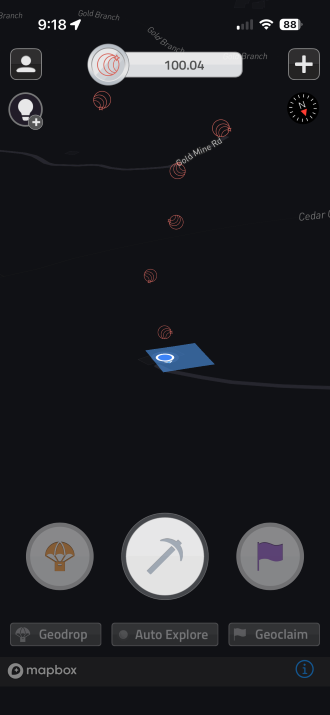
Image: Max McCaskill
COIN is a free app that rewards you with a digital cryptocurrency for sharing your real-world location data. You can manually track your location by "geomining" (pressing a big pickaxe button to mark your location), or allow the app to automatically do it in the background of your device.
Since it can automatically track a user's location, it's largely considered a passive-income app. However, COIN also rewards users for other tasks, like taking market research surveys, playing linked mobile games, and scanning product barcodes at physical retail stores.
COIN's rewards are paid in a native cryptocurrency that's also called COIN. It even has its own blockchain, which is what allows the coins to be cashed in for rewards, cash, or other cryptocurrencies. Users can redeem their coins for prizes like an iPhone 17 Pro Max, Ray-Ban Meta glasses, a Nintendo Switch 2, or even a gold bar. It can also be exchanged for Bitcoin, Ethereum, or simply be transferred to an outside wallet and sold for cash.
How do you earn COIN rewards?
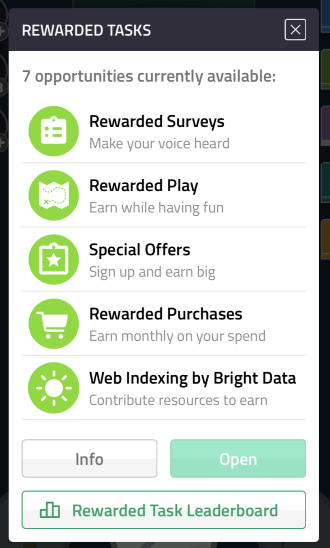
Image: Max McCaskill
There are several ways to earn COIN rewards, but the most prominent are location tracking, taking surveys, playing mobile games, and scanning products.
- Location tracking: As you move throughout the world, COIN creates a digital map of your location and rewards you with a fractional amount of coins.
- Market research surveys: Third-party organizations pay you to complete surveys on new products or polls on your opinions.
- Mobile games: You play a specific mobile game that is linked to the COIN app, with rewards unlocking as you progress through various levels.
- Scanning products: While shopping at a physical store, you complete a scavenger hunt to find and scan the barcodes of specific products.
In general, the largest rewards are tied to the most time-consuming tasks. Lengthy surveys or playing multiple levels of a mobile app may pay thousands of COIN. Easy or repetitive tasks—like location tracking—don't pay as much but are still a consistent reward.
There are also a few other rewarded tasks, like special offers or rewarded purchases that pay you for buying specific items.
COIN also has paid pro editions of the app that can help you earn rewards faster and increase the amount of COIN you get from your location data. However, these can add up, with the cheapest one (COIN LITE) starting at $7.99/month. You should only consider a paid version of the app if you're actively using it. It's not a great choice for people who download COIN for the passive rewards.
Why does COIN actually want your location?
COIN wants your location because that data is valuable. The app tracks its millions of users' locations to create a digital map of everywhere they go. This kind of data is used by retailers, advertisers, and third-party data brokers to target potential customers.
On the technical side, the extra benefit of COIN comes from users "geomining" their location, which is basically just digitally marking where they go in a way that's difficult to fake. As users move around, their location data is fed into COIN's network, where some of it gets verified and permanently written to its native blockchain. That data is stored in a way that can't be changed or deleted, making it more trustworthy to the businesses that buy it. However, it also means some of the user data COIN collects will never be deleted.
How do you get paid by the COIN app?
Getting paid by the COIN app can be complicated, depending on how you want to cash in your rewards. You'll also need a minimum of 10,000 COIN before you can redeem your first payout.
The easiest method is to simply connect the app to your Coinbase account. From there, you exchange your COIN for another cryptocurrency and sell it for cash. Note that it does take a few days for the reward to be verified and sent to your account.
For physical items, you'll need to add your address to your account and select available items from the list.
One thing to keep in mind is that since your reward is a cryptocurrency, its value can fluctuate. The redemption rate on Coinbase can change, and you may see adjustments in the price of specific items.
My experience with COIN
Overall, my experience with COIN was mixed.
I've always been skeptical of free apps that pay users, but I was impressed that COIN actually paid out. That said, I'm also extremely protective of my data privacy, so the app's tracking features and some tasks made me uncomfortable. Finally, I'm also not a crypto expert, so there were elements of the exchange process that confused me.
COIN app pros: The app works well and the rewards are real
On the positive side, COIN worked extremely well, and it did pay me, so my skepticism on that topic has lifted. Seeing your COIN rewards pile up does feel like a genuine source of passive income. The app also has a clean interface, all of the internal features worked well, and it's fairly entertaining to gamify your regular life.
I took a trip to the mountains while testing the app and was pleased to see how much COIN I'd earned after the drive. It also helps to liven up your time in the grocery store by sending you off to look for specific items.
Finally, I was happy to see that the background location tracking didn't use up too much of my mobile data.
COIN app cons: It invades your privacy and some of the third-party tasks don't work
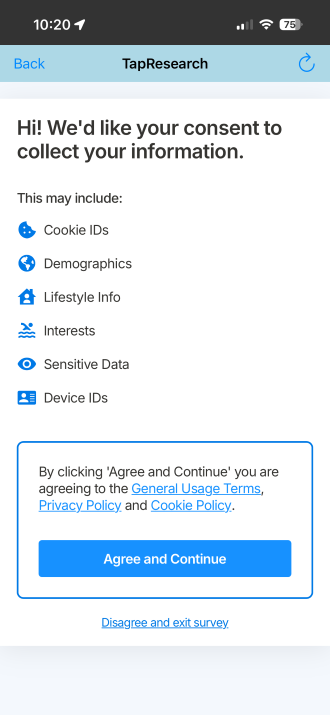
Image: Max McCaskill
The biggest issues for the COIN app revolve around data privacy. Constantly tracking your location is the easiest issue to flag, but the market research surveys collect a surprising amount of your personal information too. In just a few surveys, I'd shared information about:
- My age, sex, and ethnicity
- What state and city I live in
- My job and salary
- How much education I've completed
- My religious background
- My sexuality and marital history
- Who I voted for in the 2016, 2020, and 2024 elections
- My favorite brand of salty snack
- What brands of AI I use
- How much I spent on travel in the past two years and the destinations
To be clear, COIN did not force me to provide all this information. You don't have to do the surveys to earn rewards. That said, to access the app's biggest payouts, that's the kind of information that's required.
Why does data privacy matter?
Data privacy is important because your personal information can be used against you in ways you might not expect. Tech companies routinely build profiles of your interests and habits to sell to third parties like advertisers, data brokers, scammers, or even government agencies like the NSA and ICE. The rise of AI makes this even more concerning, due to emerging technologies like surveillance pricing, which allows companies to track your online behavior to create personalized prices based on what they think you're willing to pay.
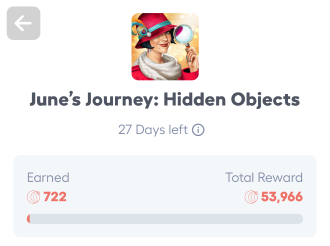
Image: Max McCaskill
The other issue I faced was with the linked mobile game. There were many options, but I chose to play an app called June's Journey since it was a well-known game with millions of downloads.
COIN rewards players for reaching specific levels in games like June's Journey. The first few rewards are small and for easy levels, but they increase if you sink enough time into the game to reach the upper levels. I hit the first four rewards of June's Journey in about an hour. The levels were extremely repetitive and followed a hidden-object format. You searched scenes, you found items, and the story is unlocked as you pass levels.
After spending about three hours playing the game, I finally unlocked the fifth COIN level, which should have been the first large reward. Unfortunately, I was never rewarded. I even played a couple of levels after that to make sure it was truly unlocked, but there was no change. A quick Reddit search revealed that this is actually a pretty common issue with linked games on COIN. Because of that risk, users who want to earn rewards by playing mobile games should only do it on a game they enjoy playing. I did not enjoy June's Journey, so that outcome was extremely frustrating.
Getting your rewards on COIN
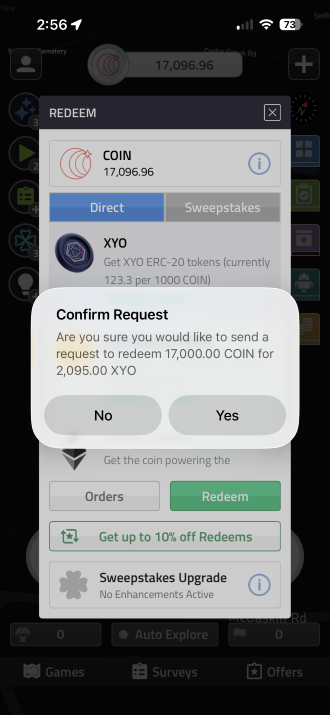
Image: Max McCaskill
The process of getting paid was a bit confusing and lengthy, even though it did eventually work out. If you're knowledgeable about crypto, it might be easier to understand the wallet transfer process and conversion rates.
When it was time to cash in my rewards, I'd accumulated around 17,000 COIN, which sounded great in theory. Unfortunately, you can't sell COIN for cash, and I had no idea what the conversion rate would be. I didn't have enough to buy a physical item or a more well-known coin, so I had to exchange it for another cryptocurrency called XYO, which is also owned by the company that makes the COIN app. That's where things started feeling a little strange.
From there, I had to verify my Coinbase account, and it took around a week for the deposit to actually hit. The exchange rate gave me 1,959 XYO. Unfortunately, I learned that one XYO was only worth $.004. When it was all finished, I earned exactly $7.78 from my time in the app.
Is COIN worth downloading to make extra money?
Overall, COIN is an interesting passive income app, especially if you're into crypto. Plus, it does actually pay you to do nothing, which will be enough to make some users want to download it. There are also plenty of other opportunities to earn more rewards, from gamifying your everyday life to taking surveys and playing games.
On the other hand, I became increasingly uncomfortable with the constant, screaming warnings from my iPhone that COIN was tracking me. As someone who is usually extremely strict with my data privacy, I simply did not see enough of a return in my $8 payout to continue using it.
How WhistleOut reviews apps
Our mobile experts scour the app stores every month, looking for the best new apps for Android and iPhone. Before recommending an app, we use it for at least one full month, testing its basic functionality and evaluating whether or not it delivers on its promises.
- Easy to use: Great apps should be intuitive to use. We select the tools that don't require a complicated instructional manual.
- Affordability: The internet is filled with expensive price tags, but we're not buying what they're selling. We lean into inexpensive, quality apps. Extra points if they're free!
- Hands-on testing: We play around with these before recommending them, ensuring they're worth gigabytes.
From there, we weigh the app's pros and cons and then determine whether or not it's a worthwhile download for the wider population of cell phone users.
Max McCaskill
Sr. Staff Writer

Thousands of cell phone plans unpacked. All the facts. No surprises.

Related Articles


Related Topics
App Reviews FeaturedPopular Topics
Featured App Reviews iOS News Coverage Device Reviews Device Explainers Carrier Explainers App Roundups T-Mobile


Free iPhone 18 Pro, up to $1,200 off, with a trade-in in any condition or a line switch on Experience Beyond




.png?w=280&h=280&usm=20&usmrad=0.8&fit=crop "The Best Cheap Phone Plans for 2026: We Tested Them All to Help You Save")