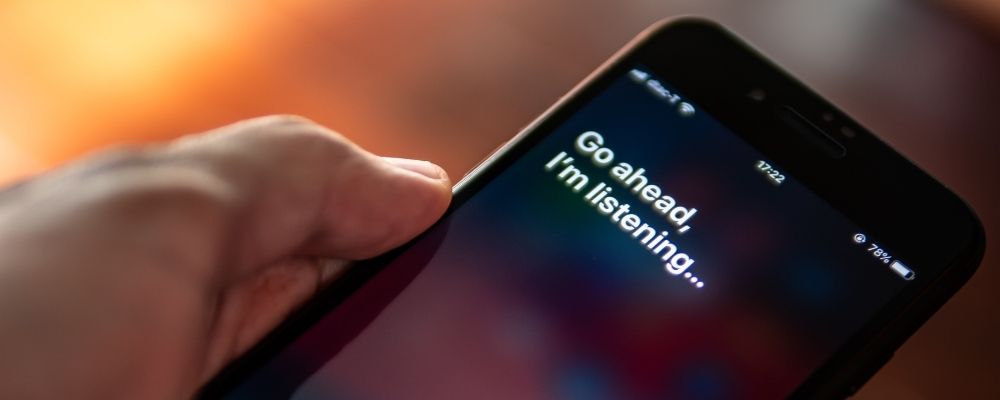
It’s widely understood that most of our internet behavior, from the sites we visit to the types of videos we watch, is constantly being tracked. But are companies going beyond this and actually spying on us to collect their data? We at WhistleOut were interested to know if Americans think big-tech is spying on them and if so, which companies they believe are the biggest perpetrators.
Who Americans Suspect of Spying
An overwhelming 85% of our respondents indicated that they believe at least one tech company is spying on them. Facebook is suspected of spying the most— 68% of those surveyed believe the social media giant is violating their privacy. Meanwhile, 53% suspect TikTok is spying on them.

It’s possible that high-profile news about both companies could influence the public’s belief of whether or not they are spying. Facebook has been heavily criticized about privacy concerns while TikTok has faced a full ban in the U.S. over concerns with the Chinese government having access to large amounts of data on American citizens.
How Americans Think Big Tech Is Spying on Them
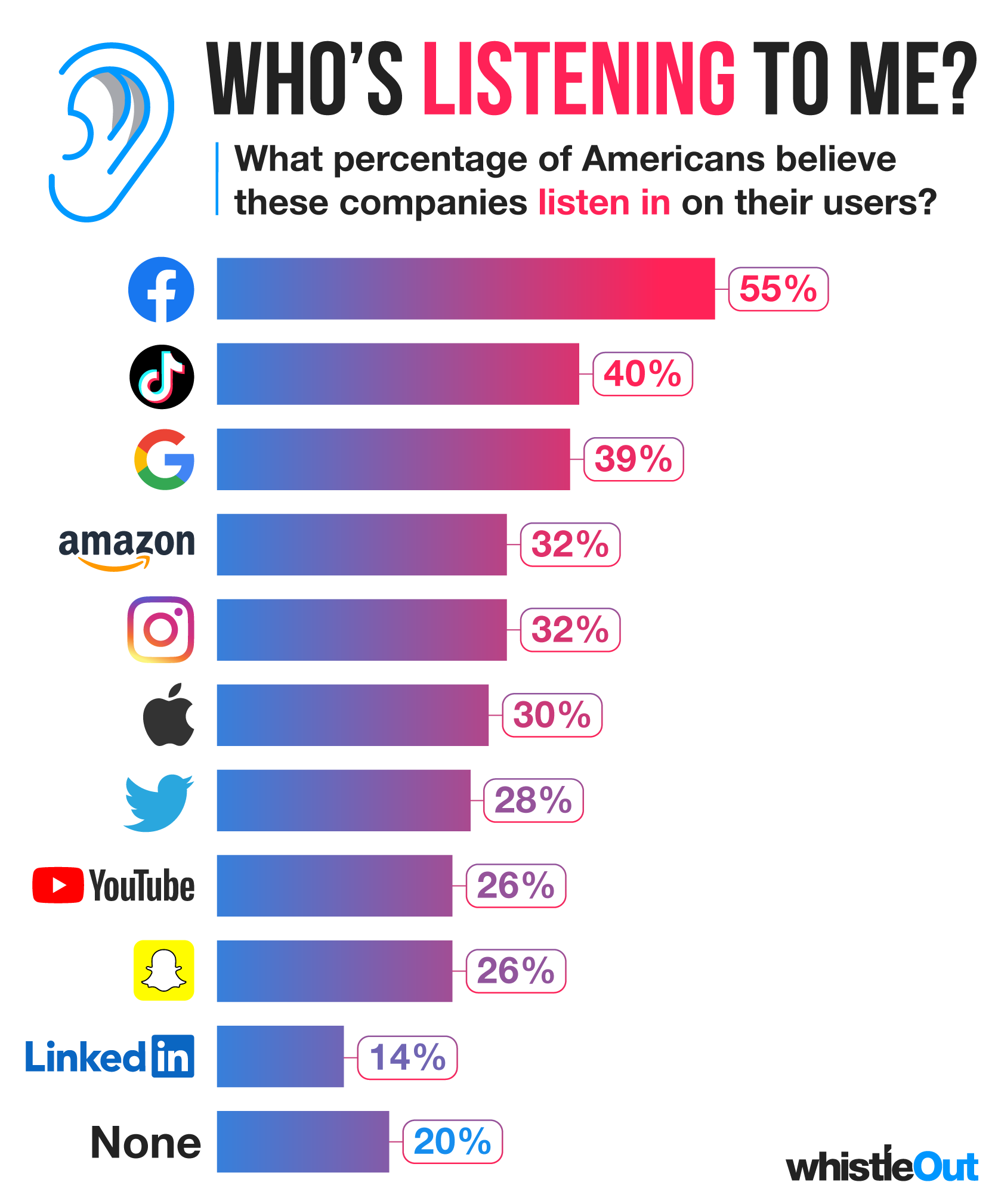
Of those who believe that big tech-companies are snooping, 80% believe that these companies are listening to their phone conversations. Again, participants in the study suspect Facebook and TikTok are the major culprits.
Why Americans Believe Big-Tech Is Spying
While the majority of respondents think big-tech companies are spying, 57% weren’t sure what the companies are doing with the information they are acquiring. Although it’s widely understood that companies collect data for advertising and marketing purposes, only 24% of participants believe that these companies spy in order to tailor their ads and content to users. That’s a surprisingly low percentage considering that almost two-thirds in our study (65%) claim that they have seen or heard an advertisement for a specific product on a big-tech company’s app or website after talking about that product but not searching for that product online.
The American Response to Threats to Privacy
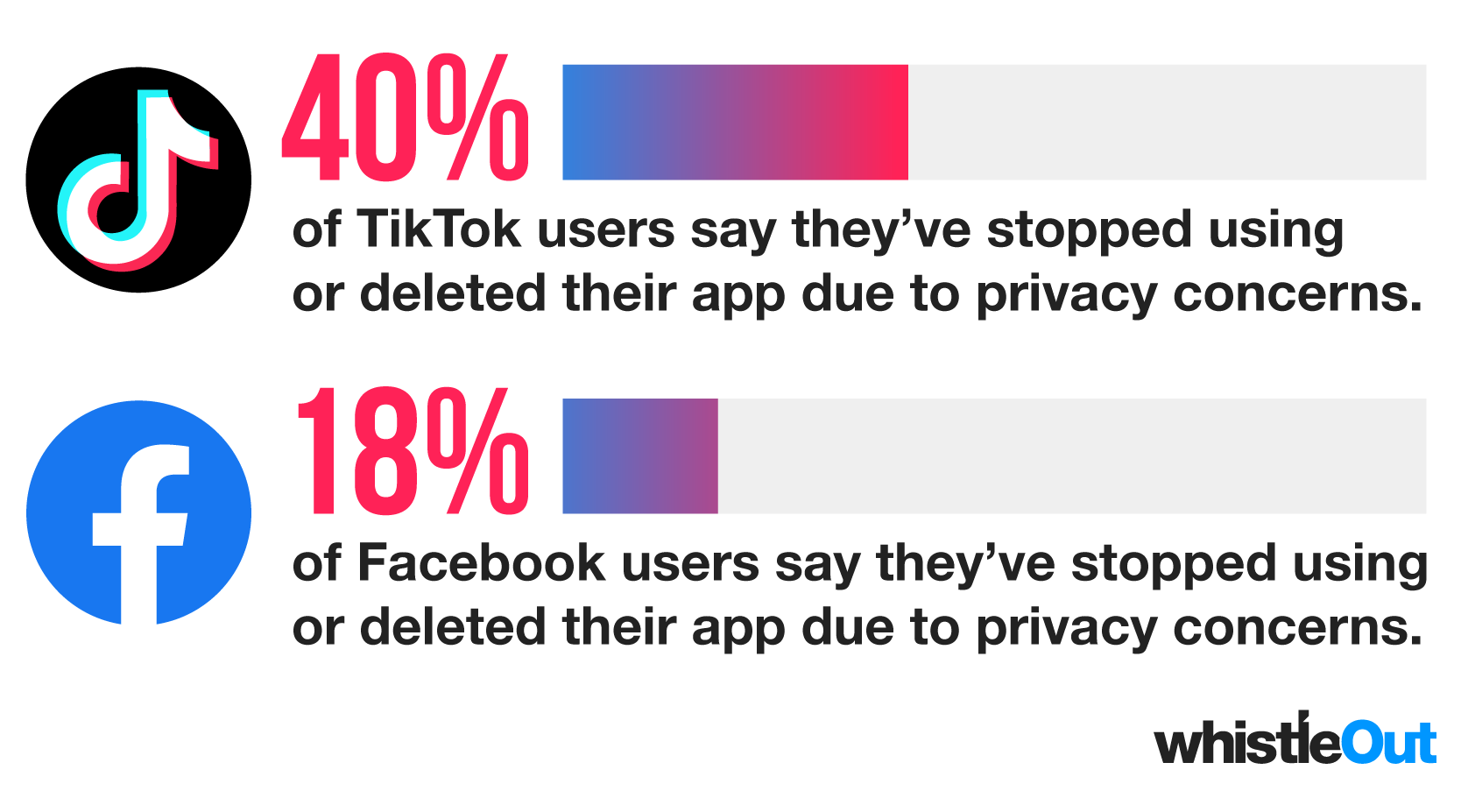
We were curious to find out how people are reacting to this perceived threat to privacy and how they feel the government should intervene. We found that when Americans have privacy concerns about an app, many will simply delete or stop using it. Forty percent (40%) of TikTok users in our survey said they'd deleted or stopped using the app before due to privacy concerns. Similarly, about 18% of Facebook users in our survey said they'd deleted or stopped using the app before due to privacy concerns.
As for government intervention, more than half of participants in our survey (57%) feel the United States government should step in and ban at least one major tech company for violating user privacy.

Of the major tech companies (those surveyed could make multiple selections):
- 37% of participants believe TikTok should be banned
- 20% of participants believe Facebook should be banned
- 13% of participants believe Instagram should be banned
Can Apple Help Americans Feel More Secure?
Despite Apple's outward concern for its users’ data and privacy, more than 30% of our participants believe that the tech giant is spying on them. Earlier this year, Apple implemented a slew of privacy protection policies and features in their latest operating system (iOS 14). Among these new protections are alerts to let users know when an app is using their phone’s mic and/or camera, and privacy reports that let users know who is tracking them and why. Most controversial is a feature that requires apps to ask user permission to track their activity over other companies’ apps and websites and to share user or device data with data brokers. Due to some opposition, Apple delayed the full implementation of these measures to allow more time for developers to comply, launching the new features in early 2021.
Methodology
WhistleOut surveyed 1000 people about their beliefs relating to major tech companies and spying practices. Participants were located in all 50 states with ages ranging from 16-54+. The survey was distributed online via Pollfish.
Angelo Ilumba
Senior Writer

Thousands of cell phone plans unpacked. All the facts. No surprises.





.png?w=280&h=280&usm=20&usmrad=0.8&fit=crop "The Best Cheap Phone Plans for 2026: We Tested Them All to Help You Save")