Two of the most popular international perks included with phone plans are international calling and international roaming.
You may not have even realized these are two separate features. Despite sounding similar, they provide different benefits for users, and failing to understand them could cost you big on your next vacation.
- International calling is the ability to call international phone numbers while in the United States.
- International roaming allows your phone to use a foreign carrier's network while traveling abroad. This includes calls, texts, and mobile data that you use while physically in another country.
Mixing them up can be an expensive mistake. In some cases, customers find they're forced to pay pricey rates for international roaming on a trip they thought was covered with an international calling perk included on their plan.
We'll help you learn how to tell these perks apart, how much they can cost, and what to actually look for before your next trip.
What does international calling mean?
International calling (also known as international long distance) lets you dial and connect to phone numbers located in other countries while you're still inside the United States. It does not mean you can make phone calls while traveling internationally.
If you're sitting on your couch at home in Chicago, calling a friend in London or a relative in Mexico City, that's international calling. Your phone is still using your domestic carrier's network, but the call is connected to another country. It's a perk designed for people who need to make frequent calls to numbers outside the United States.
Those international connections are not free. Many carriers offer this service as a paid add-on or charge you by the minute. Other carriers have begun offering it as a perk with their more expensive plans, or some may allow free calls to select nations (most often to Mexico and Canada).
Do I need international calling to call a U.S. number that's traveling abroad?
No, that's still considered a domestic call! International calling only applies when you dial an international phone number. Calling a U.S. phone number is free, even if the person you're calling is traveling internationally when they answer.
However, the person answering the call when traveling internationally may get charged since they're using international roaming.
What is international roaming?
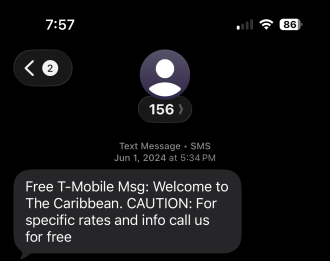
Image: Max McCaskill
International roaming is taking your phone to another country and using it there.
When you land in another country and take your phone out of Airplane Mode, it will immediately connect to the local carrier's network. You're now using international roaming, and your carrier will instantly charge you unless you've already purchased a roaming perk.
International roaming includes:
- Voice calls: Both incoming and outgoing
- Text messages: Both SMS and MMS
- Mobile data: Which is measured down to each megabyte (MB) you use
Data roaming is usually the most expensive feature, but voice and texting can also quickly rack up a bill if you're charged per text or per minute.
Some carriers include a free international roaming perk on certain plans. Others charge per use, sell day passes, or allow you to buy blocks of service before your trip.
If you want the full breakdown of how to use this service, check out our international roaming guide.
Roaming charges explained: Free perks vs. day passes vs. add-ons
These are the three main methods carriers use to offer international roaming. Each has different benefits and associated costs:
- Free international coverage perk: Your carrier includes a free allotment of international service built into your plan. This is best for long-term travelers, but it's also usually the most expensive option since it's only found with the most expensive phone plans.
- International day pass: Your carrier allows you to use your phone plan while abroad, but charges you a flat rate each day. While the rate is usually affordable (AT&T and Verizon currently charge $12/day), it's best for shorter trips since the charges will slowly add up.
- International add-on: You purchase international roaming in blocks of service as you need it from your carrier. Each block includes a small number of minutes, texts, and a data allotment. This option is best for short trips or destinations with widespread Wi-Fi. It's often the most affordable way to use your phone abroad if you limit your usage.
Make sure your phone plan includes or can access one of these methods of international service before your trip. Otherwise, your carrier may quietly let you accrue hundreds of dollars in fees before sending you a massive bill when you get home.
Should I get international calling or international roaming?
The differences between roaming and international calling mean that most plans and carriers don't offer both features for free. Which service you need depends on how you plan to use your phone.
You may need international calling if you:
- Have friends or family living in other nations
- Want to call someone who is using an international number while traveling abroad
You may need international roaming if you:
- Plan to use your personal phone number while traveling abroad
- Frequently travel across the Canadian or Mexican borders
How often you use these features should also play a role in picking your phone plan. For example, if you only travel internationally once every few years, there's no reason to pay extra every month for a phone plan with built-in international roaming. Paying out of pocket for the perk when you need it may seem more expensive at the time, but you'll save over the long term.
Additionally, you may not need international calling if you can convince the person you're speaking with to switch to an internet-based service. Messaging apps and video calls that use Wi-Fi instead of phone networks—like WhatsApp, Signal, iMessage, and FaceTime—are free for everyone.
Carriers with free international calling
One of the best features of international calling perks is that they aren't hard to find. Many carriers and plans include it for free at an affordable price. Mint Mobile and Ultra Mobile (both MVNOs owned by T-Mobile) are two of the cheaper options you'll find.
- Mint Mobile: Free international calling to Canada, Mexico, and the UK on all plans
- Ultra Mobile: Free unlimited talk and text to 90+ countries with all plans
|
Mint Mobile

Unlimited Data Plan
$10.00/mo
$60 for 6 months of service
|
|
Ultra Mobile

Unlimited 1-Month Plan
$49.00/mo
|
You can check out our list of the best international calling plans for even more options.
Plans with free international roaming
Free international roaming is a rare perk, and no carrier offers it with all of its plans. It's pricey and typically only available with expensive unlimited options.
Here are some of the top international phone plans with roaming as a free perk:
- Google Fi Unlimited Premium Plan: For $65/month, you get free data and texting in 200+ destinations
- Verizon Unlimited Ultimate Plan: At $80/month, you get 15GB of high-speed roaming data per month in 210+ countries, with unlimited talk and text abroad
- T-Mobile Experience More Plan: At $85/month, it includes up to 5GB of high-speed data in 215+ countries, plus unlimited texting
- AT&T Premium 2.0 Plan: Starting at $90/month, it includes free unlimited talk, text, and data in 20 Latin American countries
|
Google Fi Wireless

Unlimited Premium for 1
$32.50/mo
|
|
T-Mobile

Experience More 2.0
$85.00/mo
with Auto-Pay + Taxes and fees
|
|
AT&T

Premium 2.0℠
$90.00/mo
+ $35 Upfront
|
|
Verizon

Unlimited Ultimate
$95.00/mo
+ Taxes & Fees. Price includes AutoPay & Paperless discount.
+ $40 Upfront
|
International calling vs. roaming: FAQ
Is using your phone in Canada and Mexico considered international roaming?
Yes, using your phone in Canada and Mexico is considered international roaming. That said, most domestic carriers include coverage in Canada and Mexico for free or at extremely discounted rates.
Why was I charged for roaming if I have international calling?
International calling and roaming are separate features. An international calling add-on covers calls you make to other countries while you're at home on your domestic network. It doesn't cover usage when you're traveling abroad.
Does international calling work when I travel?
Yes, but you may be charged an additional fee. If you're using your domestic plan when traveling abroad, its international roaming feature may only cover calls made back to the United States. Calling an international number, like your hotel or a taxi, is still classified as an international call, even when visiting that country. Contact your carrier before your trip to understand how these features work on your plan.
Do I have to turn on roaming to make international calls?
If you're in the United States and calling another country, you don't need to enable roaming to make international calls. If you're traveling abroad, you will need to enable roaming for your phone to connect to the local network to make international calls.
How do I avoid roaming charges?
To avoid roaming charges, you can pick a phone plan that includes free roaming data, buy a travel eSIM before your trip, or buy a local SIM card from the airport or a store after landing at your destination. You can also simply disable your data for the entire trip and use Wi-Fi. Just remember that public Wi-Fi sources aren't safe when traveling, so you may still need a small amount of roaming data for things like banking.
Max McCaskill
Sr. Staff Writer

Thousands of cell phone plans unpacked. All the facts. No surprises.





.png?w=280&h=280&usm=20&usmrad=0.8&fit=crop "The Best Cheap Phone Plans for 2026: We Tested Them All to Help You Save")