Spring break is too short to waste time in a phone store weighing your options. Whether you're headed to Cancún or hopping around Europe, you need a data strategy before you land—not after. International roaming fees can hit hard, and the "I'll figure it out when I get there" strategy is how you end up paying $15 per day of data from your home carrier.
Both local SIM cards and travel eSIMs will save you money compared to roaming. The real question is which one makes more sense for your trip.
Staying longer than two weeks? Go with a local SIM card. The per-GB pricing is cheaper, and the data is more reliable with direct local coverage.
Differences between local SIM cards and travel eSIMs
| Feature | Local SIM card | Travel eSIM |
|---|---|---|
| Price | Starting at $5 | Ranging from $7–$20 |
| Setup time | 15–30 minutes in-store or at the airport | 2 minutes on Wi-Fi |
| Installation | Requires swapping cards | Digital download only |
| Phone number | Local number included | Usually data only |
| Best for | Long trips or heavy data needs | Convenience and short trips |
What is a local SIM?
A local SIM card is most commonly a physical chip you swap into your phone in order to connect to a local cellular network for service. Your new SIM usually comes with a new phone number and data amount, so the price can vary depending on how much you need for your trip.
What is a travel eSIM?
A travel eSIM (or embedded SIM) most often uses a digital version of a SIM card. Instead of a physical chip, it's a carrier profile you download directly onto your phone. You can buy an eSIM through an app (from one of our favorite eSIM providers) before you even leave home, scan a QR code, and activate it when you land. It only takes a few minutes (so no queueing) and is still more affordable than using your home carrier's rates.
Don't want to buy yet another SIM? Switch to a plan with free international data.
Major carriers like T-Mobile, AT&T, and Verizon all offer plans with international data for free. That way you don't need to worry about getting a secondary plan for your next big trip.
Check out the most popular plans with international data below:
|
AT&T

Premium 2.0℠
$90.00/mo
+ $35 Upfront
|
|
T-Mobile

Experience Beyond 2.0
$100.00/mo
with Auto-Pay + Taxes and fees
|
|
Verizon

Unlimited Ultimate
$95.00/mo
+ Taxes & Fees. Price includes AutoPay & Paperless discount.
+ $40 Upfront
|
The best option for international data: eSIMs
For a short trip, eSIMs offer a convenient and cheap way to stay connected via data. Better yet, the biggest advantage of a travel eSIM is that you never have to remove your home SIM card. That means your primary number stays active while you're abroad (just enable Wi-Fi calling), and you don't have to worry about losing a tiny piece of plastic in a foreign country.
Pros and cons of travel eSIMs
Pros:
- Set up before you leave home
- Home SIM stays active while traveling
- Nothing physical to lose or break
- Automatically activates the moment you land
Cons:
- Costs slightly more than a local SIM
- Usually data-only, no local phone number
- Requires an unlocked, eSIM-compatible phone
Why choose a travel eSIM?
Set everything up before you leave. Most travel eSIM providers let you buy and install a plan days in advance. Choose your destination, pick a data package, scan the QR code, and your eSIM is ready to use. Most plans activate when you connect to the local network (when you land), and you can easily add more data online if you need to.
Your home number stays reachable the whole time. This may not be an obvious perk, but it has saved me on many vacations. Banking apps and two-factor authentication texts usually need verification codes if they detect you're away from home. Since your phone number is still active in a dual SIM setup (because your SIM is still in your phone), you'll have no problem receiving messages.
There's nothing physical to lose. Your home SIM card is small enough to disappear forever in a coat jacket or travel backpack. With an eSIM, that risk doesn't exist. If you need to remove it when you get back home, check out our guide on how to delete an eSIM from your smartphone.
How do travel eSIMs work?
Travel eSIMs download the network profile directly onto your phone and allow the carrier to activate it remotely. Major companies partner with international companies to use their networks and data bandwidths. You simply purchase a data amount to use, and the eSIM lets you access the network once you install it.
Why local SIM cards are worth it on longer trips
If you're going away for two weeks or more (or you're a heavy data user that burns through 10GB/day), a local SIM card is much more affordable. You usually get cheaper international data since you're buying directly from a local carrier at local rates.
Pros and cons of local SIM cards
Pros:
- Lowest cost per GB
- Usually includes a local phone number
- Available at most international airports
- Great for heavy data users
Cons:
- Only available at your travel destination
- Home SIM must be removed from your phone (risk of losing it)
- Airport kiosks often upcharge tourists
Why choose a local SIM card for travel?
You get the lowest possible price. A local SIM in Cancún starts around $5, or 100 Mexican pesos. For comparison, one day with a Holafly unlimited data travel eSIM costs around $7. On a short trip, that difference barely registers, but on a two-week trip where you're burning through data, it adds up fast.
Most local SIMs come with a phone number. For extended trips, a local number can come in handy for making dinner reservations, calling a local taxi, or any situation where a WhatsApp message isn't an option.
You can find them at the airport. Most major international airports have carrier kiosks in arrivals. However, be aware that airport pricing tends to run higher than what you'd pay at a store in the city. If budget is your motivation for choosing a travel SIM, wait until you can get to a local shop and use Wi-Fi in the meantime.
If you still aren't sure, check out our guide to global and travel SIM cards if you want a more detailed breakdown of what to look for before you buy.
Can I use a travel SIM or eSIM on my phone?
Before you commit to either option, make sure your phone is unlocked—otherwise you won't be able to use a travel SIM or eSIM. If you're still paying off your device, your carrier may have it locked to its network. Call before your trip and request an international unlock. Most carriers will do it, but it can take a day or two.
For eSIMs, you'll also need an eSIM-compatible device. iPhone XS and newer support it, as do most flagship Samsung and Pixel phones from 2020 and on. The easiest way to check is to look for an "Add eSIM" option in your settings. If it's there, you're good to go.
Is your phone eSIM compatible?
The iPhone XS and newer models are all eSIM compatible, and most Android phones from 2020 and later support eSIM use. You can also check out the most recent eSIM-compatible phones below:
Galaxy A26 5G
- 6.7 inch display
- Rear Cameras: 50MP, 8MP, 2MP
- Front Camera: 13MP
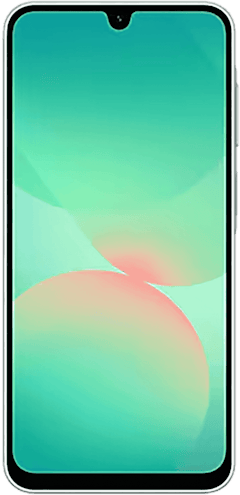
Galaxy A27 5G 128GB
- 6.7 inch display
- Rear Cameras: 50MP, 5MP, 2MP
- Front Camera: 12MP

Galaxy A37 5G 128GB
- 6.7 inch display
- Rear Cameras: 50MP, 8MP, 5MP
- Front Camera: 12MP


Local SIM or eSIM for travel: FAQ
Can I use an eSIM and SIM card at the same time?
Yes, most modern iPhones and Android phones support dual SIMs, so both lines run simultaneously. You choose which handles data in your settings, while the other stays active for calls and texts.
Do all phones support eSIM?
No, not all phones are automatically eSIM compatible. iPhone XS and newer models support it, as do most flagship Samsung and Pixel phones from the last four or five years. Check your settings for an "Add eSIM" or "Add cellular plan" option to confirm.
Are local SIM cards cheaper than eSIMs?
In general, local SIM cards are cheaper than eSIMs because you're buying directly from a carrier without any middleman markup. Travel eSIMs cost a little more in exchange for the convenience of remote setup.
Can I buy a local SIM at the airport?
Yes, you can buy a local SIM at the airport. Expect to pay more than you would at a city store since airport kiosks know they have a captive audience. If you're trying to save money, wait and find a shop in town.
Jessica Santero
Staff Writer

Thousands of cell phone plans unpacked. All the facts. No surprises.
Related Articles


Related Topics
International & TravelPopular Topics
Featured App Reviews iOS News Coverage Device Reviews Device Explainers Carrier Explainers App Roundups T-Mobile


Free iPhone 18 Pro, up to $1,200 off, with a trade-in in any condition or a line switch on Experience Beyond


.png?w=280&h=280&usm=20&usmrad=0.8&fit=crop "Best Cell Phone Deals for October 2026: Get the New iPhone 18 Pro for Free")