TL;DR: Border searches and travel burner phones in 2026
- U.S. Customs and Border Protection (CBP) searched 55,318 electronic devices at ports of entry in 2025, a record high and a 33% increase over 2023.
- CBP device searches and seizures can be conducted on both U.S. citizens and non-citizen travelers.
- Searches can be conducted on your phone, laptop, or camera at any U.S. port of entry without a warrant. Non-citizens who refuse may face detention or denial of entry.
- This power isn't limited to the U.S., and destinations including the European Union, Hong Kong, Canada, Australia, New Zealand, China, and Russia all grant border agents broad authority to search or seize devices.
- Using a cheap travel "burner" phone when traveling abroad is the easiest way to protect your privacy, secure your data, and ensure the safety of your primary phone.
 Prefer WhistleOut in Google
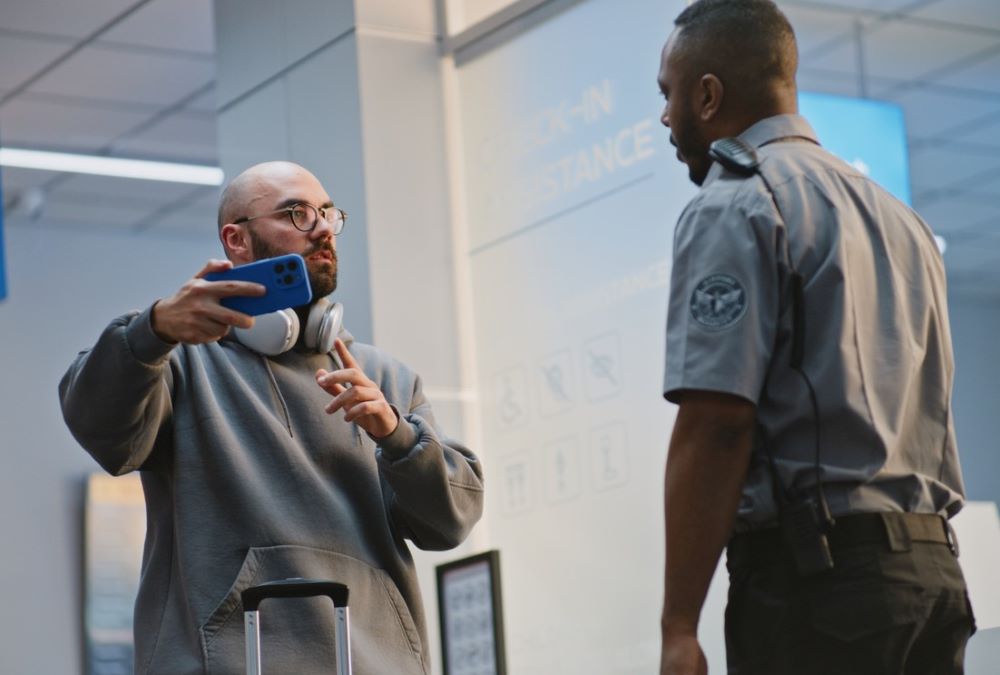
According to U.S. Customs and Border Protection (CBP), agents searched more than 55,000 electronic devices at U.S. ports of entry last year, the highest number ever recorded. These searches can happen to anyone clearing customs at a U.S. international airport—including American citizens—and generally don't require a warrant, probable cause, or an explanation.
At current trends, 2026 is already on pace to break that record. Additionally, the U.S. is not the only country doing this, as other nations around the world have stepped up their own device monitoring capabilities. Some of these countries are not just targeting tourists entering through immigration, but even transit travelers simply using their airports for international layovers.
If you're traveling internationally this summer, getting a burner phone should be at the top of your pre-travel checklist. Burner phones are the best way to keep your private data safe and avoid losing your personal device if it's seized at an international border crossing.
CBP device searches are at an all-time high and still climbing
Electronic device searches at U.S. ports of entry have steadily risen over the past decade, but the pace has sharply accelerated since the beginning of the Trump administration and its widespread immigration crackdowns.
According to the agency's enforcement statistics, CBP's device searches have increased 33% from fiscal year 2023 to 2025, topping out at a record 55,318 searches. Through the first half of 2026, CBP has already conducted 32,349 searches, putting the year on pace to surpass 64,000 if the current rate holds.
Those numbers also include American citizens. According to CBP's FY2025 year-end report, 13,590 of the 55,318 searches conducted in 2025 involved a U.S. citizen returning to the country. While U.S. citizens cannot be denied re-entry for refusing a border phone search, they can still be temporarily detained and their devices seized for long periods.
CBP electronic device searches by fiscal year
| FY2018 | 33,296 |
|---|---|
| FY2019 | 40,913 |
| FY2020 | 32,038 |
| FY2021 | 37,450 |
| FY2022 | 45,499 |
| FY2023 | 41,567 |
| FY2024 | 46,362 |
| FY2025 | 55,318 |
| FY2026 YTD | 32,349 |
Source: U.S. Customs and Border Protection enforcement statistics. Note: CBP's fiscal year runs from October through September, so figures do not align precisely with calendar years.
While those statistics may seem extreme, remember that CBP processes millions of travelers every year, and only a fraction result in device searches. In total, electronic device searches are conducted on less than 0.01% of all international travelers. That said, as search numbers have climbed and stories of travelers feeling intimidated or turned away at the border have gone viral, many people no longer feel safe traveling with their primary phone.
How does CBP search your phone?
CBP electronic device searches come in two categories: basic search and advanced search.
- Basic search: This is the most common type of CBC electronic search. It generally includes an officer manually searching the device and documenting what is seen. This could include going through your messages, social media apps, photos, contacts, browser history, and more.
- Advanced search: This kind of search is rarer, requires a reasonable suspicion that you're violating the law, and needs approval from a senior officer before it can begin. It uses external equipment to forensically search your device to review, copy, and analyze its data. Officers may break encryptions, recover deleted files, access system logs, and extract metadata.
Phone searches at the border aren't just a U.S. issue
While incidents in the U.S. have been at the forefront of the news, travelers face similar risks around the world. Most of the world's major travel destinations have increased their border agents' authority to search digital devices, and some have also increased penalties for refusing to comply.
On March 23, 2026, Hong Kong amended the enforcement rules of its National Security Law, giving police the power to demand device passwords from anyone, including tourists simply transiting through its airport to another international destination. Refusal is also now a criminal offense.
Other countries where authorities can demand access to your devices include:
- Canada: Officers can examine personal digital devices, and travelers are obligated to provide passwords when asked. If a traveler refuses, the device may be detained or seized.
- European Union: Agents can conduct searches if they have a valid reason, such as suspicion that you're breaking the law or part of a criminal organization. If you refuse, you may be denied entry and the device confiscated.
- United Kingdom: Border agents can search, seize, and retain electronic devices without needing prior suspicion or a warrant. Travelers cannot be compelled to provide passwords or PINs, but refusal can result in the device being seized, and you being temporarily detained or charged with a criminal offense.
- Australia: Border agents have broad authority to examine digital devices. Travelers can refuse to unlock devices, but the devices may be seized and examined. Refusal can also lead to detention if officers believe the device contains evidence of illegal activity.
- New Zealand: Officers may examine electronic devices if there is reasonable suspicion of criminal activity. Travelers can also be required to provide access information, such as passwords. Penalties for refusing to provide access can include fines of up to NZ$5,000.
- China. The U.S. State Department warns that Chinese authorities have broad discretion to inspect or access data stored on phones and computers, and that enforcement and penalties are arbitrary. Travelers have been advised to use burner phones when traveling to China for decades.
- Russia. The U.S. State Department advises travelers to assume there is virtually no digital privacy in Russia. Authorities have broad powers to inspect or seize devices, monitor communications, and potentially even detain foreign nationals due to content found on their phones.
How does a burner phone protect my data during international travel?
A travel burner phone is a cheap, separate device you bring on a trip loaded with only what the trip requires. It doesn't contain things like your private messages, social media accounts, email, or photos. That means if a border agent searches or seizes it, there is no sensitive data to find in the first place. Meanwhile, your primary phone is sitting at home safe and undisturbed.
This has been standard practice among journalists, security researchers, and corporate travel security teams for years. Travel can be dangerous and costly for your phone in other ways too, such as by damaging your device or it being stolen. Burner phones protect your data and primary phone, no matter what kind of threat you face while abroad.
How to set up a travel burner phone before your next international trip
Setting up a burner phone is not complicated, but it takes time and needs to be done well before your trip begins.
Here are the steps to follow to set up your burner phone:
- Select a burner phone: These can include budget phones from brands like Motorola, the Samsung Galaxy A series, the iPhone SE, and the Google Pixel A series. You can also simply use your old phone if you've upgraded in the last few years and didn't trade in your previous device. Plan to spend anywhere from $50–$200. See our picks for the best burner phones for travel if you need somewhere to start.
- Create a new, trip-only email account: This is what you will use to sign into the phone and any associated accounts. Don't tie it to your real name and don't reuse it after the trip.
- Install only what the trip requires: This will typically include travel apps like maps, translation apps, a messaging app (Signal or WhatsApp), and any apps needed for your airline or hotel. Try to avoid downloading apps with sensitive information, like financial or social media apps. You can log in to those directly from your web browser instead (using a secure international network).
- Buy a plan for the phone: Your new device still needs service. You can buy a domestic U.S. plan with international roaming features, a travel eSIM, or get a local prepaid SIM at your destination. There are plenty of options out there, so try to find a service that meets your needs, budget, and technical knowledge.
- Leave your primary phone at home: This is the best way to ensure your personal data stays safe. Some guides advise that you can bring the device anyway by putting it in your luggage and leaving it locked in your hotel's safe. However, keep in mind that border searches apply to any electronic device in your possession, not just the one you're holding. Border agents generally have full authority to pull other devices out of your luggage and search them, including laptops, cameras, storage devices, and other phones.
If you do bring your phone, turn off your biometric credentials and use a strong numeric PIN before you cross any international border. In the U.S., courts have generally found that you cannot be compelled to reveal a PIN, but agents can legally require a biometric unlock. However, other nations may still have the authority to force you to unlock the phone, no matter what security method you used.
iPhone users should also review our guide on iPhone settings to change before international travel. Several of the adjustments can help you properly secure your device before meeting security and avoid expensive international roaming fees.
Is a travel burner phone worth it for your next trip?
For most international travelers, a burner phone is a must-have item. Electronic device searches by CBP are 33% from 2023, and 2026 is already on pace to surpass that. Plus, that's only what happens on U.S. soil. The same risks exist in the countries you're planning to visit, with some destinations carrying significantly higher stakes.
Luckily, burner phones and international coverage don't have to be expensive, and they're some of the easiest risk-management tools available for international travel.
Before your next trip, take some time to run through our full phone checklist for international travel. It covers roaming options, the best apps for travel, ways to save on international coverage, and steps you can take to protect your device.
Travel burner phone: FAQ
Can a border agent force me to unlock my phone in the U.S.?
In most cases, a border agent in the U.S. cannot force you to unlock your phone if you use a PIN. CBP can search your device without a warrant at U.S. ports of entry, but refusing to provide a passcode is not itself a criminal offense. However, your device can still be seized, and non-citizens who refuse may be detained or refused entry. The situation is more complicated with biometric unlocking, which is not protected by the Fifth Amendment like your PIN is. Many attorneys advise switching to a numeric PIN before any international crossing.
Does TSA search phones at domestic U.S. airport security checkpoints?
No, the TSA does not conduct electronic searches of phones at U.S. airports. TSA's focus is on physical threats like explosives and weapons. An agent may swab a phone for explosive residue or ask you to power it on to confirm it's a functioning device. Otherwise, the TSA has generally stated it does not search devices for electronic content or extract data.
What's the best cheap unlocked phone to use as a travel burner?
Budget Android phones in the $40–$150 range include devices from Motorola, Nokia, and Samsung's Galaxy A series. If you already have an old phone from a recent upgrade, that's usually the best starting point since it's free. See our full guide to the best burner phones for travel for specific picks across different budgets and use cases.
Does traveling with a burner phone look suspicious to border agents?
No, traveling with a burner phone is not suspicious to border agents. It's been a standard practice for business travelers, journalists, tech workers, researchers, activists, and privacy-conscious tourists for years. Additionally, there are reasons other than data privacy to travel with a burner phone, such as avoiding having your primary phone stolen or damaged while abroad.
All the latest cell phone news and deals, delivered every Thursday.
Max McCaskill
Sr. Staff Writer

Thousands of cell phone plans unpacked. All the facts. No surprises.





.png?w=280&h=280&usm=20&usmrad=0.8&fit=crop "The Best Cheap Phone Plans for 2026: We Tested Them All to Help You Save")