
There's still plenty we don't know about 6G, but the conversation has moved well past pure speculation. In late 2025, China completed the first phase of its 6G trials, with more than 300 technical advances. Let's spell out what we know and don't know so far.
What is 6G technology?
As the name implies, 6G will be the sixth generation of modern wireless technology. Every new generation of wireless technology brings about new and more advanced ways of digital encoding. For example, the major breakthrough with 5G wireless was the opening up of short-range airwaves that 4G couldn’t access. Because 5G wireless can take advantage of more airwave channels, data can move significantly faster than it did with 4G wireless.
In 2026, 6G is no longer just a buzzword being kicked around in research labs. In 2023, the International Telecommunication Union (ITU)—the same global body that set the ground rules for 5G—finalized an official framework for 6G, formally called IMT-2030 (International Mobile Telecommunications-2030). That framework spells out six core usage scenarios that 6G is actually being built to deliver:
- Immersive communication: Powers lag-free VR, AR, and holographic media that feel seamless.
- Integrated sensing and communication (ISAC): Turns the network into a sensor that detects objects, motion, and location while carrying data.
- Massive communication: Connects a large number of devices simultaneously, serving as the backbone of smart cities and the Internet of Things.
- Hyper-reliable and low-latency communication: Delivers near-instant, rock-solid links for remote surgery, self-driving cars, and factory automation.
- Ubiquitous connectivity: Extends coverage to rural and remote areas, often via satellites, to close the digital divide.
- AI-and-communication: Bakes AI into the network so it can manage and optimize itself.
In other words, we now have an official blueprint for what 6G is supposed to do—not just educated guesses.
6G vs 5G: How different will 6G be?
While the exact breakthrough technology is still being hammered out in standards meetings, most experts expect 6G will follow 5G's lead and keep opening up more short-range airwaves. Currently, 5G airwaves max out at 100 Gigahertz (GHz), so naturally 6G will need to go well beyond the 100 GHz-threshold and jump into the terahertz (THz) range!
Essentially, the more airwaves 6G can utilize, the faster data can move. Scientists and mathematicians will need to design models that allow for thousands of airwaves to be utilized at once.
The current signal exchange (Time Division Duplex, or TDD) between cell towers and your phone is based on turn-taking. One signal is sent, read, and then retransmitted. 5G made this switching smarter with FDD transfer (like automatically shortening pauses when more people talk), but it’s still turn-based.
6G aims to allow for simultaneous signal sending and receiving with full duplex technology. According to Samsung Research, the design model for 6G data transferring will need to look something like this:
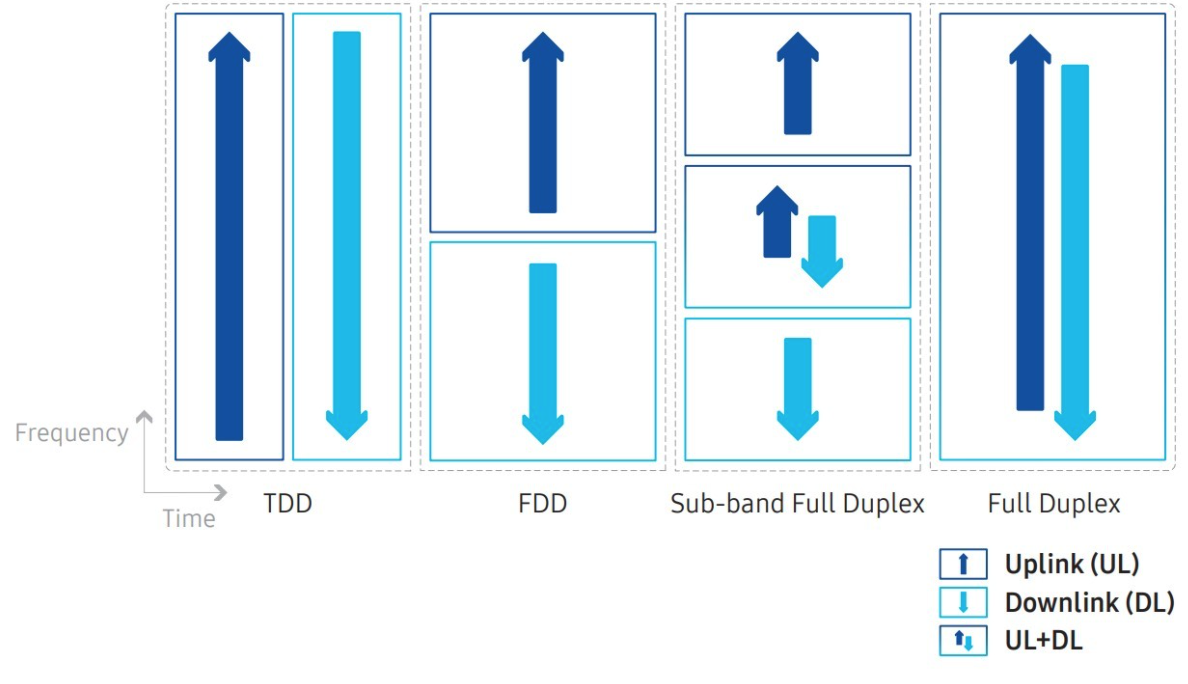
Image: Samsung White Paper
What are Gigahertz and Terahertz?
Basically, the higher your GHz (or even THz), the faster data can be run and processed. Think of it like miles-per-hour on your car. 5G is capable of 100 GHz (akin to 100 mph in your car), but 6G will likely be capable of something more like 1,000 GHz (like going 1,000 mph in your car). Long story short, the higher the number, the faster data can transmit and process.
4G vs. 5G vs. 6G
The easiest way to understand the difference between 4G, 5G, and 6G is by looking at the way the technology is being used and the speed at which the data is being moved.
4G technology explained
4G technology was primarily designed for mobile smart devices and offered data speeds up to 100Mbps. It revolutionized the way people used their mobile devices by making high-quality streaming available with mobile data. There was no need for a Wi-Fi connection to watch videos or download music.
However, there are drawbacks: the 4G networks can’t handle all the devices that currently use them. They have become increasingly congested in urban areas, making it difficult for everyone to have fast data speeds and limiting the utility of mobile hotspots.
5G pros and cons
The emerging 5G networks should solve many of the issues plaguing 4G mobile networks. Once they are fully rolled out they promise to offer data speeds of up to 10Gbps, which is 100 times faster than 4G. They also offer more bandwidth, so more devices can connect to them without causing network congestion.
While 5G is an improvement over 4G, it’s not without its downsides. The biggest challenge currently facing 5G networks is that their fastest speeds are limited to short-range high-band towers. Carriers have placed these towers in urban areas so large numbers of people will have coverage.
However, the fastest 5G speeds among carriers give small pockets of coverage. Other (slower) 5G areas use low and mid-band towers. These towers can offer coverage over longer distances but have a much slower speed.
Get 5G for home internet
5G networks aren't simply for cell phones. Major carriers, like Verizon, and T-Mobile, and AT&T, offer 5G home internet service as an alternative to satellite and wired connections.
|
#1
|
Verizon

5G Home
$50/mo
with AutoPay
|
|
#2
|
AT&T

Internet Air
$55/mo
Price plus taxes and fees. AutoPay & Paperless bill req’d. Not available in all areas.
|
How fast will 6G be?
Current estimates are that 6G speeds will max out at one terabit per second (1Tbps) which is 100 times faster than the estimated final 5G speeds. Both 6G latency and speed will improve compared to current connection stats.
What will 6G be used for?
At this point, scientists hope it can be used for virtually any connection that demands high speeds, stability, and low latency. New technology, high-tech machinery, artificial intelligence, smart cities, and virtual reality could all run on the 6G network. It'll be far more than just a tool for wireless communication.
When is 6G coming?
We won’t see 6G technology until semiconductor materials capable of THz frequencies are invented. According to Samsung’s White Paper report, the company started “defining a 6G vision” in 2020, and 6G technology will be available around 2030.
Here’s what the rough timeline looks like:
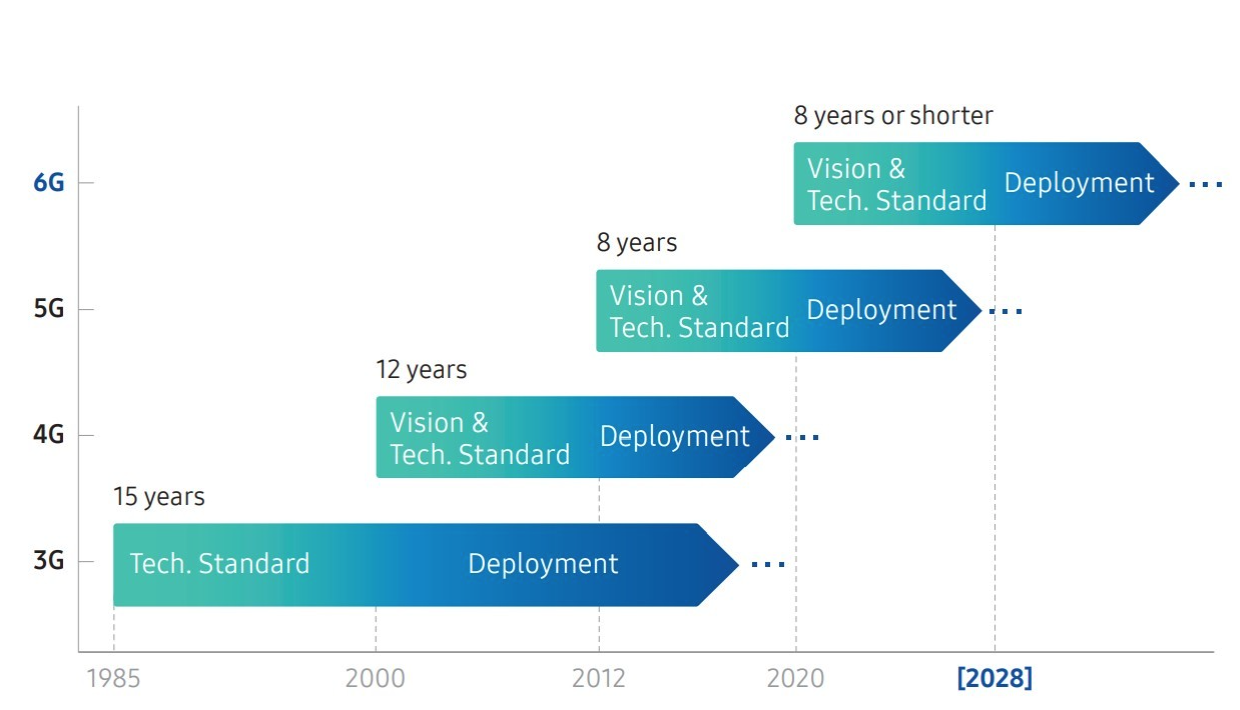
Image: Samsung White Paper
And that 2030 timeline is looking more and more solid, because the groups that actually set wireless standards are now working to a concrete schedule. The 3rd Generation Partnership Project (3GPP), the group that writes the technical rules every carrier's network follows, kicked off its first official 6G studies in Release 20 back in 2025. The first true 6G specifications are slated to arrive in Release 21, with the core specs expected to be finalized by the end of 2028. The ITU, for its part, is targeting early 2029 for formal 6G technology proposals. Line all of that up and you land right where Samsung predicted, with the first commercial 6G networks going live around 2030.
So, don’t plan on getting 6G wireless in your hands until at least 2030. But you have plenty to look forward to until then—the major carriers are still in the process of rolling out their 5G networks, which means if it’s not available near you already, it will be relatively soon.
When will 6G internet be available?
Our best estimate is that 6G internet will be available for consumers around 2030. In the past, it has taken around a decade for each new generation of wireless technology to emerge. Considering that 5G first became available around 2020, it’s a safe bet that 2030 is when 6G could make its appearance.
But some factors could impact how rapidly 6G becomes available. Although 5G technology has been available for some time, it’s not evenly spread. Large swaths of the United States have 5G coverage from one of the major carriers, but many rural areas still don’t. The national 5G networks will need a large, stable footprint for the 6G framework to build off of. Without widespread 5G coverage, 6G can’t emerge.
How will 6G work and what will 6G do?
We don’t know exactly how 6G will work, but we can take some guesses based on how 5G evolved. It’s safe to say that 6G will be at least partially built on the 5G network and technologies. This is the same way that the 5G rollout emerged from 4G wireless networks.
Apart from that, the possibilities are endless. Current projections say it could also use satellite technology, transmit data with light, or use artificial intelligence to manage networks and grow.
Will 6G be safe?
6G will likely be safe provided it operates within the same frequency bands as 5G. Since the current 5G spectrum of radio waves doesn’t have the ability to turn harmful and damage your cells with radiation, 6G shouldn’t be dangerous if it follows suit.
However, given the expectations of faster and greater data transmission with 6G technology, it’s possible the wave frequency will be different. Needless to say, safety will be a major concern for tech companies developing 6G technology. Figuring out the safety, viability, and profitability of 6G technology will certainly be a huge focus over the course of the next decade.
What can we do with 6G technology?
So what does all of that actually look like day-to-day? Samsung has taken the ITU's targets a step further and sketched out some of the more eye-catching possibilities.
Here are some of the main goals Samsung hopes to accomplish with 6G wireless.
Truly immersive XR
XR is the combination of VR (Virtual Reality), AR (Augmented Reality), and MR (Mixed Reality). A truly immersive XR experience would look something like the images below:

Image: Samsung White Paper
Basically, 6G wireless technology would be so fast that you could actually seamlessly interact with digital objects. This type of technology would be a big deal for entertainment, medicine, science, education, manufacturing industries, and basically everything else in the world. Personally, I really like the idea of playing some version of the boardgame Risk with XR technology.
High-fidelity mobile hologram
Have you ever managed to get through a FaceTime call without seeing the “Poor Connection” notification? If 4G and Wi-Fi connections struggle with FaceTime conversations, imagine the firepower one would need to have a fully-realized hologram of a person projected in front of you. Instead of talking to your Mom on your phone, a hologram of your Mom would be sitting in the living room with you, shooting the breeze. Samsung hopes that 6G wireless speeds can allow you to interact with holograms.

Image: Samsung White Paper
Digital replica
6G technology would allow us to duplicate any physical object into a digital object. Imagine a surgeon being able to digitally duplicate your heart and examine that replica thoroughly before putting you under the knife. With 6G wireless speeds, objects can be copied and interacted with digitally without any constraints.

Image: Samsung White Paper
Best 5G phone plans available now
We’ve got a long time to wait for 6G. Luckily, you can take advantage of the rapidly growing 5G networks right now.
Most carriers offer 5G cell phone plans. That includes massive carriers like AT&T or Verizon and smaller carriers like Mint Mobile or Visible. As 5G coverage has grown, these carriers have made access easier than ever by offering 5G to virtually all customers on unlimited plans.
You can check out which 5G cell phone plans are currently most popular below:
iPhone 14 128GB Plans

|
#1
|
Tello

Unlimited Text, 300 Minutes, and 2GB Plan
$8.00/mo
+ $429 Upfront
|
|
#2
|
Visible

$30 Visible+ Plan
$30.00/mo
Taxes & Fees included
+ $629 Upfront
Out of stock
|
|
#3
|
GoTalk Wireless

SafeSim Regular Consumer Plan
$15.00/mo
$45.00 advance payment for 3 months (equals to $15.00/month)
+ $799 Upfront
|
Of course, you’ll need a cell phone with 5G connectivity capabilities if you want to take advantage of those incredibly fast speeds.
Check out the most popular 5G devices below:
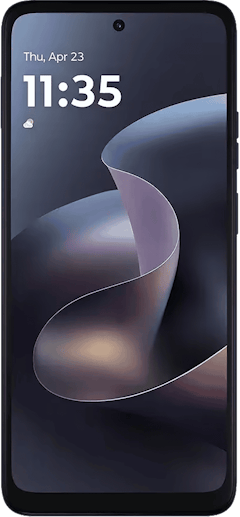
Moto G 5G (2026) 128GB
- 6.7 inch display
- Rear Cameras: 50MP, 2MP
- Front Camera: 32MP
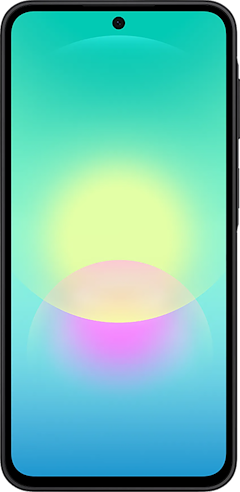
Galaxy A27 5G 128GB
- 6.7 inch display
- Rear Cameras: 50MP, 5MP, 2MP
- Front Camera: 12MP
Galaxy A37 5G 128GB
- 6.7 inch display
- Rear Cameras: 50MP, 8MP, 5MP
- Front Camera: 12MP
Edge (2026) 128GB
- 6.3 inch display
- Rear Cameras: 50MP, 50MP, 10MP
- Front Camera: 50MP

Moto G Stylus 5G (2026) 128GB
- 6.7 inch display
- Rear Cameras: 50MP, 13MP
- Front Camera: 32MP

The wait for 6G technology begins
All of these sci-fi-sounding activities have one thing in common—it’s going to take an absolute bonkers amount of high-speed data to make these things a reality.
As fast as 5G data speeds are, they aren’t even close to what’s required to augment reality in a significant way. For now, holograms and digital replicas are still in the realm of fiction, but 6G technology has the potential to make these things a reality.
Max McCaskill
Sr. Staff Writer

Thousands of cell phone plans unpacked. All the facts. No surprises.





.png?w=280&h=280&usm=20&usmrad=0.8&fit=crop "The Best Cheap Phone Plans for 2026: We Tested Them All to Help You Save")