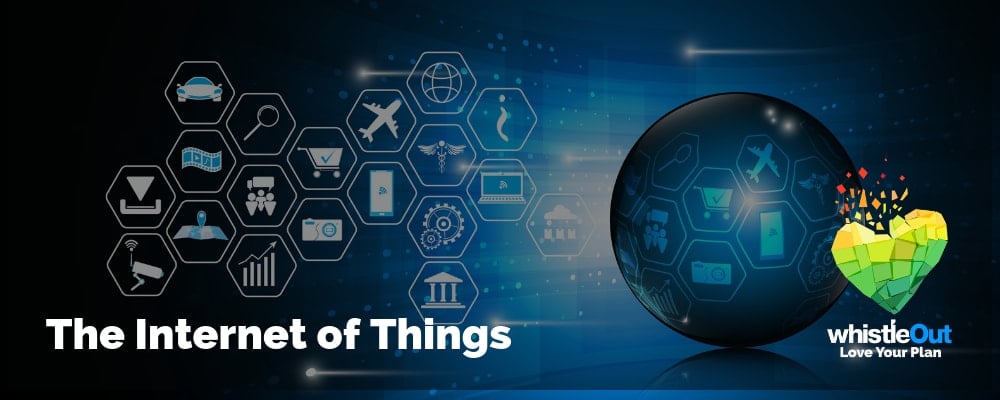
The internet of things has been around for a long time, but as it continues to grow, it is talked about more and more. While the internet of things, basically the connectivity of the things around us, is seemingly omnipresent, it's not exactly something many people think about or even know very much about. Is the internet of things safe? What does it really mean to our lives? What in the world is it? These are only some of the questions revolving around the internet of things.
Whether you know it or not, the internet of things (IoT) is all around us. So many of our things are connected, and it's likely that several of the things that aren't will soon enough be. Experts across tech predict that by 2020 well over 20 billion devices will be connected and thus be part of the internet of things.
What Is the Internet of Things?
Look around you. Chances are you are surrounded by things. If you've hopped on board the Marie Kondo train (thank you Netflix), perhaps you are surrounded by a few less things and those joy-inducing things you still have left are very well organized.
You probably don't have to look very far to find things that are either connected or smart (which are essentially the same thing). Maybe on your wrist there is a smartwatch. Perhaps you're reading this on a smartphone (people debate whether phones should be considered internet of things, erm, things). That TV mounted on your wall is almost certainly a smart TV.
At its most basic definition (and trust us, it can get way more complicated than this depending on who you are talking to) the internet of things is the network of devices that can connect to the internet.
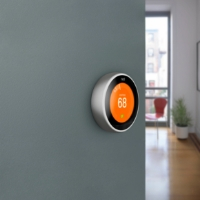
Maybe you've recently replaced your old thermostat with a Nest. You might have even set your home so that when you walk in all you have to do is say "Alexa turn on the hallway lights" and BAM your lights are on. All of these things – the connected and smart things – do at least part of what they do because the internet gives them the ability to do so. They are basically things connected to and by the internet — the internet of things.
A Day in the Life of the Internet of Things
Imagine...
It's 8am and BEEP BEEP BEEP. You didn't set an alarm but through integration with your calendar, your clock knows that you have to be at work in an hour. Not only that, through the data it has gathered over time, it knows that it'll take you just about an hour to get ready, make your commute, and get to work comfortably on time.
You hop into the shower. No need to wait for the water to warm. Your shower already knows your ideal water temp and has it primed and ready for you.

Once you are showered, clothed and ready for the day you make your way to the kitchen and grab your favorite breakfast. Time seems to be running out but no need to worry, you just take that breakfast out with you to the car, enter it, and let it take you off...ON. ITS. OWN.
There's no traffic congestion. Each car knows what the other is going to do before it ever does it, and because of this everything on the roads are flowing to absolute efficiency. Before you know it, that breakfast is done, and you are at work on time and safe.
The workday passes and it's eventually time to go back to home. Your car (again, on its own) get you home safe and sound. Right as you get to your front door you are greeted by a fresh delivery. It's groceries you didn't order, but luckily for you, your refrigerator knew you needed all of them and put the order in for you.
You enter your place, which is already at the optimal temperature. Don't worry the AC wasn't running all day. It just knew when you would be home and kicked in to get things perfect for your arrival.
The rest of your night is filled with an easy to make dinner, and your favorite TV shows. Once it gets late enough you're given the gentle reminder that maybe it's time to get to sleep. You'll have to do it all over again tomorrow.
Not all of this is possible quite yet, but some of it is. Some of it may very well be possible in the near future. Whether it's part of the world now or in the future, it would all be thanks to the internet of things.
What Does the IoT Mean to Me?
Your life might already be affected by the internet of things. However, it might not be affected in very big ways. If your car is relatively new, there's a good chance it's connected with smart features. You might find that when you get into your car in the morning, you're greeted with the best route to work (calculated for traffic). However, as connected as your car might be, it can't actually drive to work for you (yet).
Your watch might be able to track your heart rate, your steps, and other things to help give you a picture of your general health, but it can't replace your doctor. Your fridge might be able to tell you that you need more quinoa, but it's up to you to completely ignore it because...quinoa.
The internet of things is absolutely all around us, and it's only predicted to have an even greater presence in the very near future. Before we know it our lives will be changed in so many little ways by the IoT that it all actually builds up to one really big change. Only time will tell — through connected clocks that wake you up even when you didn't ask it to.
Is the Internet of Things Safe?
This is an important question and one that will continue to grow in importance as more of our things are internet of thing-y. For now, the best you can get out of experts is a "we sure hope so?"
The fact of the matter is, the more things that are connected could very well mean that there are more things to be accessed – more gateways to your precious information and things.
The answer we as consumers need to give to this question is that the internet of things better be safe, and if it isn't, it better be made safe as soon as possible.
The Catch of the Things
Of course there's a catch! With all things connected, the very big catch is that all things will always be gathering data. Your fridge will know that you're out of quinoa, and you might make the decision not to buy quinoa (again, because quinoa!!), but don't be surprised if the next add you see is a commercial reminding you just how nutritionally beneficial quinoa is.
Your things are going to be tracking your behavior and in a world where data is gold, you should expect that your things will be reporting that data. Consumers of today might be used to this. Our data is already being constantly collected and sold. However, many might argue that we are too used to/comfortable with it and that we should be far more concerned that the growth of the internet of things simply means a whole lot more data collection of all of our personal lives and behaviors.
The Internet of It All
Your things, as magical as the might seem, don't just automatically connect to the internet of things. For the most part, they'll need you to do some connecting for them. For your household things, you'll likely be able to just connect to your home internet through your WiFi network. With so many things connected, you'll want to make sure you have a strong internet plan. Take a look at just some of the internet plans you can have to support your household internet of things.
|
#1
|
Astound

150 Mbps Internet
$19.95/mo
Observed speeds may vary | One-time fees extra | Restrictions apply | Not available in all areas | New residential customers only
|
|
#2
|
Kinetic

100 Mbps
$19.99/mo
for 1 year with AutoPay
|
|
#3
|
Breezeline

Internet 100
$20/mo
for 24 months then $45.00/month. Includes $10/mo EcoSave/ AutoPay discount.
|
|
#4
|
Brightspeed

200 Mbps
$29.99/mo
Limited availability/areas. Taxes and fees extra. Autopay required. Pricing Subject to change.
|
|
#5
|
Fidium

1G
$30/mo
With AutoPay. Available in select locations.
+ $199 Upfront
|
|
#6
|
Nextlink

Fiber 500
$30/mo
for 12 months then $50.00/month. Available in select locations.
+ $64.99 Upfront
|
|
#7
|
WOW!

Internet 300
$30/mo
with AutoPay.
+ $10 Upfront
|
|
#8
|
Verizon Fios

300 Mbps
$30/mo
with AutoPay
+ $99 Upfront
|
|
#9
|
Starry

Starry 200
$30/mo
Available in select locations
|
|
#10
|
Spectrum

Spectrum Internet® 100
$30/mo
for 1 year
+ $20 Upfront
|
Angelo Ilumba
Senior Writer

Enter your address to find the best internet providers available in your area.

Related Articles


.jpg?w=160&h=160&usm=20&usmrad=0.8&fit=crop "Viasat vs Hughesnet Internet Plans Compared")
Related Topics
InternetPopular Topics
Internet Spectrum Internet Xfinity Research and Reports AT&T T-Mobile News Verizon MINTernet App ExplainersInternet Providers by State
- Internet in Alabama
- Internet in Alaska
- Internet in Arizona
- Internet in Arkansas
- Internet in California
- Internet in Colorado
- Internet in Connecticut
- Internet in Delaware
- Internet in District of Columbia
- Internet in Florida
- Internet in Georgia
- Internet in Hawaii
- Internet in Idaho
- Internet in Illinois
- Internet in Indiana
- Internet in Iowa
- Internet in Kansas
- Internet in Kentucky
- Internet in Louisiana
- Internet in Maine
- Internet in Maryland
- Internet in Massachusetts
- Internet in Michigan
- Internet in Minnesota
- Internet in Mississippi
- Internet in Missouri
- Internet in Montana
- Internet in Nebraska
- Internet in Nevada
- Internet in New Hampshire
- Internet in New Jersey
- Internet in New Mexico
- Internet in New York
- Internet in North Carolina
- Internet in North Dakota
- Internet in Ohio
- Internet in Oklahoma
- Internet in Oregon
- Internet in Pennsylvania
- Internet in Rhode Island
- Internet in South Carolina
- Internet in South Dakota
- Internet in Tennessee
- Internet in Texas
- Internet in Utah
- Internet in Vermont
- Internet in Virginia
- Internet in Washington
- Internet in West Virginia
- Internet in Wisconsin
- Internet in Wyoming


.jpg?w=280&h=280&usm=20&usmrad=0.8&fit=crop "Verizon Fios Internet vs. Optimum Internet")

.jpg?w=280&h=280&usm=20&usmrad=0.8&fit=crop "Viasat vs Hughesnet Internet Plans Compared")


.jpg?w=280&h=280&usm=20&usmrad=0.8&fit=crop "gFiber vs. AT&T Fiber: Which internet is better for you?")