Starlink satellite internet has made a big splash in the broadband universe, giving consumers another option for high-speed satellite internet. Although more expensive than other internet types, Starlink offers fast and reliable internet in some of the most remote locations in the nation.
On the other hand, fiber networks are still the gold standard for internet connectivity. They're more reliable and much faster than Starlink's satellite network. Plus, the cost of fiber plans is usually lower too. That said, fiber is more limited in availability with internet companies still building out their infrastructure in many places.
Our internet experts Max McCaskill (that's me) and Lauren Hannula have used Starlink and fiber internet for years for tasks like gaming, streaming, and remote work. For most customers, fiber internet is the cheaper and faster option. Looking at the two services, we've found:
- Starlink is best for customers in remote areas who need high-speed internet.
- Fiber internet is best for customers who need incredibly fast download speeds, a cheaper internet plan, or who struggle to understand technology.
Keep reading to see how we've compared Starlink and fiber internet in terms of speed, availability, reliability, and cost.
Get to the point: Starlink vs. fiber
There's a lot of variability among Starlink plans and fiber plans from other providers. That said, we can make some broad distinctions between the two. Here’s a quick rundown of the pricing and features of Starlink and average fiber plans:
| Starlink | Fiber | |
|---|---|---|
| Plan prices | $50–$165/month | $20–$200/month |
| Equipment costs | $349 | Free from most ISPs |
| 5G networks and speeds* | 25–200Mbps |
100Mbps–8Gbps |
| Self-installation | Yes | No |
| Bundle w/ phone or TV | No | Yes |
| Shop Starlink | Search plans |
The bottom line:
Customers who can access fiber internet will generally find it's the better option. In general, fiber is often cheaper than Starlink's plans and equipment. It also offers much faster download speeds and a more reliable connection, making your overall internet experience better. Finally, fiber providers like AT&T and Verizon Fios let customers bundle services—like wireless and internet—for extra savings and convenience.
Starlink is the best option for customers in areas without a fiber hookup. Despite the high prices, satellite internet's wide availability in rural areas is one of its biggest perks. Plus, it offers faster speeds than rival providers like Viasat or HughesNet. While customers in urban areas can still purchase Starlink, it's just not as good a value as fiber.
If you're not sure about your internet needs, check out our internet speed guide to determine what speed is best for your household. This knowledge will help you decide if the speeds provided by Starlink are good enough or if you should be looking for a faster fiber or cable connection.
What is Starlink internet and how does it work?
Starlink internet is a satellite internet service that operates using a "constellation" of low-Earth orbit (LEO) satellites, around 300 miles above the planet's surface. That's tens of thousands of miles closer than standard satellites, which orbit around 22,000 miles above Earth.
Standard satellites match the speed of Earth's orbit, essentially staying in the same position above the planet constantly. Because of this stationary position, standard telecom satellites can only communicate with the specific areas they're located above. LEO satellites like Starlink's, on the other hand, pass one another frequently, with multiple satellites "talking" to each other in a given area at any one time. This allows them to transmit large packets of information and hand off connections from one satellite to another without interruptions.
Starlink's internet network is slated to be the largest satellite network ever built. SpaceX hopes to launch upwards of 42,000 LEO satellites to comprise its Starlink network. As of early 2026, you'll find roughly 10,000 Starlink satellites floating around our planet.
|
Starlink

Residential 100 Mbps
$55/mo
Available in select locations
+ $418 Upfront
|
What is fiber internet and how does it work?
Fiber internet is the most advanced type of broadband internet currently available.
Fiber internet (short for "fiber-optic") is delivered through cables made of small, flexible glass strands. Unlike cable internet, which uses copper coaxial cables to send data via electricity, these glass fibers use light pulses to transmit information back and forth. This makeup results in blazing-fast internet speeds—potentially up to 10Gbps or higher.
Fiber networks are typically entirely grounded, meaning they're buried deep within the Earth. This protects the cables from common interruption-prone issues like weather events or curious wildlife.
Some of the top fiber internet providers in the U.S. include Xfinity, Verizon Fios, Spectrum, and Frontier.
Is Starlink faster than fiber internet?
Starlink is not faster than most fiber internet plans. Even some of the slowest fiber plans still reach 100Mbps, which is around the average top speed of Starlink.
Starlink internet reaches speeds up to 100Mbps
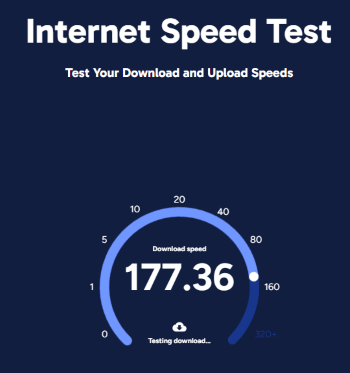
hardwired ethernet connection.
Image: Max McCaskill
I've been a Starlink internet customer for over three years and have seen average download speeds of around 100Mbps. While I regularly achieve speeds upwards of 175Mbps, I've also seen it drop as low as 20Mbps during "peak hours." These hours are when most people are home using their service and typically stretch between 6 p.m. and 11 p.m. local time. High numbers of users strain the network and slow down speeds for everyone in your area.
Fiber internet can reach speeds over 10Gbps
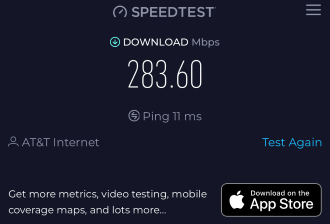
Image: Lauren Hannula
Fiber internet offers incredibly fast speeds, with most plans averaging between 100Mbps-1Gbps. Some plans can even reach speeds up to 10Gbps, though they're very expensive and not available from all providers. Lauren Hannula—WhistleOut's Managing Editor—has the AT&T 300 fiber plan and regularly sees speeds in excess of 300Mbps.
100Mbps is usually fast enough for an average person's needs, meaning a cheaper fiber plan with lower speeds is still probably more than enough for tasks like gaming, streaming, and working from home.
Fiber internet has a much lower latency than Starlink
Latency and bandwidth are the most important factors other than speed for determining internet quality. Latency is how long it takes for your internet signal to make a round trip from your device to the server and back, measured in milliseconds (ms). A lower latency indicates faster download speeds, while a higher latency results in lag and buffering. Bandwidth is the amount of data that can be transferred over a network connection. The higher your bandwidth, the faster your speeds are, and the more users can connect to your internet without slowing it down.
As a hardwired connection, fiber has much lower latency than satellite internet, meaning it's faster and more reliable. Lauren's AT&T Fiber latency was around 11ms, which is incredibly fast. My Starlink latency is typically over 30ms, which is usable, but it means I sometimes see things like lagging screens when playing video games. Remember that Starlink's signal must pass over 300 miles between satellites and your dish, so latency rates will be much higher. That said, Starlink offers decently low latency for a satellite provider. The latency rates for HughesNet and Viasat are over 600ms.
As for bandwidth, fiber internet generally has a much higher bandwidth than Starlink. More users can connect to your router without slowing the speeds down. Starlink's bandwidth is lower, meaning that it doesn't take many users to slow the service in your home to a crawl.
Is Starlink or fiber better for working from home?
Fiber is the better choice for most remote workers, and upload speed is the reason why. Fiber plans are typically symmetrical, meaning you get the same speed going up as you do coming down. That matters a lot on video calls like Zoom, Teams, and Google Meet, which all rely heavily on your upload speed.
Starlink's upload speeds cap out around 40Mbps on the MAX plan and often average much lower in practice. For a solo worker on a call, that's usually fine. But if you're regularly sharing large files, running cloud backups in the background, or doing anything that pushes data outward, you'll feel the ceiling.
Latency is the other factor. Fiber's latency typically runs below 15ms. Starlink averages around 30ms or higher. For most work tasks, that difference is invisible. For VoIP calls or anything real-time, it occasionally isn't.
Pro tip: If you're a remote worker in a rural area with no fiber option, Starlink is still a solid choice. Just close your background apps before a big call.
How much does Starlink cost compared to fiber?
Fiber is generally more affordable than Starlink, because of both the plan offerings and the equipment costs. Starlink's Residential MAX plan runs at $120/month while the average fiber bill is $50–$100/month.
Starlink internet plans
Starlink currently runs at $120/month for its 400Mbps Residential MAX plan, which is more expensive than the average fiber plan. You'll also have to pay $10/month for equipment rental. The good news is, for residential plans, there are currently no data caps.
|
Starlink
Residential 200 Mbps
$85/mo
Available in select locations
+ $418 Upfront
|
|
Starlink
Residential MAX
$130/mo
Available in select locations
+ $369 Upfront
|
Fiber internet plans
Fiber is generally an affordable option for internet service. That said, it's still a bit more expensive on average than cable since the fiber network is still expanding in many places.
The average fiber internet bill is around $50–100/month, but is highly dependent on your speed, data cap (if any), and any bundles you may have opted for. Getting a plan with the fastest speeds available could cost you close to $200/month. The good news about fiber is your equipment is generally free or you only pay a low-cost rental fee built into your monthly bill. You will need a technician to install it and you may have to pay for the new fiber cable to run from your home to the street.
|
Verizon Fios

300 Mbps
$30/mo
with AutoPay
+ $99 Upfront
|
|
Xfinity

1 Gig
$50/mo
Internet price guaranteed for 5 years. Price includes $10/mo autopay and paperless discount.
|
|
Spectrum

Spectrum Internet® 100
$30/mo
for 1 year
+ $20 Upfront
|
|
Kinetic

100 Mbps
$19.99/mo
for 1 year with AutoPay
|
|
Spectrum
Spectrum Internet® 500
$40/mo
for 1 year
+ $20 Upfront
|
Contract and commitment terms
One area where Starlink has a clear edge over most fiber providers: there's no annual contract. Starlink is month-to-month, so you can cancel anytime without a penalty. That's a real perk if you move frequently, travel for extended periods, or just want flexibility.
Most fiber providers aren't quite as casual about commitment. AT&T Fiber and Verizon Fios are notable exceptions—both offer no-contract plans. But plenty of regional fiber providers still lock customers into one- or two-year agreements, particularly on promotional pricing. Breaking those contracts early usually means paying out the remaining months or a flat early termination fee.
The other thing worth knowing is that promotional pricing on fiber plans is common. You might sign up for $35/month and find that rate expires after 12 months, jumping to a higher regular rate. Starlink's pricing is less promotional but also less variable, so what you pay now is likely what you'll pay in a year.
Before signing up for any fiber plan, ask specifically whether the price is promotional, and what it reverts to after the promo period ends, so you're not surprised when your bill suddenly jumps up.
Starlink vs. fiber: Availability & reliability
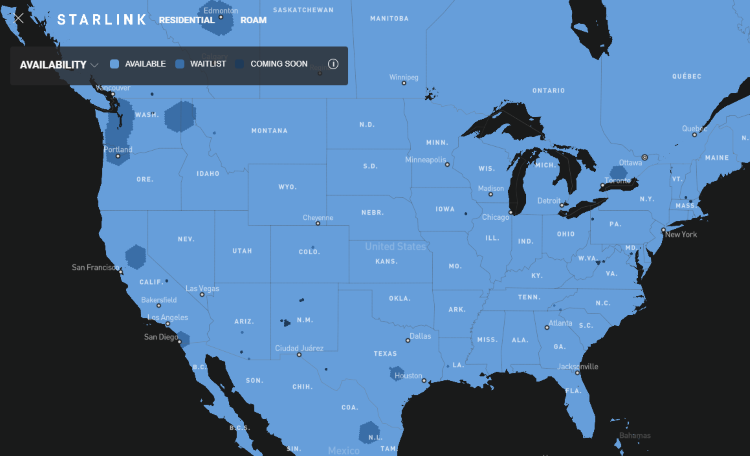
Image: Max McCaskill
Starlink is one of the most widely available internet services. In many rural and remote locations—including where I live—it's the only option for high-speed internet service. However, remember satellite internet is not always the most reliable option. Strong storms or tree branches can slow your speeds and disrupt your service. While placing a Starlink dish in an area with a good view of the sky can help, you're never completely immune from service outages. You should also factor in that you're required to set up Starlink's dish yourself. While the service is accessible, it may not be the best choice for customers who struggle with technology.
Fiber internet is available if your neighborhood has the infrastructure to offer it. It's currently only available to 56% of homes and is typically limited to urban areas. Still, fiber should continue to grow as internet companies continue to update their cable networks. It's also much more reliable than Starlink since it's a hardwired connection to your home.
Pros & cons of Starlink and fiber
| Pros | Cons | |
|---|---|---|
| Starlink |
|
|
| Fiber |
|
|
Is Starlink or fiber internet better?
For most customers, fiber internet is the best option because it offers cheaper plans and incredibly fast download speeds. With pricing averaging $50–$100/month and most plans not requiring customers to purchase equipment, it's much cheaper than Starlink. As for speeds, typical fiber plans start at 100Mbps, but it can reach as fast as 10Gbps. While fiber is not yet as accessible as cable or Starlink, internet service providers are rapidly building out their networks. You may have a fiber hook-up soon if you live in an urban area.
Starlink is the best option for rural customers who can't connect to a fiber or cable network. Its satellite signals are available in even the most remote areas of the country where no other services are offered. With top speeds averaging around 100Mbps, it's solid for virtually all internet tasks including streaming and working from home. As for pricing, its Residential plans start at $50/month and equipment fees can add up to $499, so Starlink is certainly not cheap. However, if you have no other internet options available, it might be worth paying for Starlink to get high-speed internet.
Max McCaskill
Sr. Staff Writer

Enter your address to find the best internet providers available in your area.

Related Articles


.jpg?w=160&h=160&usm=20&usmrad=0.8&fit=crop "Viasat vs Hughesnet Internet Plans Compared")
Related Topics
InternetPopular Topics
Internet Spectrum Internet Xfinity Research and Reports AT&T T-Mobile News Verizon MINTernet App ExplainersInternet Providers by State
- Internet in Alabama
- Internet in Alaska
- Internet in Arizona
- Internet in Arkansas
- Internet in California
- Internet in Colorado
- Internet in Connecticut
- Internet in Delaware
- Internet in District of Columbia
- Internet in Florida
- Internet in Georgia
- Internet in Hawaii
- Internet in Idaho
- Internet in Illinois
- Internet in Indiana
- Internet in Iowa
- Internet in Kansas
- Internet in Kentucky
- Internet in Louisiana
- Internet in Maine
- Internet in Maryland
- Internet in Massachusetts
- Internet in Michigan
- Internet in Minnesota
- Internet in Mississippi
- Internet in Missouri
- Internet in Montana
- Internet in Nebraska
- Internet in Nevada
- Internet in New Hampshire
- Internet in New Jersey
- Internet in New Mexico
- Internet in New York
- Internet in North Carolina
- Internet in North Dakota
- Internet in Ohio
- Internet in Oklahoma
- Internet in Oregon
- Internet in Pennsylvania
- Internet in Rhode Island
- Internet in South Carolina
- Internet in South Dakota
- Internet in Tennessee
- Internet in Texas
- Internet in Utah
- Internet in Vermont
- Internet in Virginia
- Internet in Washington
- Internet in West Virginia
- Internet in Wisconsin
- Internet in Wyoming


.jpg?w=280&h=280&usm=20&usmrad=0.8&fit=crop "Verizon Fios Internet vs. Optimum Internet")

.jpg?w=280&h=280&usm=20&usmrad=0.8&fit=crop "Viasat vs Hughesnet Internet Plans Compared")


.jpg?w=280&h=280&usm=20&usmrad=0.8&fit=crop "gFiber vs. AT&T Fiber: Which internet is better for you?")