Starlink satellite internet, the brainchild of SpaceX and its owner/founder Elon Musk, has made a big splash in the broadband universe, giving consumers yet another option for high-speed internet. Although more expensive than other internet types, Starlink offers fast internet speeds and solid reliability in some of the most remote locations in the nation.
On the other hand, cable internet is still the most popular internet in the country. Serving customers living in towns and cities, it offers excellent reliability and much faster speeds than most forms of satellite internet.
Our internet experts Max McCaskill (that's me) and Daphne Kelly have used Starlink and cable internet for years for tasks like gaming, streaming, and remote work. For most customers, cable internet is the cheaper and faster option. Looking at the two services, we've found:
- Starlink is best for customers in remote areas who need fast speeds.
- Cable internet is best for customers who need fast download speeds, need a cheaper internet plan, or struggle to understand technology.
Keep reading to see how we've compared the two in terms of speed, availability, reliability, and cost.
Get to the point: Starlink vs. cable snapshot
There's a lot of variability among Starlink plans and cable plans from other providers. That said, we can make some broad distinctions between the two. Here’s a quick rundown of the pricing and features of Starlink and average cable plans:
| Starlink | Cable | |
|---|---|---|
| Plan prices | $50–$165/month | $20–$100/month |
| Equipment costs | $349 | Free from most ISPs |
| 5G networks and speeds* | 100–400Mbps |
50Mbps–1Gbps |
| Self-installation | Yes | No |
| Bundle w/ phone or TV | No | Yes |
| Shop Starlink | Search plans |
The bottom line:
Customers with access to a cable hookup will generally find it's the better option. Cable is often cheaper than Starlink's plans and equipment. It also offers faster download speeds and a more reliable connection. Finally, major cable providers like Xfinity let customers bundle services—like wireless and internet—for extra savings and convenience.
Starlink is the best option for customers in areas without a cable or fiber hookup. Despite the high prices, the service's wide availability in rural areas is one of its biggest perks. Plus, it offers faster speeds than rival satellite providers like Viasat or HughesNet. While customers in urban areas can still purchase Starlink, it's just not as good a value as cable.
If you're not sure about your internet needs, check out our internet speed guide to determine what speed is best for your household. This knowledge will help you decide if the speeds provided by Starlink are fast enough or if you should be looking for a cable connection.
What is Starlink internet and how does it work?
Starlink internet is a satellite internet service, but it's galaxies away from the typical satellite internet you're familiar with. Starlink's "constellation" satellite network lives in low-Earth orbit (LEO), around 300 miles above the planet's surface—tens of thousands of miles closer than standard satellites, which orbit around 22,000 miles above Earth.
Objects positioned in LEO also travel much faster than those located higher, which match the speed of Earth's orbit and therefore essentially stay in the same position above the planet. Because of this stationary position, standard telecom satellites can only communicate with the specific areas they're located above. LEO satellites like Starlink's, on the other hand, pass one another frequently, with a number of satellites "talking" to each other in a given area at any one time. This allows them to transmit large packets of information and hand off connections from one satellite to another, resulting in practically uninterrupted service.
Lastly, Starlink's internet network is slated to be the largest satellite network ever built. SpaceX hopes to launch upwards of 42,000 LEO satellites to comprise its Starlink network. As of early 2026, you'll find roughly 10,000 Starlink satellites floating around our planet with many more thousands planned for this year.
|
Starlink

Residential 100 Mbps
$55/mo
Available in select locations
+ $418 Upfront
|
What is Cable internet and how does it work?
Cable internet is one of the most popular broadband internet types on the market, because of its wide accessibility and speedy connection. It uses the same coaxial cables that provide cable TV service, but the signal travels along unused parts of the copper wires that are dedicated exclusively to internet frequencies. This allows your internet service provider (ISP) to deliver internet to your home without interrupting your television signal.
Data is transmitted along those wires via an electrical current, resulting in a speedy journey from your ISP's servers straight to your computer. Unlike its most recent successor, fiber internet, cable networks are already well established throughout the country, making it an affordable and available option to most consumers.
Is Starlink faster than cable internet?
Starlink is not faster than most cable internet plans. While there are some budget cable plans with throttled speeds, in general, cable is faster and more reliable than any kind of satellite internet.
Starlink internet reaches speeds up to 100Mbps
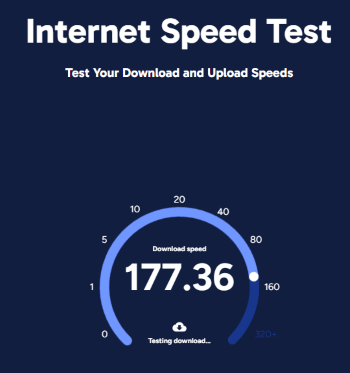
hardwired ethernet connection.
Image: Max McCaskill
I've used Starlink internet for over three years and have seen average download speeds around 100Mbps. While I regularly achieve speeds upwards of 175Mbps, I've also seen it drop as low as 20Mbps during "peak hours." These hours are when most people heavily use their service and usually stretch between 6 p.m. and 11 p.m. local time. High numbers of users can strain the network and slow down speeds for everyone.
Cable internet can reach speeds over 1Gbps
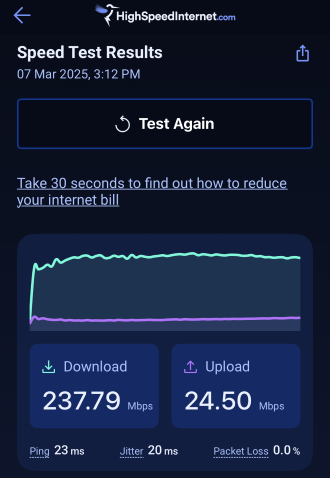
Image: Daphne Kelly
Cable offers lightning-fast internet speeds, averaging between 25–400Mbps—though some cable providers do offer plans up to 1Gbps. The individual speeds depend on your plan and provider. Daphne Kelly—WhistleOut's contributing editor—has a cable internet plan with Sparklight and regularly sees speeds around 250Mbps.
100Mbps is usually plenty fast for most households, making cable's standard speeds more than enough to satisfy the majority of customers. That said, cable internet speeds are also heavily affected by network bandwidth, meaning the more people using your network signal at once, the slower your speeds will be.
Cable internet has a lower latency than Starlink
Latency and bandwidth are the most important factors other than speed for determining internet quality. Latency is the delay in network communication for internet services. Simply put, it's how quickly data travels between devices. A lower latency speed indicates faster download speeds, while a higher latency results in internet lag and delays. Bandwidth is the amount of data that can be transferred over a network connection. The higher your bandwidth, the faster your speeds are, and the more users can connect to your internet without slowing it down.
As a hardwired connection, cable has much lower latency than satellite internet, meaning it's faster and more reliable. Daphne's Sparklite latency was around 20 milliseconds (ms), while my Starlink latency is typically over 30ms. Remember that Starlink's signal must pass over 300 miles between satellites and your dish, so latency rates will be much higher. That said, Starlink offers decently low latency for a satellite provider. The latency rates for HughesNet and Viasat are over 600ms.
As for bandwidth, cable internet generally has a higher bandwidth than Starlink. More users can connect to a cable service without it slowing down. Starlink's bandwidth is lower, meaning that it doesn't take many users to slow the service in your home to a crawl.
Is Starlink or cable better for working from home?
Cable is often the better choice for most remote workers, but it comes with an asterisk. Unlike fiber, cable internet is asymmetrical, which means your download speed is much faster than your upload speed. Most cable plans top out at around 35Mbps upload, which is similar to Starlink's ceiling. For solo video calls and basic file sharing, that's usually enough. For anything heavier, like large file uploads, cloud backups running in the background, or multi-person households where two people are on calls simultaneously, both options start to show their limits.
Where cable does pull ahead is in latency. Cable typically runs between 10–30ms, compared to Starlink's 30ms average that can spike higher during peak hours. For day-to-day remote work, cable's latency is more consistent and predictable.
If you're a remote worker choosing between Starlink and cable, the real question is upload. Check your cable plan's upload speed before you sign because it varies a lot by provider and tier.
How much does Starlink cost compared to cable?
Cable is generally more affordable than Starlink, because of both the plan offerings and the equipment costs. Starlink's current Residential plans run at $50-$120/month while the average cable bill is $60–$80/month.
Starlink internet plans
Starlink currently runs at $50-$120/month for its Residential plans, which is more expensive than cable. You'll also have to pay $10/month for equipment rental. The good news is that, for residential plans, there are currently no data caps.
|
Starlink
Residential 200 Mbps
$85/mo
Available in select locations
+ $418 Upfront
|
|
Starlink
Residential MAX
$130/mo
Available in select locations
+ $369 Upfront
|
Cable internet plans
Cable is an extremely affordable option for internet service. This pricing is possible since the infrastructure already exists (unlike fiber, which is still in its relative infancy and costs a chunk of money to build). This infrastructure also allows cable internet providers to offer a variety of plan speeds and data allowances that meet a variety of budgets.
The average cable internet bill is around $60–80/month, but is highly dependent on your speed, data cap (if any), and any bundles you may have opted for. The good news about cable is your equipment is generally free or you only pay a low-cost rental fee built into your monthly bill. No need to pay upfront for equipment or install it yourself. Popular providers like Xfinity and Spectrum offer plans starting around $30/month.
|
Xfinity

300 Mbps
$40/mo
Internet price guaranteed for 5 years. Price includes $10/mo autopay and paperless discount.
|
|
WOW!

Internet 1 Gig
$50/mo
with AutoPay.
+ $10 Upfront
|
|
Armstrong

25 Mbps
$34.95/mo
Available in select locations
|
|
Breezeline

Internet 1 Gig
$45/mo
for 24 months then $75.00/month. Includes $10/mo EcoSave/ AutoPay discount.
|
|
Optimum

300 Mbps Internet
$35/mo
with AutoPay & Paperless Bill. Wired connection. WiFi speeds may vary. Not available in all areas.
|
Contract and commitment terms
Starlink is month-to-month with no annual contract, which gives it a real flexibility advantage over most cable providers. Cancel anytime, no penalty.
Cable internet is a different story. Most major cable providers like Xfinity, Spectrum, and Cox technically offer no-contract plans, but promotional pricing is nearly universal, and the fine print matters. That $50/month intro rate often climbs significantly after 12 months, and some providers still bundle equipment rental fees or require a contract to lock in the advertised price.
Spectrum is one of the cleaner exceptions with no contracts and no data caps on most plans. But across the cable industry broadly, the gap between the promotional rate and what you actually pay in year two is one of the biggest sources of customer frustration.
Starlink's pricing is more straightforward by comparison. No promotional period, no rate hike after 12 months. You pay the same in month one as you do in month 24.
Our advice: When comparing cable plans, always ask what the price is after the promotional period ends. The monthly rate in the advertisement is rarely the rate you'll pay long-term.
Starlink vs. cable: Availability & reliability
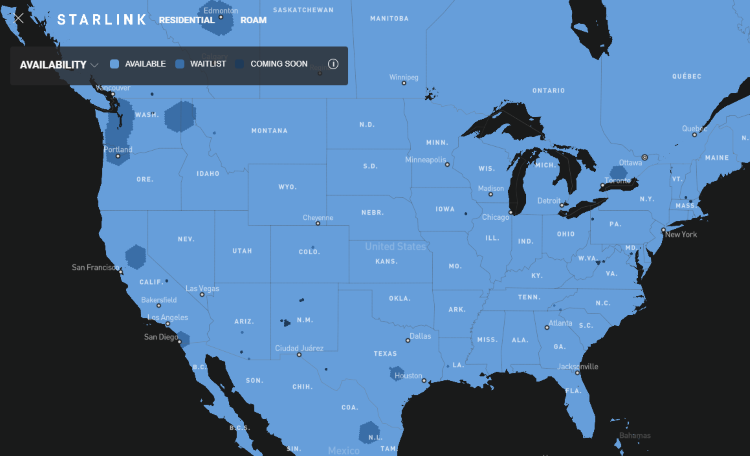
Image: Max McCaskill
Starlink is one of the most widely available internet services that currently exists. In many rural and remote locations—including where I live—it's the only option for high-speed internet service. However, remember satellite internet is not always the most reliable option. Strong storms or trees can slow your speeds or even disrupt your service. While placing a Starlink dish in an area with a good view of the sky can help, you're never completely immune from service outages. You should also factor in that you're required to set up Starlink's dish yourself. While the service is accessible, it may not be the best choice for customers who struggle with technology.
Cable internet is available if your neighborhood has the infrastructure to offer it. That typically means it's only available in cities and urban areas. Still, that's not necessarily a bad thing! The FCC has found that cable is available to 82% of U.S. households since most people live in urban areas. It's also much more reliable than Starlink since it's a hardwired connection to your home.
Pros & cons of Starlink and cable
| Pros | Cons | |
|---|---|---|
| Starlink |
|
|
| Cable |
|
|
Is Starlink or cable internet better?
For most customers, cable internet is the best option because it offers cheaper prices, faster download speeds, and widespread availability. With pricing averaging $60–$80/month and most plans not requiring customers to purchase equipment, it's much cheaper than Starlink. As for speeds, while most plans stretch from 200–400Mbps, you can even find cable plans with download speeds up to 1Gbps. Finally, cable is the most widely used internet in the U.S. with 82% of households having potential access, so most customers can probably get a plan.
Starlink is the best option for rural customers who can't connect to a cable network. Its satellite signals are available in even the most remote areas of the country where no other internet types are offered. With speeds averaging around 100Mbps, it's solid for virtually all internet tasks including streaming and working from home. That said, with its plans priced $50-$120/month and equipment fees can add up to $499, so Starlink is not cheap. However, if you have no other internet options available, it might be worth paying for Starlink to get high-speed internet.
Not sure what's available at your address? Compare internet plans from all major providers to find the best option for your home.
Max McCaskill
Sr. Staff Writer

Enter your address to find the best internet providers available in your area.

Related Articles


.jpg?w=160&h=160&usm=20&usmrad=0.8&fit=crop "Viasat vs Hughesnet Internet Plans Compared")
Related Topics
InternetPopular Topics
Internet Spectrum Internet Xfinity Research and Reports AT&T T-Mobile News Verizon MINTernet App ExplainersInternet Providers by State
- Internet in Alabama
- Internet in Alaska
- Internet in Arizona
- Internet in Arkansas
- Internet in California
- Internet in Colorado
- Internet in Connecticut
- Internet in Delaware
- Internet in District of Columbia
- Internet in Florida
- Internet in Georgia
- Internet in Hawaii
- Internet in Idaho
- Internet in Illinois
- Internet in Indiana
- Internet in Iowa
- Internet in Kansas
- Internet in Kentucky
- Internet in Louisiana
- Internet in Maine
- Internet in Maryland
- Internet in Massachusetts
- Internet in Michigan
- Internet in Minnesota
- Internet in Mississippi
- Internet in Missouri
- Internet in Montana
- Internet in Nebraska
- Internet in Nevada
- Internet in New Hampshire
- Internet in New Jersey
- Internet in New Mexico
- Internet in New York
- Internet in North Carolina
- Internet in North Dakota
- Internet in Ohio
- Internet in Oklahoma
- Internet in Oregon
- Internet in Pennsylvania
- Internet in Rhode Island
- Internet in South Carolina
- Internet in South Dakota
- Internet in Tennessee
- Internet in Texas
- Internet in Utah
- Internet in Vermont
- Internet in Virginia
- Internet in Washington
- Internet in West Virginia
- Internet in Wisconsin
- Internet in Wyoming


.jpg?w=280&h=280&usm=20&usmrad=0.8&fit=crop "Verizon Fios Internet vs. Optimum Internet")

.jpg?w=280&h=280&usm=20&usmrad=0.8&fit=crop "Viasat vs Hughesnet Internet Plans Compared")


.jpg?w=280&h=280&usm=20&usmrad=0.8&fit=crop "gFiber vs. AT&T Fiber: Which internet is better for you?")