Would you rather scroll through your phone than talk to the people around you? If so, you’re not alone. This behavior is called “phubbing,” which means to snub the people around you in favor of using your cell phone. While this isn’t a problem with strangers on the bus or at the grocery store, phubbing is increasingly occurring in personal relationships where it can take a major toll.
Here at WhistleOut, we surveyed 1,000 U.S. adults to see just how pervasive phubbing has become. We found that 50% of Americans have been victims of phubbing in face-to-face interactions. It happens during all kinds of situations, including dates, job interviews, and even during sex.
Let’s dive into the data and learn more about what kinds of people are most guilty of phubbing, the situations when it happens, and what you can do to fight back and save your relationships.
Phubbing facts and figures:
- Phubbing is a sign of screen addiction
- Symptoms of screen addiction
- Americans have reported experiencing "phubbing" during job interviews, on dates, and even in the middle of sex
- 50% of Americans have been a victim of "phubbing" during a face-to-face conversation
- Women are more likely to be "phubbed" than men
- Millennials are the most likely to admit to snubbing someone for their phone (55%), while Baby Boomers are the least likely (28%)
- Tips to avoid phubbing
- Methodology
What is phubbing?
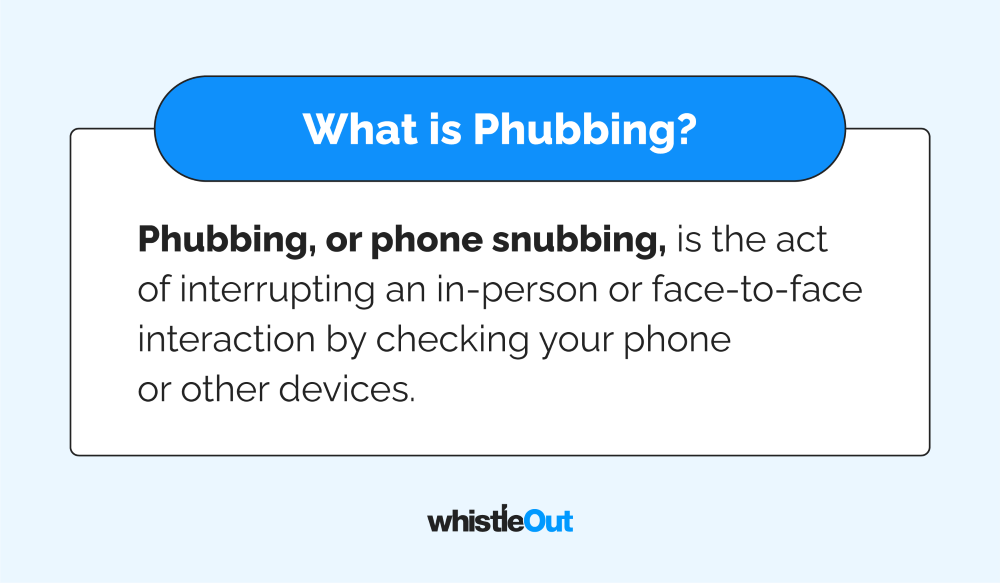
“Phubbing” is the act of snubbing someone in favor of spending time on your cell phone. It’s a combination of the words “phone” and “snubbing.”
As phones have grown more important in our lives, phubbing has become an insidious habit in many relationships. Instead of talking to their partner or spending time with their kids, some people are electing to doomscroll through their social media or respond to texts.
You’ll find complaints about phubbing across the internet from social media posts to news stories. It happens with your coworkers, within your marriage, and among your friends. It seems our relationships with our phones are starting to threaten our relationships with the people around us.
What are pubbing behaviors?
- Ignoring people around you to look at your cell phone
- Using your cell phone mid-conversation
- Interrupting ongoing situations by using your phone
Why do people phone snub?
There are several reasons why people may phone snub, including:
- Cell phone addiction
- Social anxiety
- Boredom
Habitual phubbing is a clear sign of cell phone addiction. That said, it’s a sign that’s often ignored. Many people don’t realize they are phubbing because it feels like they’re simply using their phones. They don’t understand that it’s a compulsive action or that they may be hurting the feelings of the people around them.
Another reason is social anxiety. Some people are more comfortable hiding behind their phones than dealing with personal conflicts. This can be especially destructive within personal relationships. Instead of talking through problems with their partner, some people choose to ignore them altogether by using their smartphones.
Finally, there’s boredom. Our phones are incredibly entertaining, and often, real life is just not. Why spend time listening to a boring story when you could be watching TikTok or scrolling through Instagram?
Screen addiction symptoms
You might be an addict… at least when it comes to your cell phone. Almost half of Americans have self-reported that they are addicted to their phones. However, the true number may be even higher, as many people don’t realize they’re addicted.
Here are some screen addiction symptoms:
- Phubbing
- Anxiety when parted from your phone (also known as nomophobia)
- Poor sleep from using your phone before bed
- Bad posture and back pain from looking down at your phone
- Compulsive notification checking
- Using your phone during inappropriate times, like while driving
Phubbing is often just a symptom of the broader issue of screen addiction. When people are addicted to their phones, they get a dopamine hit whenever they use them. Essentially, screen addiction can cause people’s brains to reward them for phubbing.
When does phubbing happen?
Phubbing is pervasive in all aspects of life. Americans have reported experiencing phubbing during job interviews, on dates, and even in the middle of sex.
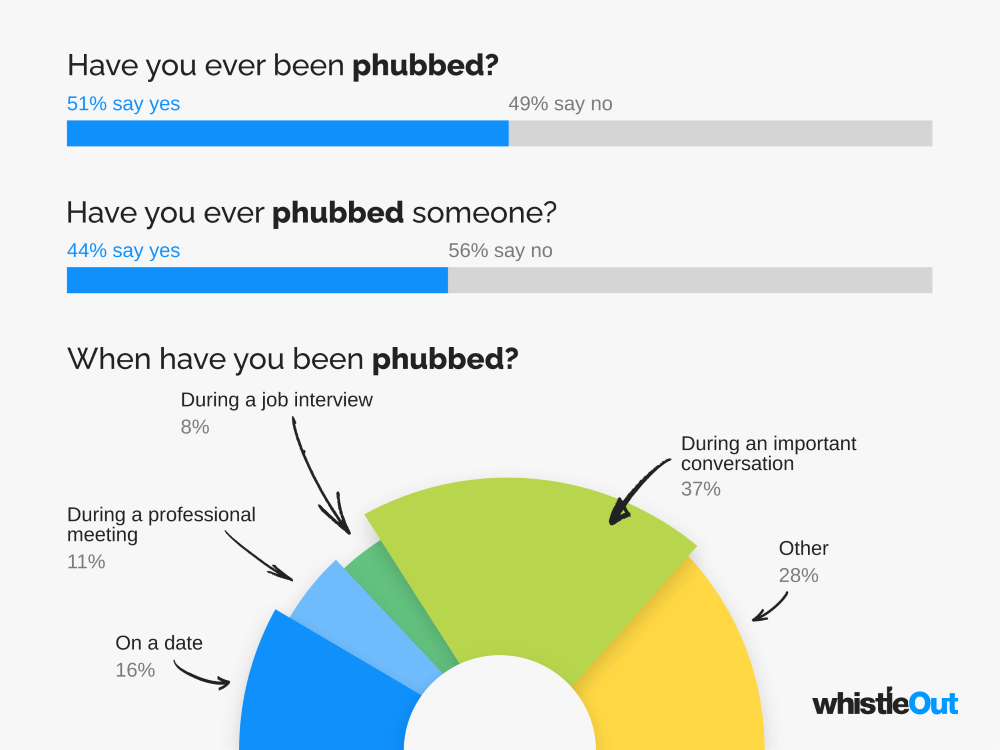
- 1 in 10 people have experienced "phubbing" during a job interview
- 1 in 5 people have experienced "phubbing" on a date
At its core, phubbing tells people, “I find my cell phone more interesting than you.” It’s disappointing to be phubbed by a potential employer. However, being phubbed while on a first date or during sex can be emotionally devastating.
Half of Americans are victims of phubbing
Many Americans have been victims of phubbing, but not quite as many are willing to admit they’ve done it themselves.
- 50% of Americans have been a victim of "phubbing" during a face-to-face conversation
- Only 44% of Americans admit to "phubbing" other people during face-to-face conversations
Why the slight difference? It’s likely that people may not even realize they’re phubbing someone else. Looking at your phone is such a common occurrence that you may not recognize when you’re ignoring the people around you. It’s much easier to recognize phubbing when you’re the victim of it.
Women admit to phubbing more than men
There are some differences in phubbing behavior between men and women.
- Women are more likely to be "phubbed" than men
- Men are slightly less likely to snub someone for their phone than women
Women are most likely to be victims of phubbing, with over half of respondents saying they’ve experienced the behavior. However, women are also more likely to be the phubbing culprits in the first place.
All ages are guilty of phubbing
Phubbing as a behavior stretches through multiple generations. That said, some age groups are more likely to engage in the practice.
- Millennials are the most likely to admit to snubbing someone for their phone (55%), while baby boomers are the least likely (28%)
- Gen X and millennials are tied for the most likely to have been victims of phubbing
- Over half of Gen Zers and millennials admit to snubbing in-person conversations in favor of checking their phone
While you might think that older Americans would refrain from phubbing, the fact that 28% of baby boomers admit they’ve snubbed someone for their phone shows this a problem for all ages.
As the most tech-savvy generations, younger Americans are more guilty of phubbing. Over half of Gen Z and millennials admit to phubbing. That said, the most likely victims are millennials and Gen X. This suggests Gen Z will admit to phubbing more frequently, but its members don’t necessarily see it as a problem in the same way older generations do.
How to avoid phubbing
Phubbing is not a healthy practice. Whether intentional or not, it gives off a signal that you don’t think the people around you are interesting. This can put a strain on your relationships, both in your personal life and professionally.
If you’ve realized you’re a phubber, there are some steps you can take:
- Turn your phone off during important events
- Break your screen addiction
- Be present in your conversations
Turning off your phone is the easiest way to avoid phubbing, at least in the short term. There are times when you just shouldn’t be playing on your phone. Meetings at work, dates, and getting intimate with your partner are obvious examples. However, think beyond that. Do you really need to see what your college buddy posted on X during family dinner time? Is that Facebook notification really more important than asking your kids about their day?
Since phubbing is often a symptom of screen addiction, treating that underlying cause might fix the problem. Screen addiction is not a clinical diagnosis, but excessive screen time can have an impact on your physical and mental health. We all love our phones, but it’s possible to love them too much. Consider using apps that limit your phone usage and try to find other ways to occupy your time. You can also buy products like the Brick or Autonomous Key to temporarily lock yourself out of problematic apps. Using your phone a healthy amount will make you feel better overall.
Improve your mental and financial health
If you’ve managed to break the phubbing habit, you may also be ready to beat another common problem with cell phones: spending too much on your data plan. Many people don't realize they're not using all the mobile data they're paying for. If you want to only pay for the data you use, consider switching to a limited data plan.
Family plans are one of the best options for saving money and you can often save on plans from both large carriers and MVNOs. You can also check out our list of the best plans for two lines if you’re simply looking for a plan for you and your partner.
Finally, be vigilant when spending time with others. If you get the urge to pull your phone out during a conversation, try changing the subject or find another way to stay present in the moment. Simply having a good conversation might be all it takes to defeat the little voice in your head telling you it’s time to watch TikTok for a few hours.
Methodology
We conducted a survey of 1,000 U.S. adults using Pollfish. Results are post-stratified.
Max McCaskill
Sr. Staff Writer

Thousands of cell phone plans unpacked. All the facts. No surprises.





.png?w=280&h=280&usm=20&usmrad=0.8&fit=crop "The Best Cheap Phone Plans for 2026: We Tested Them All to Help You Save")