Viasat Essentials
- Typical Download Speed: 36 Mbps
- Typical Upload Speed: 5 Mbps
- Typical Latency: 601 ms
- Monthly Data: Unlimited
- Suitable for 2-4 Users
- Deal: New customers get $20 dollars off for the first 12 months

Lite
- Typical Download Speed: 25 Mbps
- Typical Upload Speed: 3 Mbps
- Monthly Data: 100 GB Priority Data; Unlimited Standard Data
- Suitable for 1-2 Users
Viasat Unleashed
- Typical Download Speed: 28 Mbps
- Typical Upload Speed: 9 Mbps
- Typical Latency: 616 ms
- Monthly Data: Unlimited
- Suitable for 2-4 Users
- Deal: New customers get $20 dollars off for the first 12 months

Residential 100 Mbps
- Typical Download Speed: 100 Mbps
- Typical Upload Speed: 35 Mbps
- Typical Latency: 25-60 ms
- Monthly Data: Unlimited
- Suitable for 2-5 Users
ROAM 100GB
- Typical Download Speed: 100 Mbps
- Typical Upload Speed: 30 Mbps
- Typical Latency: 25-60 ms
- Monthly Data: Unlimited
- Suitable for 2-4 Users
Select
- Advertised Download Speed: 50 Mbps
- Advertised Upload Speed: 5 Mbps
- Monthly Data: 100 GB Priority Data; Unlimited Standard Data
- Suitable for 2-3 Users
Elite
- Advertised Download Speed: 100 Mbps
- Advertised Upload Speed: 5 Mbps
- Monthly Data: 200 GB Priority Data; Unlimited Standard Data
- Suitable for 2-4 Users
ROAM 300GB
- Typical Download Speed: 300 Mbps
- Typical Upload Speed: 30 Mbps
- Typical Latency: 25-60 ms
- Monthly Data: Unlimited
- Suitable for 2-5 Users
Residential 200 Mbps
- Typical Download Speed: 200 Mbps
- Typical Upload Speed: 35 Mbps
- Typical Latency: 25-60 ms
- Monthly Data: Unlimited
- Suitable for 2-5 Users
Viasat Unleashed Max
- Typical Download Speed: 200 Mbps
- Typical Upload Speed: 3 Mbps
- Typical Latency: 616 ms
- Monthly Data: Unlimited
- Suitable for 2-4 Users
- Deal: New customers get $20 dollars off for the first 12 months
Fusion
- Advertised Download Speed: 100 Mbps
- Advertised Upload Speed: 5 Mbps
- Monthly Data: 200 GB Priority Data; Unlimited Standard Data
- Suitable for 2-4 Users
Residential MAX
- Typical Download Speed: 400 Mbps
- Typical Upload Speed: 40 Mbps
- Typical Latency: 25-60 ms
- Monthly Data: Unlimited
- Suitable for 2-4 Users
ROAM Unlimited
- Typical Download Speed: 300 Mbps
- Typical Upload Speed: 30 Mbps
- Typical Latency: 25-60 ms
- Monthly Data: Unlimited
- Suitable for 2-5 Users
Viasat Essentials
- Typical Download Speed: 36 Mbps
- Typical Upload Speed: 5 Mbps
- Typical Latency: 601 ms
- Monthly Data: Unlimited
- Suitable for 2-4 Users
- Deal: New customers get $20 dollars off for the first 12 months
Lite
- Typical Download Speed: 25 Mbps
- Typical Upload Speed: 3 Mbps
- Monthly Data: 100 GB Priority Data; Unlimited Standard Data
- Suitable for 1-2 Users
Viasat Unleashed
- Typical Download Speed: 28 Mbps
- Typical Upload Speed: 9 Mbps
- Typical Latency: 616 ms
- Monthly Data: Unlimited
- Suitable for 2-4 Users
- Deal: New customers get $20 dollars off for the first 12 months
Residential 100 Mbps
- Typical Download Speed: 100 Mbps
- Typical Upload Speed: 35 Mbps
- Typical Latency: 25-60 ms
- Monthly Data: Unlimited
- Suitable for 2-5 Users
ROAM 100GB
- Typical Download Speed: 100 Mbps
- Typical Upload Speed: 30 Mbps
- Typical Latency: 25-60 ms
- Monthly Data: Unlimited
- Suitable for 2-4 Users
Select
- Advertised Download Speed: 50 Mbps
- Advertised Upload Speed: 5 Mbps
- Monthly Data: 100 GB Priority Data; Unlimited Standard Data
- Suitable for 2-3 Users
Elite
- Advertised Download Speed: 100 Mbps
- Advertised Upload Speed: 5 Mbps
- Monthly Data: 200 GB Priority Data; Unlimited Standard Data
- Suitable for 2-4 Users
ROAM 300GB
- Typical Download Speed: 300 Mbps
- Typical Upload Speed: 30 Mbps
- Typical Latency: 25-60 ms
- Monthly Data: Unlimited
- Suitable for 2-5 Users
Residential 200 Mbps
- Typical Download Speed: 200 Mbps
- Typical Upload Speed: 35 Mbps
- Typical Latency: 25-60 ms
- Monthly Data: Unlimited
- Suitable for 2-5 Users
Viasat Unleashed Max
- Typical Download Speed: 200 Mbps
- Typical Upload Speed: 3 Mbps
- Typical Latency: 616 ms
- Monthly Data: Unlimited
- Suitable for 2-4 Users
- Deal: New customers get $20 dollars off for the first 12 months
Fusion
- Advertised Download Speed: 100 Mbps
- Advertised Upload Speed: 5 Mbps
- Monthly Data: 200 GB Priority Data; Unlimited Standard Data
- Suitable for 2-4 Users
Residential MAX
- Typical Download Speed: 400 Mbps
- Typical Upload Speed: 40 Mbps
- Typical Latency: 25-60 ms
- Monthly Data: Unlimited
- Suitable for 2-4 Users
ROAM Unlimited
- Typical Download Speed: 300 Mbps
- Typical Upload Speed: 30 Mbps
- Typical Latency: 25-60 ms
- Monthly Data: Unlimited
- Suitable for 2-5 Users


What is Satellite Internet?
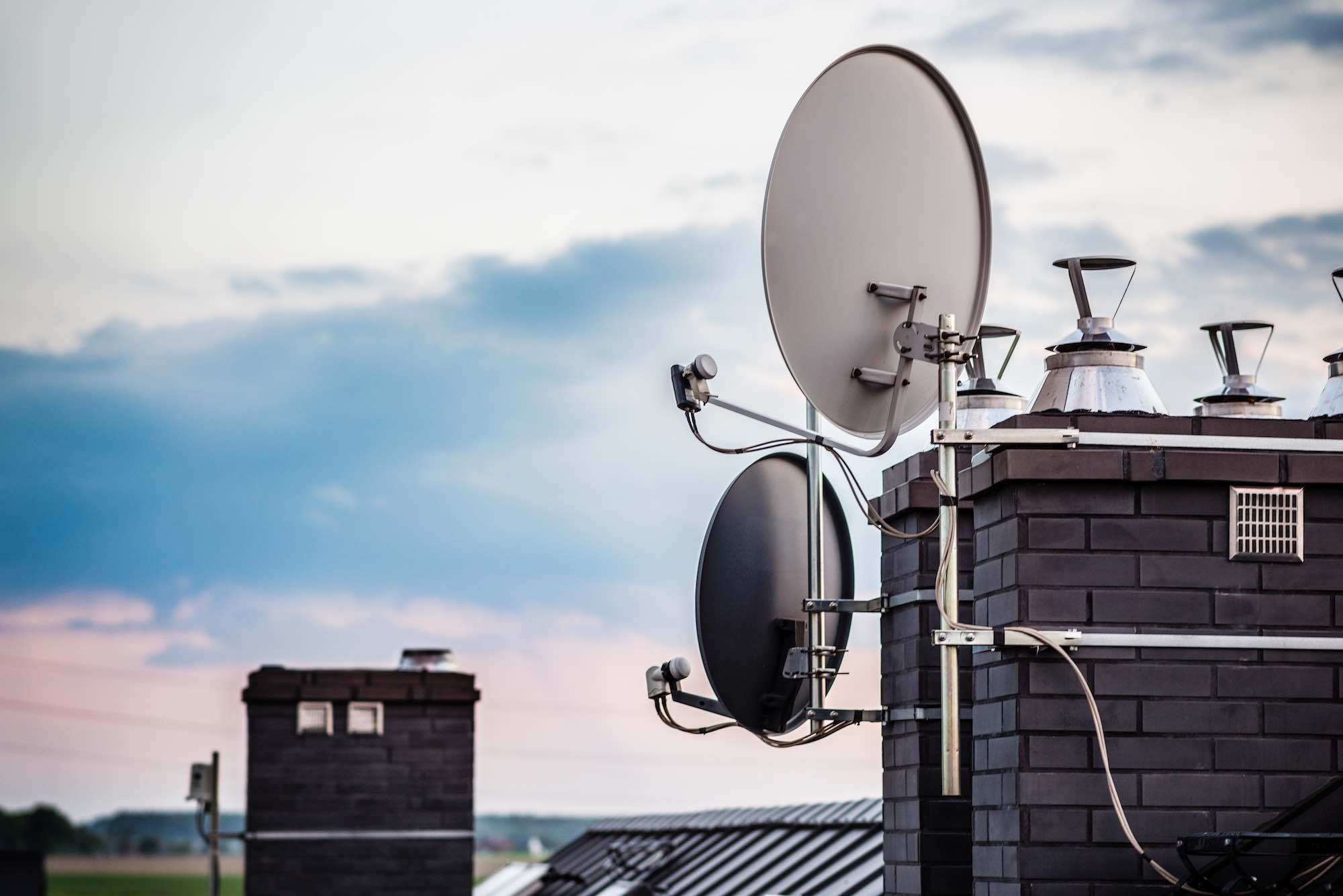
Satellite allows you to connect the internet without cables or wires—only a satellite dish. Connections are beamed quite literally from an orbiting satellite in the sky to a terrestrial satellite dish, so customers living in rural areas without the infrastructure for cable, DSL or fiber still have a way to connect to the internet.
Because satellite signals are sent from such a great distance, download and upload speeds are typically a bit slower than you'd find with traditional wired connection types. Still, some carriers have managed to improve their satellite internet connection speeds by leaps and bounds over the last couple of years.
Satellite internet companies provide service to all 50 U.S. states. These providers generally require customers to either buy or lease their dish, as well as pay for any installation costs. Also, as a general rule it's easier to have a satellite dish installed on a property if you are the owner.
A general rule about satellite internet is that it's best for rural or remote areas. If you live in a busy city, you'll likely experience network congestion which means slower speeds and unreliable connection. Also, if there are tall buildings around, they may interfere with your connection.

Which Satellite Internet Providers Are In My Area?
Want satellite internet for your home, but unsure which companies provide service to your area? WhistleOut is here to help.
Our address lookup feature, part of our internet plan comparison engine, lets you see which satellite internet providers are available at your specific address. All you have to do is type in your street, city and zip code, click "Search," and filter the subsequent results page by "Satellite."
The two main satellite providers in the United States are Viasat and HughesNet, with Dish having backed out of the satellite internet game to only offer satellite TV.
Viasat and HighesNet offer a range of satellite internet plan options, with a range of speeds and bundles. In our comparison engine, you can filter by the speed you're looking for, along with data cap limit, contract length, and price.
Note that your internet speeds can be significantly affected by your natural surroundings, and any barriers to a clear signal. That's why it's worth double checking as to plan availability with the providers directly once you've found one you like via WhistleOut.
How Fast is Satellite Internet?
A quick glance at satellite internet plans on WhistleOut's comparison engine show satellite speeds starting at 12Mbps and topping out at 100Mbps for the most super-charged option.
You'll want to see what speeds are like at your specific location, though; the best way to do that is by plugging your address into our internet plan comparison engine, pressing search, and filtering the results by "Satellite."


How Does Satellite Internet Installation Work?
Satellite internet is made possible via a dish installed at a home (or business). Typically, you'll have to purchase your satellite dish outright, which you can bundle with a WiFi modem—that's right, you'll need a modem for satellite internet service—or you can lease the modem at a monthly rate.
Since satellite dishes are relatively permanent fixtures—at least while they're up—it's much easier to arrange for their installation with your provider if you own the property.
Getting a dish installed as a renter requires agreement from the property owner, and likely your assurance that its removal will not result in any permanent damage. Check with your provider for their specific policies on this.
It may take up to a week for a service technician to come to your home to install your satellite connection. Certified technicians are specially trained to locate the best location for your satellite dish and securely attach it to your home.
There are typically three different types of installation mounts: sloped roof mount, wall mount, or standard pole mount. Most satellite dishes are roughly 30 inches by 30 inches. In some cases, the best connection does not always provide the strongest signal. If this happens, a non-standard option may be recommended to ensure you receive the fastest satellite internet possible.
Satellite Internet Contracts & Cancellation Fees
The big advantage of not signing up for a long-term contract, of course, is that you can jump ship whenever you want, without incurring early termination fees. HughesNet, for example, charges customers $400 for terminating their contracts within the first 90 days of service, and lowers it $15 for every subsequent month of active service.
It's important to specify the early termination fee associated with the plan you're interested in before signing up. To get this info, click on the plan in WhistleOut's internet plan comparison engine and scroll down for details, or contact the provider directly.


Satellite Internet: Best for Rural Areas
If you live in a remote or rural location, then you'll probably want (if not need) to invest in satellite internet. Rural areas is where satellite internet shines. Without the heavy internet traffic slowing down your speeds, or high-rises blocking the view from your dish to the satellite, you connection will be much faster and reliable than those using satellite internet in metropolitan areas.
When we say "need" satellite internet, we're referring to the fact that some rural areas don't have the right infrastructure set up to accommodate cabled internet options.
Since satellite internet doesn't use wires to reach cities in the U.S., it can be accessed from literally anywhere in the country. Cable, DSL and fiber internet options are much more limited when it comes to providing service to areas that are more remote.
Satellite internet is especially useful if you live close to mountains, rivers, and other natural formations that can make wired internet options difficult. If it's uncommon to see a fixed wireless tower in your rural town, then satellite internet may be your best (or only) option.
Common Satellite Internet Questions
Internet Providers by State
- Internet in Alabama
- Internet in Alaska
- Internet in Arizona
- Internet in Arkansas
- Internet in California
- Internet in Colorado
- Internet in Connecticut
- Internet in Delaware
- Internet in District of Columbia
- Internet in Florida
- Internet in Georgia
- Internet in Hawaii
- Internet in Idaho
- Internet in Illinois
- Internet in Indiana
- Internet in Iowa
- Internet in Kansas
- Internet in Kentucky
- Internet in Louisiana
- Internet in Maine
- Internet in Maryland
- Internet in Massachusetts
- Internet in Michigan
- Internet in Minnesota
- Internet in Mississippi
- Internet in Missouri
- Internet in Montana
- Internet in Nebraska
- Internet in Nevada
- Internet in New Hampshire
- Internet in New Jersey
- Internet in New Mexico
- Internet in New York
- Internet in North Carolina
- Internet in North Dakota
- Internet in Ohio
- Internet in Oklahoma
- Internet in Oregon
- Internet in Pennsylvania
- Internet in Rhode Island
- Internet in South Carolina
- Internet in South Dakota
- Internet in Tennessee
- Internet in Texas
- Internet in Utah
- Internet in Vermont
- Internet in Virginia
- Internet in Washington
- Internet in West Virginia
- Internet in Wisconsin
- Internet in Wyoming


.jpg?w=280&h=280&usm=20&usmrad=0.8&fit=crop "Verizon Fios Internet vs. Optimum Internet")

.jpg?w=280&h=280&usm=20&usmrad=0.8&fit=crop "Viasat vs Hughesnet Internet Plans Compared")


.jpg?w=280&h=280&usm=20&usmrad=0.8&fit=crop "gFiber vs. AT&T Fiber: Which internet is better for you?")