The rise of high-speed data and powerful smartphones has led to the creation of every kind of app imaginable. They’ve become so ingrained in our lives that you probably don’t realize how frequently you use them. The average American adult spends over 69 days using apps on their smartphone in a year. Any time you use your phone for something other than making a phone call or sending a text, you’re probably relying on an app.
The problem is many of these apps are wasting more than just your time—some of the most popular apps on the market are also filling up your storage space and burning through your phone’s data. This means apps can waste your money if you have to shell out for a new phone or a more expensive data plan. That’s the secret cost of free apps like Facebook, YouTube, and TikTok.
Here at WhistleOut, we surveyed 1,000 adults to get a sense of their app usage. Let’s dive into the world of apps to see just how popular they’ve become, how much time and money we spend on them, and how you can regain control of your phone.
App usage overview
- What are apps?
- Top 5 apps taking up your time, data, and storage
- Spending money on apps
- Most popular types of apps
- Apps we use every day
- Downloading and maintaining apps
- Healthy app habits
- Best data plans for apps
- Methodology
What are apps?
App is short for “application.” Simply put, an app is a software program that can be installed on a mobile device like a smartphone, tablet, or smartwatch. They can be simple tools that come pre-loaded on your device, or extremely complicated third-party programs that need a lot of processing power and strong internet speeds.
Apps: A brief history
Apps have been around longer than you realize, first emerging with personal digital assistants (PDAs) in the 1980s. These first apps were extremely basic, like clocks and calculators. Then, in 1997, the Nokia 6110 was released with a pre-installed version of the arcade game Snake. Its popularity opened a new frontier for app development.
Apple was one of the first companies to recognize the potential for these new kinds of mobile apps and it developed them for early versions of the iPod. It would take the emergence of 3G networks and the ability to download larger files on phones to finally create apps as we know them today.
The Apple App Store debuted in 2008 with just 500 apps to download on the first-generation iPhone. The iPhone and App Store were such massive successes that they completely changed the way the world understood apps and spawned a new industry to create them. Today, Apple users can pick from almost almost 2 million different apps on the App Store. Meanwhile, the Google Play Store offers over 3 million apps to choose from.
Top 5 apps taking up your time, data, and storage
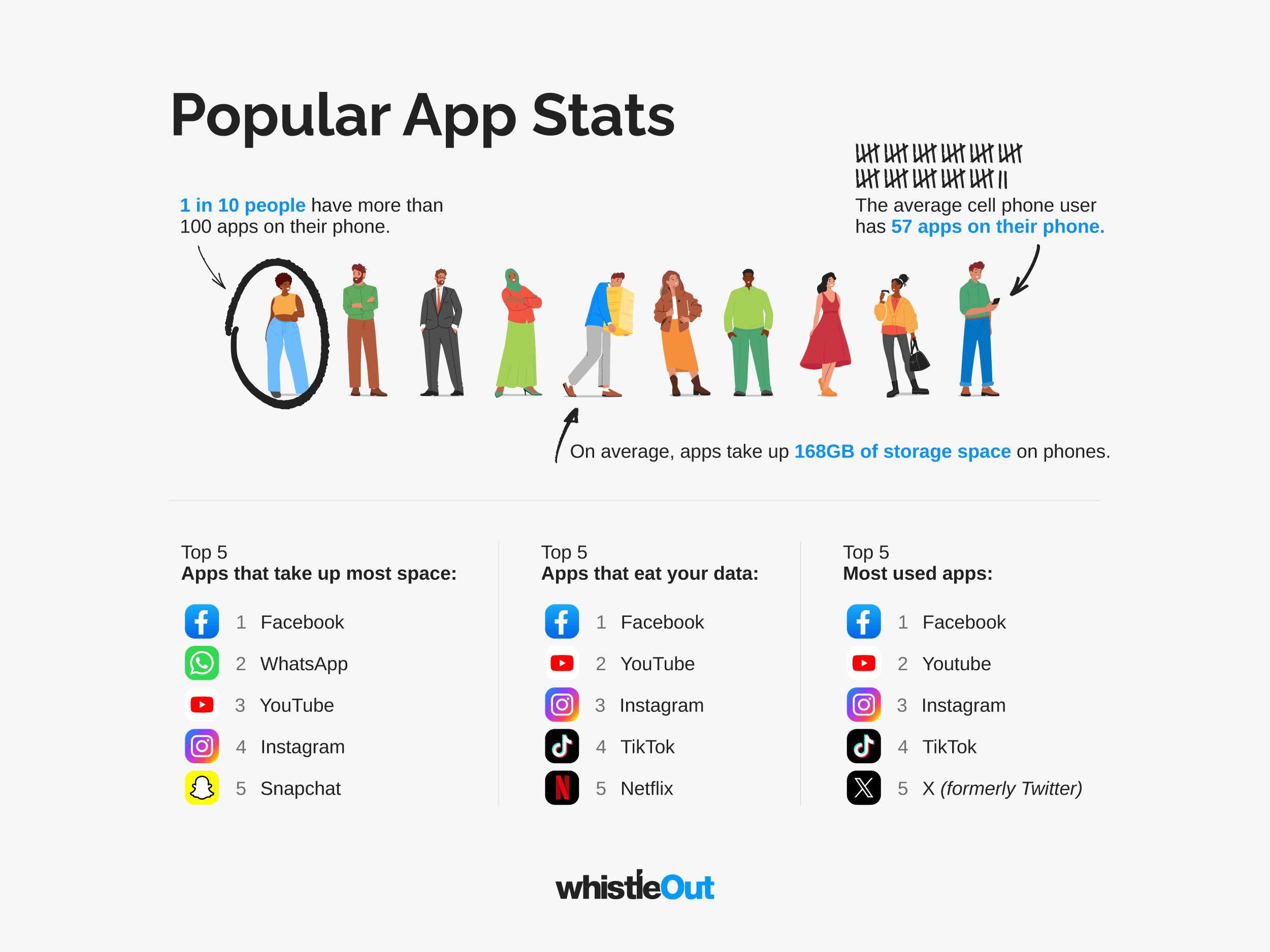
You’ve probably got more apps living on your phone than you realize.
- The average cell phone user has 57 apps on their phone
- 1 in 10 people have more than 100 apps on their phone
While that may sound like a lot, remember that not all of these apps get screen time. Some may only be opened for a few seconds at a time, like a two-factor authentication app. However, there are some apps we spend hours on.
Top 5 most-used apps:
- YouTube
- TikTok
- X (Twitter)
It should come as no surprise that social media and streaming apps are the most used overall. These apps have been perfected with personalized algorithms to keep you coming back for more content.
It’s easy to lose an entire day scrolling through TikTok or liking Facebook posts, and a few hours here and there can add up fast. Remember the average American adult spends over 69 days using apps on their smartphone in a year. That’s around 4.5 hours per day or 1,671 hours per year. That said, you should realize that your time isn’t the only you’re spending. Many of these same apps are sucking up all your mobile data too.
Top 5 apps eating up your data:
- YouTube
- TikTok
- Netflix
As you can see, it’s a similar list to the most popular apps. It simply trades out X for Netflix. Why do these apps eat up so much data? For the most part, it’s video streaming. YouTube, TikTok, and Netflix are exclusively streaming apps. The Meta-owned Facebook and Instagram, while still relying on regular posts, developed Reels and Instagram Live to remain competitive in the streaming world.
Streaming can annihilate your data. We’ve tested the mobile data usage for most of these apps. On the lower end, simply browsing Facebook uses 80MB per hour. Watching videos on Facebook doubles that to 160MB per hour. On the upper end, TikTok and Instagram use around 800MB of data per hour. If you adjust your settings, it can get even worse. Watching a high-definition Netflix video can consume as much as 1GB per hour. It’s no wonder many people find themselves needing more expensive phone plans with higher data limits to keep up with their app usage.
Still, apps need more than just data to function. They also need storage space and processing power. On average, apps take up 168GB of storage space on phones. Some of the most popular apps also require a lot of your memory.
Top 5 apps that take up the most space:
- YouTube
- Snapchat
It’s shocking how much storage you’ve probably surrendered to these apps. I’ve downloaded a Spotify playlist of 1,160 songs (73 hours of music) directly onto my iPhone 14 Pro. Spotify is currently occupying 3.69GB of my storage. Despite that, Snapchat is still in the lead overall taking up almost 5GB of space.
Apps need a ton of storage to function properly. They need space for operating files and many store local data–like saved posts–directly on your device. This information is kept so the app can quickly pull it back up. Basically, the more you use an app, the more storage it’s going to take up as the app tracks what you’re doing.
What does all this mean for your phone? If your storage gets too full, your device can slow down and crash. Your phone’s operating system also needs empty storage for completing tasks. Too much app bloat can prevent updates from completing and make you feel like you need to buy a new phone with more storage space.
Spending money on apps
While you may not realize some popular apps are costing you by using all your data and storage space, there are some apps we knowingly spend money on.
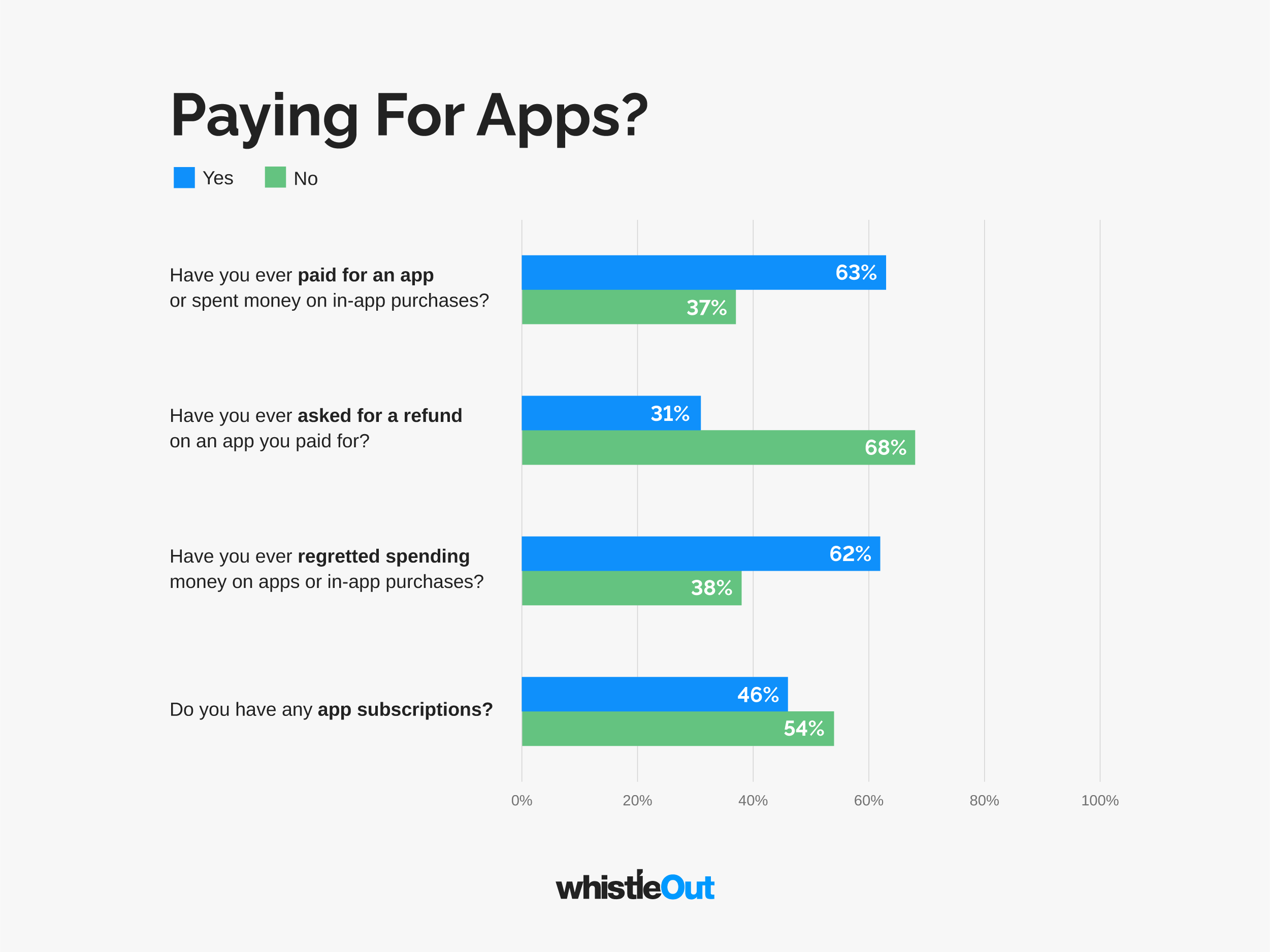
The average person spent $127 on apps or in-app purchases in the past year. Think of all the different ways apps can take your money. Common examples include freemium games, ad-free versions of apps, monthly subscriptions, and one-time payments to download a new app.
- 63% of people have paid for at least one app or spent money on in-app purchases
- 45% of people have paid to remove ads from an app
- 30% of people have asked for a refund on at least one app they've paid for
- 61% of people who have spent money on apps or in-app purchases have regretted their purchase
- 45% of people pay for app subscriptions to access premium features or get rid of ads
- People have 9 different monthly app subscriptions on average
Most popular types of apps
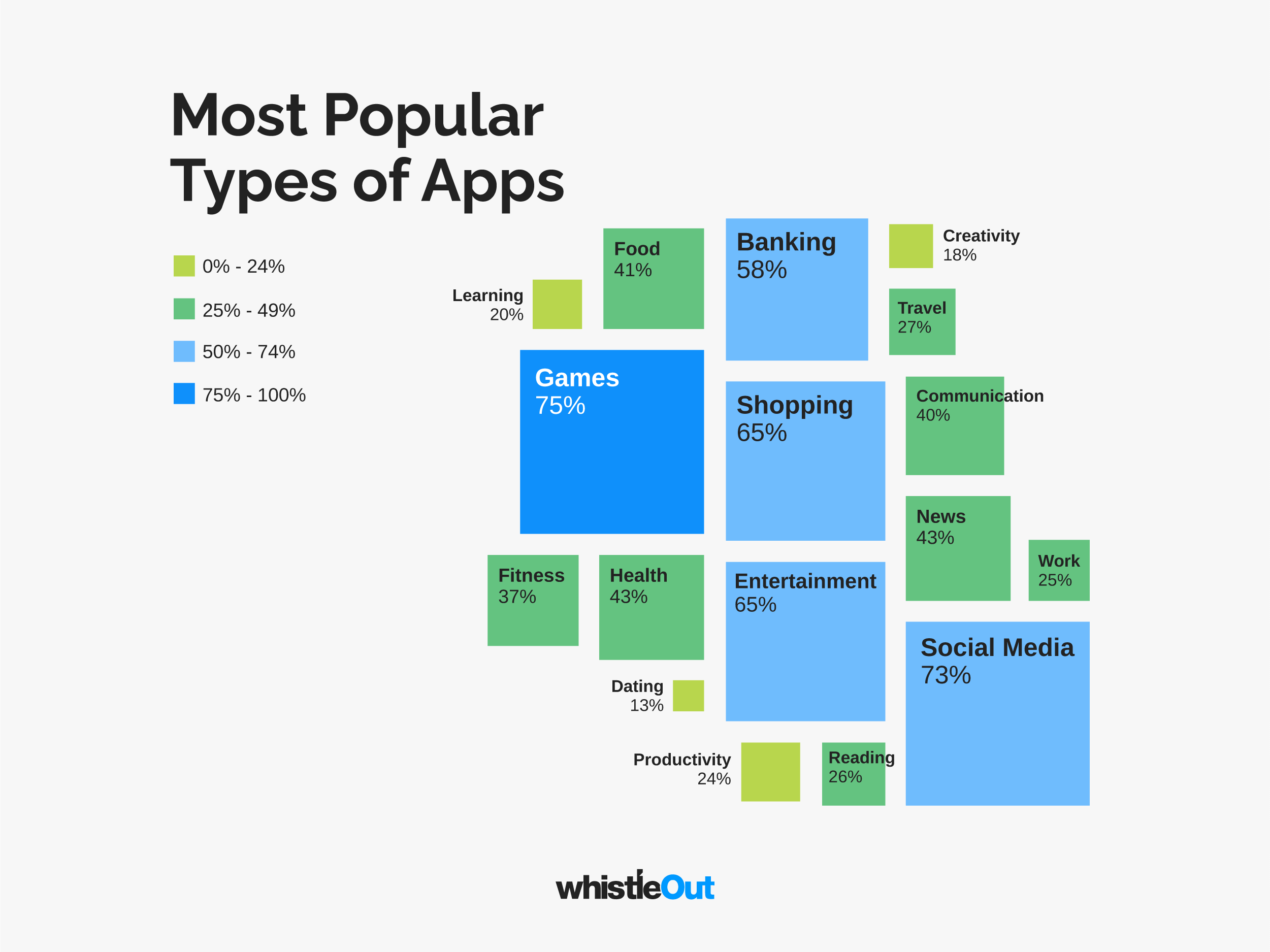
How are most people using their apps?
Top 5 most popular types of apps:
- Games (75%)
- Social media (73%)
- Entertainment (65%)
- Shopping (65%)
- Banking (58%)
Don’t be surprised that games are among the most popular types of apps. Remember that mobile games aren’t just for kids. Many adults can’t function without their Candy Crush fix or a daily crossword.
The prominence of social media and entertainment apps (like Netflix) is not surprising based on the top apps that most people have downloaded on their phones. Shopping apps (like Amazon) and banking apps are also clearly popular.
Wondering about dating apps? According to our data, most people don’t keep them on their devices.
- Dating apps are the least likely to be downloaded in 2024, with only 13% of people having them on their phone
- However, 1 in 10 married people have a dating app downloaded on their phone
Popular apps like Tinder, Hinge, and Grindr–and niche dating apps like Luxy and Token–have millions of downloads and annual users, so how does this data make sense? It’s likely that most people don’t keep these apps on their phones once they begin a relationship or stop dating.
Apps we use every day
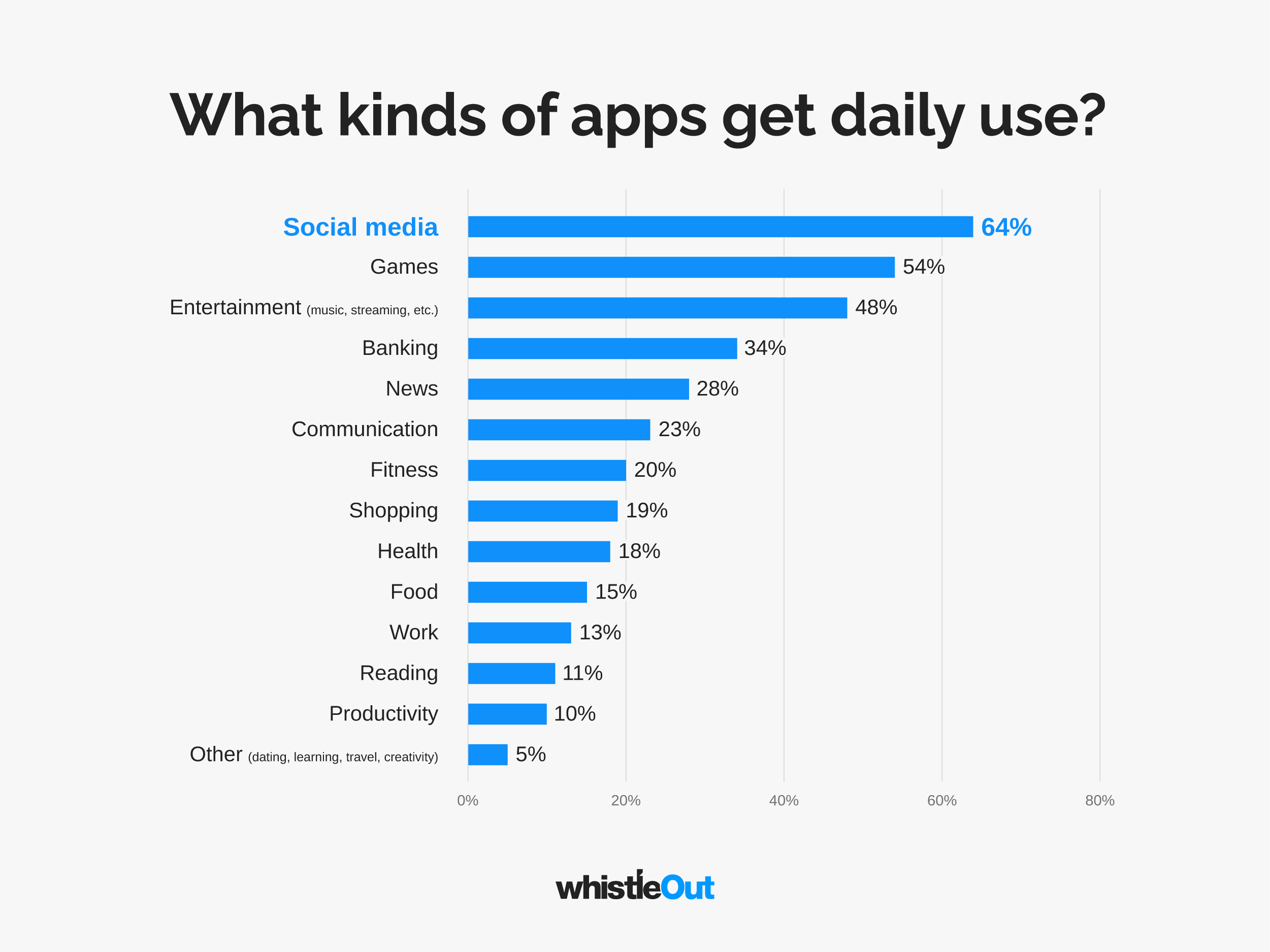
We’ve established some of the most popular apps, but how frequently are people using them? For many users, hopping onto their favorite app is a daily ritual.
- 64% of people use social media apps every single day
- Over half of respondents (54%) use games on their phone every day
- 48% of people use streaming or music entertainment apps daily
- 37% of people have fitness apps installed, but only 20% use them daily
Social media, gaming, and entertainment apps all get plenty of frequent use. In fact, our recent survey of TikTok usage found that many users are addicted to the platform and went through symptoms of withdrawal during a temporary outage in January 2025. These same issues can be found with all social media apps. The same can’t be said for fitness apps. While 37% of people have them on their phones, only 20% use them daily. That doesn’t necessarily mean people avoiding exercise. It could be because these users don’t work out daily.
Downloading and maintaining apps
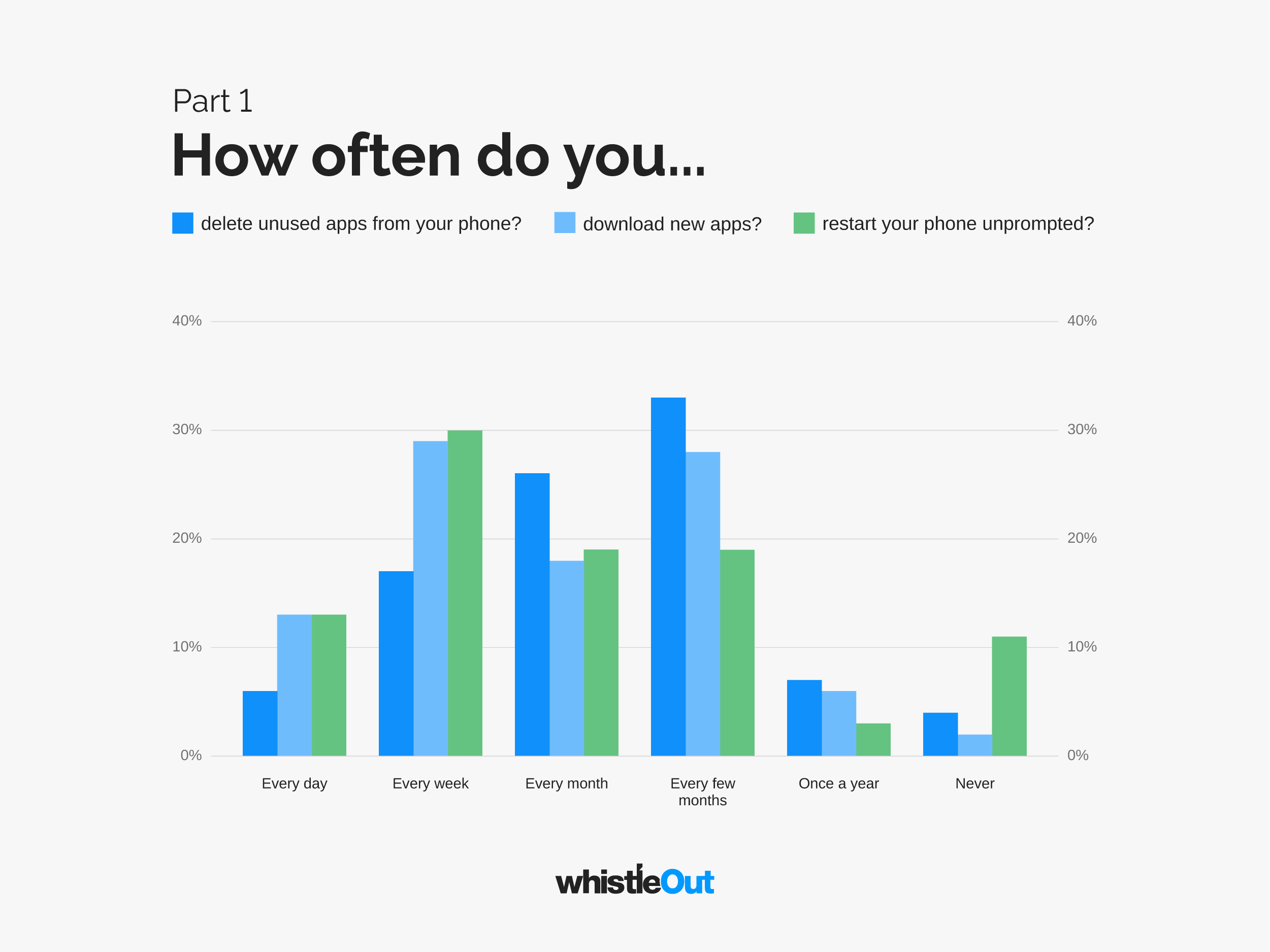
Once an app is on our phones, there’s a good chance it will be there for a while. Many people, myself included, fail to delete unused apps to free up storage. Even worse, some users also fail to properly maintain their storage. They may decline essential updates or refuse to restart their phones unless prompted to do so.
- 1 in 3 people only delete unused apps from their phone every few months
- 1 in 10 people claim to never restart their phone unprompted
- Over half of people don't restart their phone on a more than monthly basis
While restarting your phone isn’t something you should do all the time, it does help clear temporary memory caches. It’s also required for most software updates that keep your device and apps running smoothly. Putting off updates until the phone is forcing itself to restart is not good for the health of your device.
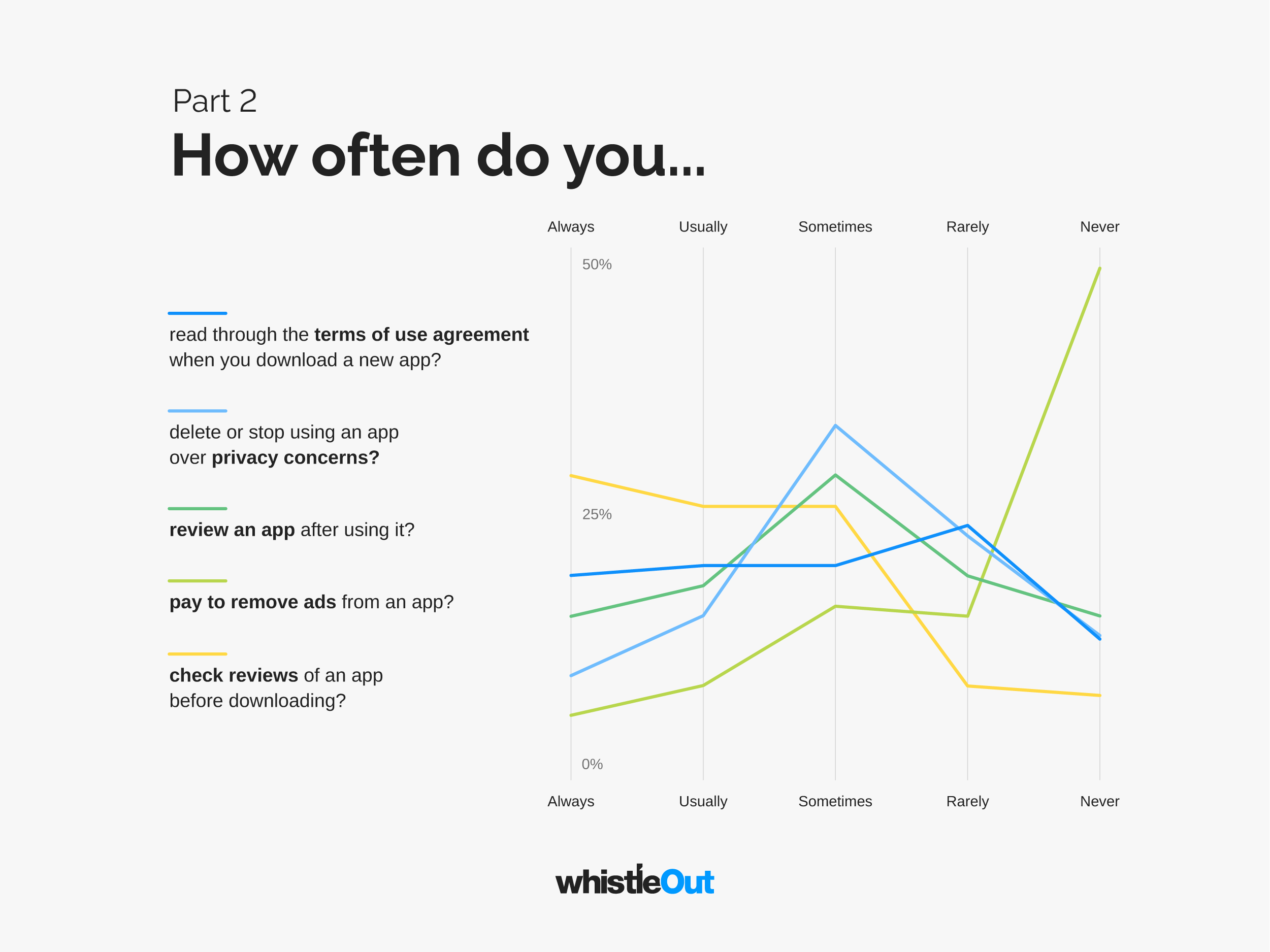
When it comes to downloading a new app, most people don’t practice due diligence. They may check app reviews–or leave a review of a bad app–but few of us take the time to read through the terms of use agreement that comes with each app we download. This means some apps may have access to more of our data and privacy than we realize.
- Over 1 in 10 people download new apps every single day
- 2 in 10 people always read through the terms of use agreement when downloading a new app
- Most people (81%) check reviews of an app before downloading, but only 63% submit reviews themselves
Healthy app habits
The data above shows how apps can take up your time, waste your money, and drive your device into the ground. That said, we here at WhistleOut still love apps. Apple coined the phrase “There’s an app for that” in 2009, but the statement is still true today. Apps and smartphones can enrich your life by connecting you to friends, helping you pass the time, and serving as useful tools to keep yourself organized. That said, you still need to practice healthy app habits.
If you use apps constantly, you might be suffering from smartphone addiction. Some of the most common symptoms include phubbing–snubbing people around you in favor of using your phone–and doomscrolling social media before bed. You may also get anxious if you can’t have constant access to your smartphone. These behaviors indicate you’re spending too much time on your cell phone, which can harm your mental health.
There are steps you can take to reduce your time on apps. You can turn off your phone or, ironically enough, download an app that limits your overall screen time.
Another issue some people face is spending too much money on apps. A few small purchases and forgotten monthly subscriptions can add up fast. Remember to keep track of your credit card bill and set reminders to cancel free trials and old subscriptions.
Finally, make sure to keep your device and apps up to date. Many app updates are security updates. Failing to install them can leave your personal data contained in the app vulnerable or exposed.
Need a bigger data plan to run your favorite apps?
We recommend connecting to Wi-Fi for most of your app usage, but we also know that’s not always an option. If you’re streaming podcasts in the car or letting the kiddos watch Disney+ in the grocery store, you’re going to need a data plan that can handle heavy app usage. Luckily, these data plans don’t have to break the bank. You can follow our data usage guide to figure out exactly how much data you typically use in a month.
Smaller carriers called MVNOs offer priority data on the big networks for a fraction of the cost. One of our top picks for apps is Mint Mobile's Unlimited Plan. Running on T-Mobile’s network, it offers 50GB of priority data and a 20GB mobile hotspot starting at just $30/month ($15/month for the first 3 months). For average users, 50GB is plenty of data for your apps, especially if you use Wi-Fi at home and work.
Mint Mobile Unlimited Data Plan

| Carrier | Mint Mobile |
|---|---|
| Data | Unlimited Data |
| Type | No Contract |
| Current Deal | Get this unlimited plan for just $10/mo. for the first 6 months of service |
| Total Price |
$10 per month
$60 for 6 months of service
|
| View Plan |

For heavy users who need even more data, US Mobile’s Unlimited Premium plan offers one of the largest data allotments on the market. Starting at $44/month, it includes unlimited priority data and a 50GB mobile hotspot. Plus, if you get a family plan with three or more lines, you can get a free streaming perk to services like Netflix or HBO Max.
US Mobile Unlimited Premium Plan

| Carrier | US Mobile |
|---|---|
| Data | Unlimited Data |
| Type | No Contract |
| Current Deal | Get this monthly plan for only $39 for 6 months of service using promo code ONLY39 OR $5 off per month for 6 months OR 30 Days FREE Trial |
| Total Price |
$39 per month
|
| View Plan |
Methodology
We conducted a survey of 1000 U.S. adults using Pollfish. Results are post-stratified.
Max McCaskill
Sr. Staff Writer

Thousands of cell phone plans unpacked. All the facts. No surprises.




.png?w=280&h=280&usm=20&usmrad=0.8&fit=crop "The Best Cheap Phone Plans for 2026: We Tested Them All to Help You Save")