When should a kid get their first cell phone? It’s a question that puzzles many parents who wonder if their child is ready.
Cell phones can offer major benefits for families. They help some parents feel more comfortable giving their children independence, since they’ll always have a way to contact them. On the other hand, many parents are rightfully concerned about cell phones impacting their kids’ grades, causing mental health issues, and exposing children to online dangers.
We’ve conducted two polls of parents and everyday Americans to learn the statistics surrounding children and cell phones. Every family is different, but our survey found that most people think a child should get their first phone between the ages of 11 and 16, with 13 coming up as the optimum age.
If you’re wondering if this back-to-school season is the right time to buy your kid their first phone, we’ve got the data to help you make the right decision. Plus, we can help you select the best phone for your kid and learn to keep them happy and healthy with their new cell phone.
Overview: Buying your child's first cell phone
- What age should your child get their first cell phone?
- Should I let my kid take their phone to school?
- Most children use cell phones at home and school
- Cell phone safety features for kids
- Cell phones and mental health in children
- Why get a phone for your child?
- When is the best time to buy your kid a phone?
- Finding the right first phone for your kid
- Recap
- Methodology
What age should your child get their first cell phone?
Most people think a child should get their first phone between the ages of 11 and 16, with 13 coming up as the optimum age.
That might seem young, but remember these are the ages when kids begin to assert their independence. They might join after-school clubs, play sports, or even visit a friend’s house without their parent coming along. In all of these situations, having a phone can make a parent feel better about staying connected with their child.

- Over half of Americans believe it's important for kids to have access to a cell phone during the school day by age 13.
- Parents across generations agree that 11-13 years old is the optimal age for a child to receive their first cell phone.
Getting a phone at a young age has also become pretty commonplace. Newer generations are getting their first phones at younger ages than ever before. These days, it’s not unheard of for elementary schoolers to have their own cell phones.
- 1 in 3 Millennial parents received their first cell phone before they turned 14 years old.
- 25% of Millennials were between the ages of 14-16 when they received their first cell phone.
- Gen Z-ers received a cell phone even earlier, between the ages of 11 and 13.

Should I let my kid take their phone to school?
Most parents like the idea of being able to contact their children during the school day. That said, some people have concerns about the role of phones in schools. In the worst circumstances, phones can be major distractions in the classroom, tools for bullying, and help students cheat.
Some schools have even taken steps to ban phones or ask students to lock them away during the day. You should check out your own school’s policies to determine if they’ll allow your child to bring their phone during the day.
Most children can access cell phones at home and school
Most kids can use their cell phones at home and at school. Despite concerns from parents that cell phones might impact grades, most believe that their children should be able to access their phones during school hours. That said, some people have qualms about younger kids accessing their phones during the school day.
- Only 17% of Americans think students should not have access to a cell phone during the school day.
- 1 in 4 Americans think kids should be 14-16 years old before having access to a cell phone during the school day.
- 47% of kids have access at home and school.
- 38% of kids only have access to electronic devices at home.
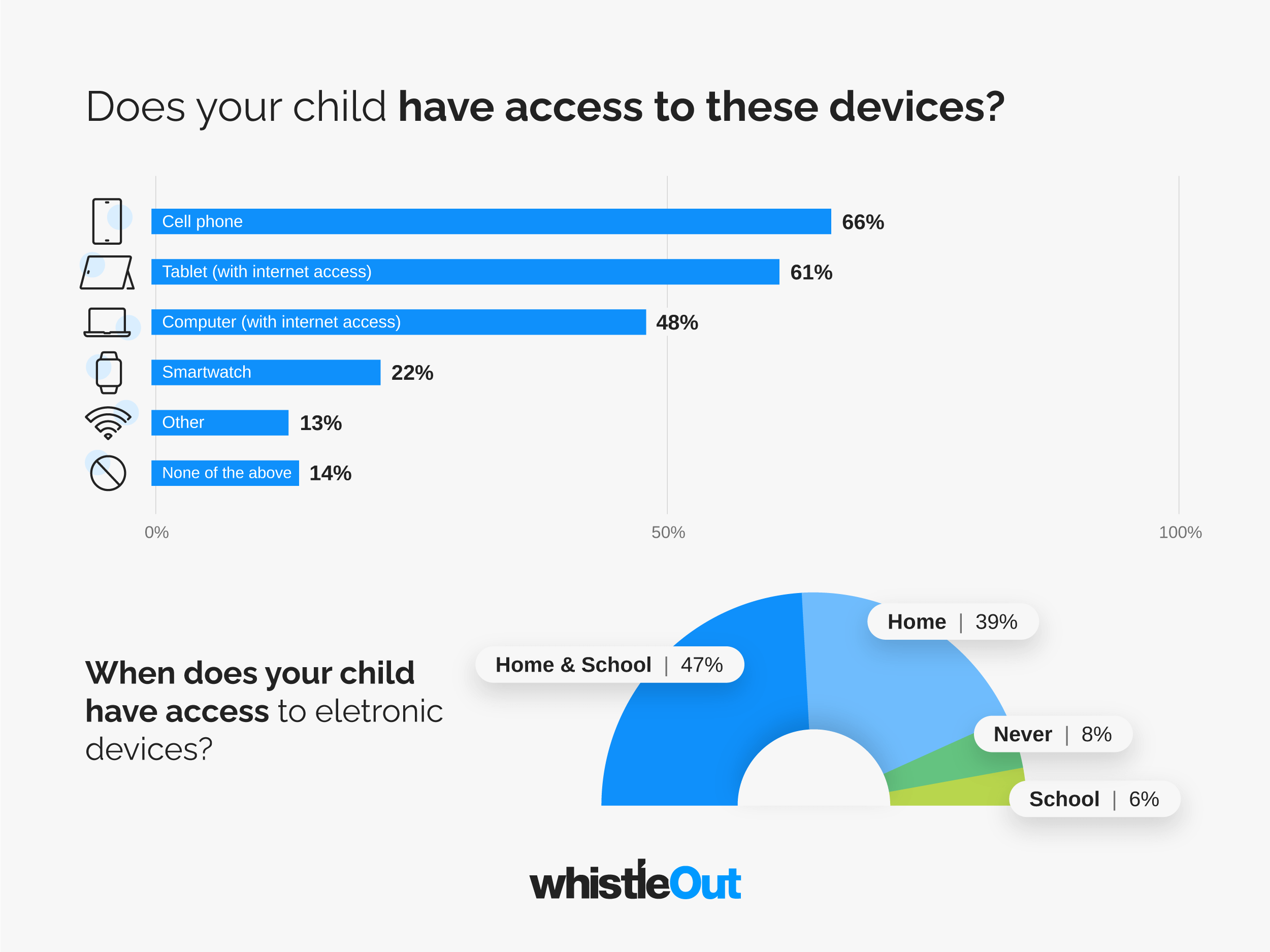
Kids are also more connected to technology than ever before.
- 66% have access to a cell phone.
- 61% have access to a tablet with internet.
- 48% have access to a computer with internet.
- 22% have access to a smartwatch.
Lots of kids first get access to devices like tablets at a young age to watch videos and play games. For many parents, a cell phone is a logical next step once their kid is responsible enough to have one.
What is the most important safety feature of a child’s cell phone?
For the majority of parents, keeping their child safe is the most important part of deciding when to buy a smartphone. Our surveys showed that 89% of parents agree that safety features are of the utmost importance for a child's cell phone or cell phone plan.
- Half of parents want parental controls on their kids’ cell phone.
- Around a third (31%) want GPS location tracking.
- Only 13% of parents prefer a phone for emergency calls only.
Keeping your child’s phone safe doesn’t have to be complicated.
- Our friends over at SafeWise compared 16 parental control apps to find the best ones on the market.
- The SafeWise team also recommends phones for kids that are helpful but not risky.
How to set up parental controls on your kid’s iPhone
Parental controls for iPhones are easy to enable and important for keeping your kids safe. Check out this WhistleOut video guide for step-by-step instructions:
Will cell phones impact your child’s mental health?
Cell phones can have an impact on anyone’s mental health, including children. People of all ages with phones have reported issues with anxiety, depression, and even smartphone addiction. Most Americans believe that smartphones can cause mental health issues.
- Over two-thirds of Americans say that children having access to cell phones contributes to cell phone addiction.
- Another 61% of Americans believe that children’s access to cell phones contributes to anxiety and depression.
- Over half of Gen Zers engage in phubbing (snubbing the people around them to use their cell phone).

However, don’t get discouraged. There are solutions to help kids from developing mental health issues stemming from cell phones.
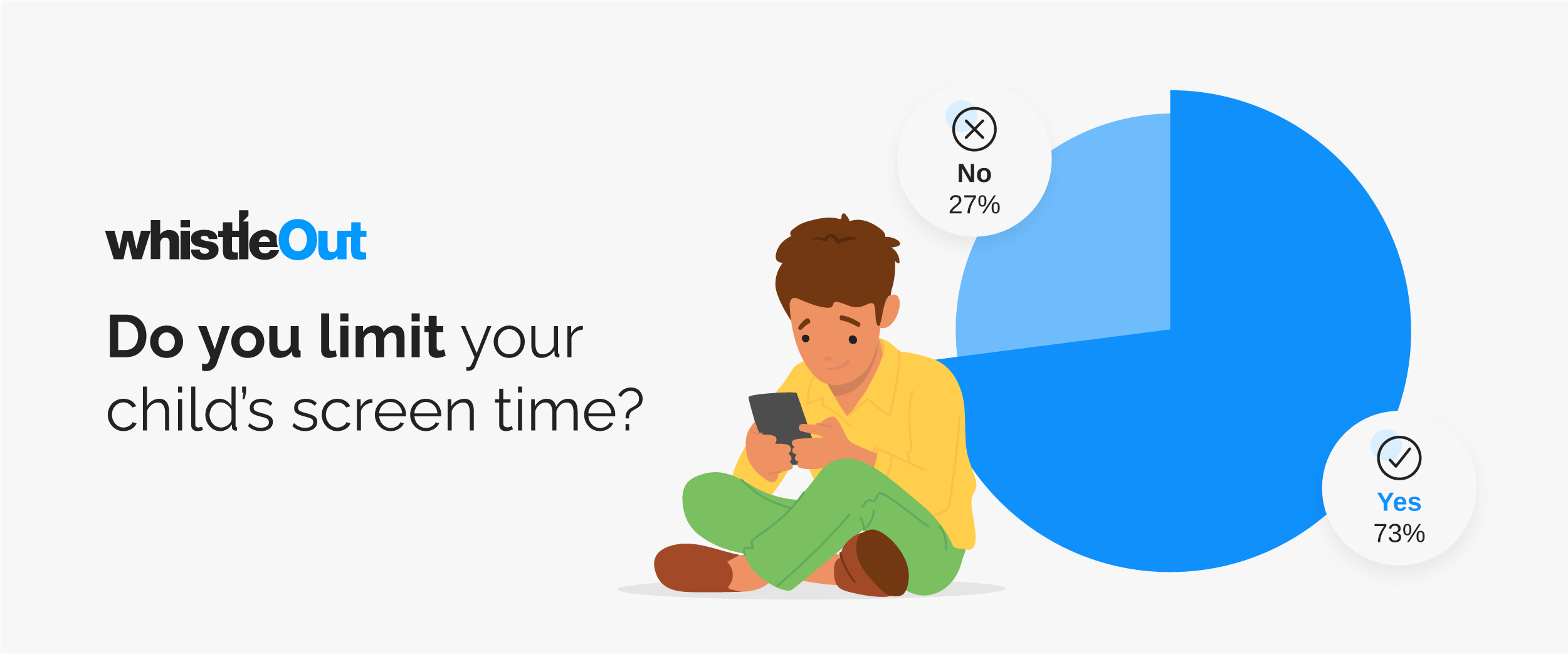
The easiest answer is to simply cut down on their screen time. In fact, 73% of parents already limit their kids’ screen time, which means their kids can only be on their phones for a specific time allowed by their parents each day. (Limiting screen time isn’t just for kids. Adults are susceptible to smartphone addiction too, so we recommend everyone cut down on their screen time before bed.)
It’s also important for parents to communicate with their child. Take time to talk about online dangers, healthy smartphone habits, and what level of privacy your child should expect in their phone. These conversations establish trust over surveillance first. That said, if you feel like there’s a problem developing, you may need to establish boundaries like:
- Restricting contacts
- Blocking inappropriate content
- Tracking cell phone locations
- Deleting social media accounts
- Taking your child's phone away when they don’t need it
Why get a phone for your child?
Knowing the dangers surrounding cell phones, why would you want to get one for your child? Well, most parents think the benefits of cell phones outweigh the risks.
The biggest reason most parents got a phone for their kids was so their children could contact them in emergency situations.
- 56% of parents also cited communication while their kid attends school.
- 22% pointed to cheaper family plan options.
- 21% noted that other children their kids’ age already have cell phones.
- 88% of Americans believe that having a cell phone is a necessary part of staying connected in today’s world.

Peer pressure from your children’s friends is certainly not the best reason to buy your child a new phone. That said, having ease of communication with your kids and saving on your phone bill with a family plan are more compelling arguments.
As we talked about above, over half of Americans believe it's important for kids to have access to a cell phone during the school day by age 13. If your child is mature enough to start getting involved with school activities when you’re not present, it might be time to consider buying them a phone.
When is the best time to buy your kid a phone?
If you’ve decided to buy your kid a cell phone, the best time is during carrier sales or around new device launches.
Phone carriers run limited-time sales around holidays and big events throughout the year. While most people think of holidays like Black Friday or Memorial Day as having the best deals, you’ll find plenty of carriers running back-to-school sales, too. Phone companies know that many parents want to send their kids to school with a phone, so this time of year can be a great time to buy.
The other great time to buy a new phone is during new device launches. Companies like Apple, Google, and Samsung typically reduce the prices of their old models after the newest phones come out. Carriers will always offer special deals around these new device release dates. In fact, if you’re purchasing a new line on your phone plan for your child, certain carriers may give you a device for free.
Pro tip: Give them your old phone
Kids can be hard on technology. It’s no secret that many kids will damage, lose, or destroy their first phone. With that in mind, one of the best ways to save money on your child’s first cell phone is to give them the device currently in your pocket.
If you’re ready for an upgrade and you’ve paid off your device, we recommend buying a new phone for yourself and giving your old phone to your child. That way, if the worst should happen and the old phone is destroyed, it won’t be as hard on your wallet.
Finding the right first phone for your kid
Now comes the hard part: picking your child’s first phone. There’s no shortage of phone options on the market. Some are incredibly cheap while others can practically break the bank. However, we do have some things you can think about that might help narrow down your decision.
What to look for in your child's first phone
Your child likely doesn’t need the newest device with all the fanciest features. Think about these factors when picking a phone:
- Age of the device: Older models typically have similar features to newer phones for a much cheaper price.
- Cameras: Unless your child is an aspiring photographer, a basic smartphone camera will work fine for most kids.
- Processor: An older processor will work for most smartphone uses including basic photo editing and normal mobile gaming.
- Battery life: If you think your child may forget to plug in their phone every day, you’ll want a phone with a longer battery life.
- Parental features: Some phones have built-in family features to help parents monitor their child’s activity.
Smartphones vs. “dumb” phones
Most people automatically default to buying smartphones these days. That said, don’t underestimate the power of a “dumb” phone. These are basic devices that lack most of the fancy features found in modern smartphones.
Companies like Nokia have relaunched their retro-model phones and have found a major market in Gen Z. Many young people are fed up with the tech influence in their lives and have found that dumb phones offer a way to stay connected without becoming absorbed.
If you want your child to have a phone but are leery about giving them a full-fledged smartphone, a basic cell phone with phone calling and texting capabilities may be all they need until they’re older.
Best phones for kids and teens
If you decide to buy a new smartphone for your child, we suggest targeting budget devices or older models.
Some potential options include:
- Apple iPhone SE (3rd Gen)
- Apple iPhone 14
- Google Pixel 8a
- Google Pixel 8
- Samsung Galaxy S23 FE
- Samsung Galaxy S23
- Samsung Galaxy A15
You can also check out our best phones for kids guide for more options.
Recap: Should you buy your kid a phone for the new school year?
Every family is different, but there are plenty of reasons to purchase your kid a new phone for the new school year. If your child is about to start playing sports, attending after-school activities, or going home with friends, a cell phone is a great way to keep track of your child without trampling their independence.
Parents are right to be concerned about the impact a phone can have on their children’s lives. However, there are steps families can take to ensure everyone stays healthy and gets the most out of their new phones.
If you’re ready to buy a phone for your child, we recommend setting up a family plan if you’re not already on one. While you can simply buy a basic phone plan for your kid, or choose a kid-friendly phone line like Mint Kids. Usually adding a new line to a family plan can score you a major multi-line discount. For most carriers, the more lines you have, the cheaper the cost per line. Plus, you may even qualify for extra perks like streaming subscriptions.
The savings are so good that younger kids aren’t the only ones joining family plans. More adults than ever before (55% of Millennials and Gen Z) are staying on their parents’ phone plan to score savings for the whole family.
Here are some of the best family plans on the market with four phone lines:
Shared plan with 4 lines

|
#1
|
Verizon

Simplicity Plan
$120.00/mo
+ Taxes & Fees. Price includes AutoPay & Bring a Number discount
|
|
#2
|
AT&T

Premium 2.0℠
$180.00/mo
+ $140 Upfront
|
|
#3
|
US Mobile

Unlimited Starter Plan
$100.00/mo
|
|
#4
|
T-Mobile

Essentials 2.0
$105.00/mo
with Auto-Pay - Taxes & Fees NOT included
|
|
#5
|
Spectrum Mobile®

Unlimited
$120.00/mo
+ $80 Upfront
|
Methodology
We conducted two surveys via Pollfish. The first was a survey of 417 parents, and the second was 1,000 adults. Both were of Americans over the age of 18.
Max McCaskill
Sr. Staff Writer

Thousands of cell phone plans unpacked. All the facts. No surprises.





.png?w=280&h=280&usm=20&usmrad=0.8&fit=crop "The Best Cheap Phone Plans for 2026: We Tested Them All to Help You Save")